

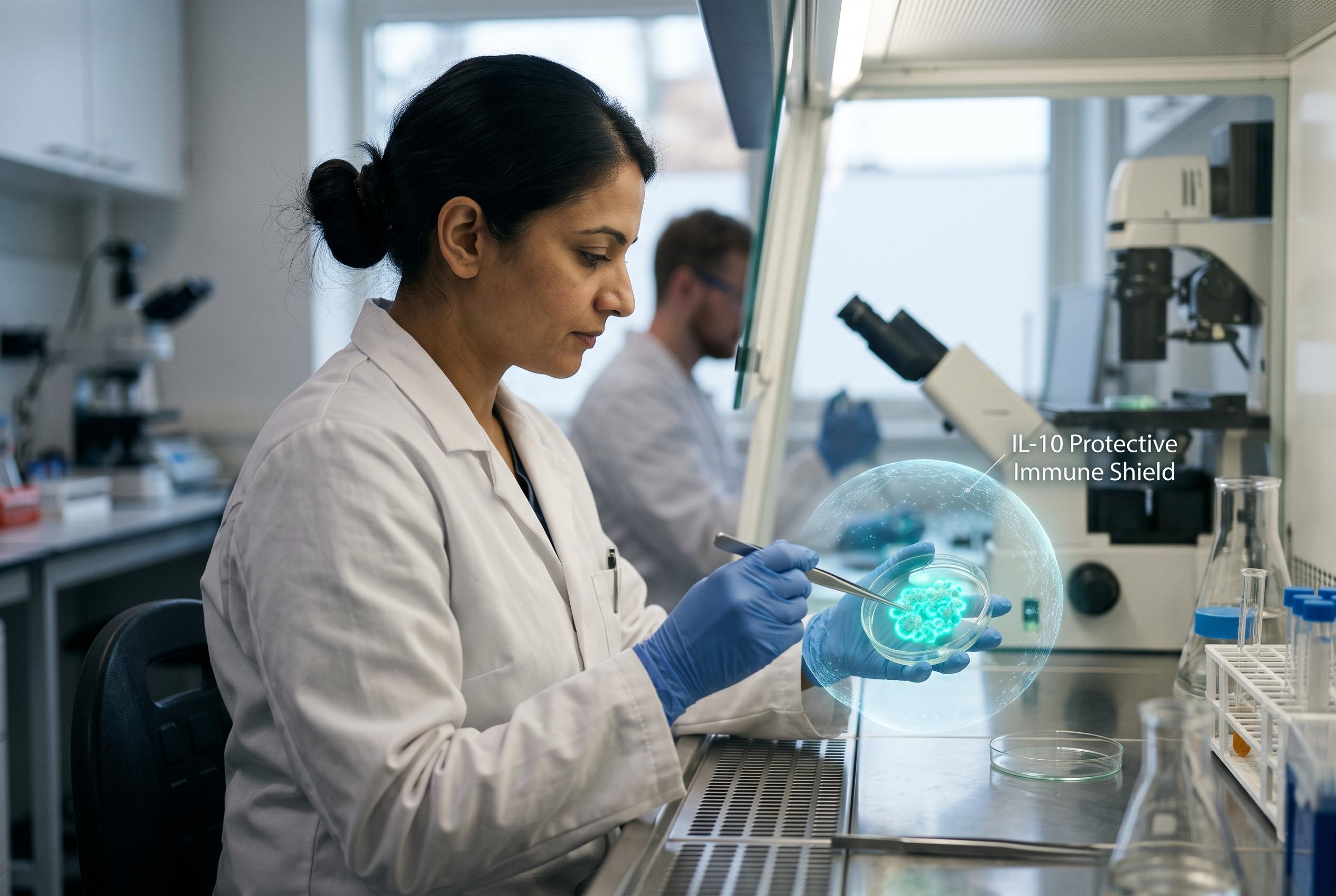

Scientists at Rice University have created a local immune buffer using IL-10 to protect transplanted pancreatic beta cells, extending their survival in diabetic mice and potentially revolutionising cell therapies for type 1 diabetes.
Rice University researchers say they have found a way to create a protective immune buffer around transplanted pancreatic beta cells by engineering nearby cells to secrete interleukin 10, or IL-10, a signalling protein that helps calm immune activity. In a study published in Science Advances, the team reported that the approach allowed insulin-producing cells to control blood sugar in diabetic mice for more than 100 days, far longer than unprotected grafts, and they argue it could help pave the way for better cell therapies for type 1 diabetes.
The strategy is designed to tackle one of the biggest barriers to transplant medicine: the immune system’s tendency to treat implanted material as foreign. That reaction often leads to fibrosis, in which scar-like tissue builds around the graft and eventually cuts it off from oxygen and nutrients. Dilrasbonu Vohidova, a doctoral student in bioengineering at Rice and a co-first author, said the method aims to solve rejection without weakening immunity throughout the body, which is a major limitation of current transplant practice.
To build the system, the researchers screened several cytokines, the small proteins that help regulate immune responses, before settling on IL-10 as the most effective option. They then placed IL-10-producing cells alongside insulin-producing cells inside hydrogel capsules and implanted them into diabetic animals. According to the study, the local IL-10 environment reduced fibrotic buildup around the implant and improved graft survival. The work was led by Omid Veiseh, a Rice bioengineer, who said it marked an important step for cell-based therapies and could move towards clinical testing in the coming years.
The team also tested the platform in non-human primates and reported that the implants continued producing IL-10 without obvious harmful effects elsewhere in the body. That matters because systemic immunosuppression, still commonly used in islet transplantation, can raise the risk of infection, cancer and organ failure. Rice said the approach has support from Breakthrough T1D, the Advanced Research Projects Agency for Health and the National Institutes of Health, and could eventually be adapted for autoimmune disease, inflammation and organ transplantation.
The findings also come against a more complicated scientific backdrop. Earlier animal studies, including work archived in PubMed Central, found that IL-10 on its own did not prevent islet rejection and in some diabetes models did not stop immune attack on pancreatic tissue. The new Rice study suggests that delivery may be the crucial difference: rather than relying on IL-10 systemically, the researchers are creating a tightly localised immune shield around the graft.
Disclaimer: This content is for informational purposes only and is not intended to be a substitute for professional medical judgment, advice, diagnosis, or treatment.



