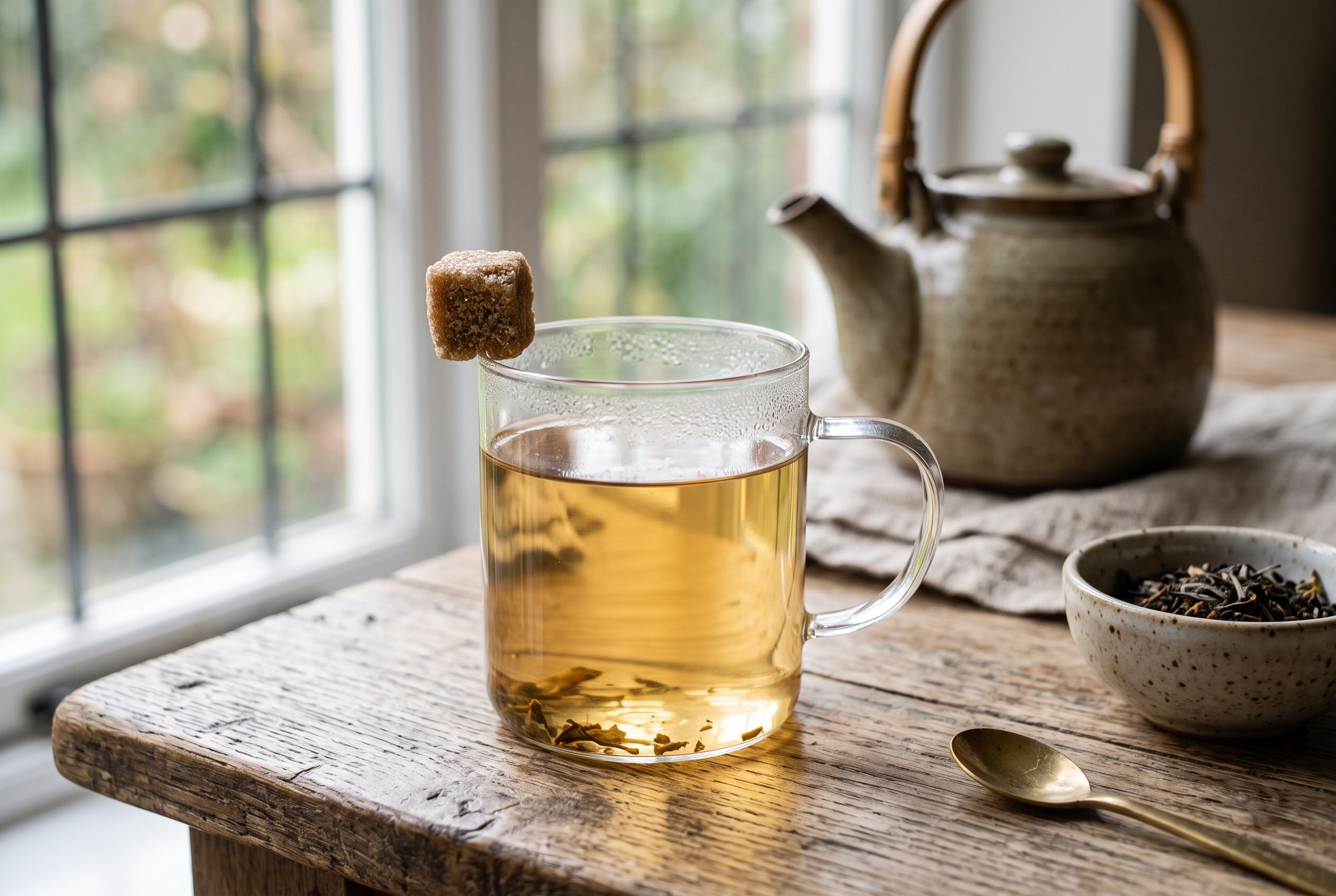

Updated US guidance underscores that added sugars in prepared drinks like tea significantly impact health, prompting a closer look at consumption patterns, health effects, and practical tips for reducing sugar intake without sacrificing the habit.
If the aim is to keep added sugar down, the key question is not whether tea is healthy in the abstract but what goes into the cup. Updated US guidance from the Centers for Disease Control and Prevention says added sugars include those put into drinks when they are prepared, adding plainly that “Putting sugar in tea is an example of a prepared drink.” The agency says sweetened coffee and tea account for 11% of Americans’ added sugar intake, while adult men consume an average 19 teaspoons a day and adult women 15. (cdc.gov)
That matters because the recommended ceiling is lower than many people assume. The American Heart Association says added sugars should make up no more than 6% of daily calories, which works out at about 6 teaspoons a day for most women and 9 for most men. Two teaspoons stirred into one mug already uses a third of that daily allowance for many women. The association also stresses that honey, syrup and fruit juice concentrates still count as added sugars, even when they are marketed as more natural choices. (heart.org)
The tea itself is a different story. Evidence reviewed in a systematic analysis of 27 studies involving 1,898 people suggests green tea may slightly lower fasting blood glucose compared with placebo or water, while oolong tea showed a possible effect based on very low-quality evidence. The same review found no significant fasting-glucose benefit for black tea. Even for green tea, the effect was small and appeared most clearly in studies of younger adults or Asian populations, suggesting that plain tea can be a sensible low-carbohydrate drink without being a miracle for glucose control. (pmc.ncbi.nlm.nih.gov)
From a diabetes-prevention perspective, clinicians focus less on tea as a special drink than on the broader problem of added sugar. An American Diabetes Association article for clinicians said meta-analyses show a strong relationship between added sugars, including sugar-sweetened beverages, and the development of obesity and type 2 diabetes. It also noted that about 7% of added sugars from beverages come from tabletop sugar and honey added to drinks such as tea and coffee. The same article said low- and no-calorie sweeteners may help reduce carbohydrate and calorie intake in the short term when used in moderation, though that is presented as a practical tool rather than a cure-all. (diabetesjournals.org)
For people who already have type 2 diabetes, the strongest evidence may come from what tea replaces. A BMJ prospective cohort study that followed 15,486 adults with type 2 diabetes for almost 19 years found that drinking more than one serving a day of sugar-sweetened beverages was linked to a 20% higher risk of all-cause mortality than drinking fewer than one serving a month. In substitution analyses, replacing one daily serving of a sugary drink with tea was associated with a 16% lower risk of all-cause mortality. Coffee, plain water and low-fat milk were also linked to lower risk when swapped in for sugary drinks. (bmj.com)
Not all newer evidence fits a simple “sweetened tea bad, unsweetened tea good” formula, however. A 2025 Frontiers in Nutrition study of 195,361 UK Biobank participants found that people drinking 3.5 to 4.5 cups of unsweetened tea a day had a 20% lower risk of all-cause mortality, a 14% lower risk of cancer mortality and a 27% lower risk of cardiovascular mortality than non-drinkers. Yet the same study reported that sugar-sweetened tea was not significantly associated with all-cause, cancer or cardiovascular mortality, while artificially sweetened tea also showed no significant association. In other words, the clearest potential advantage was seen for unsweetened tea, but the evidence did not show a straightforward mortality penalty for every sweetened cup. (frontiersin.org)
That does not let sweet tea off the hook on day-to-day sugar intake. The UK Biobank paper was observational, even though it adjusted for factors including smoking, body mass index, physical activity, diabetes, blood-pressure treatment and other parts of the diet. Mortality studies and short-term glucose-control studies answer different questions. Public health advice remains more direct: the CDC says 3 in 5 Americans aged 2 and older consume more added sugar than recommended and recommends unsweetened tea as a healthier choice alongside water and unsweetened coffee. (frontiersin.org)
The practical lesson is less about banning tea than about making sweetness visible. Packaged iced teas and café drinks can hide added sugars, and the American Heart Association advises checking the nutrition label for “Added Sugars” and scanning ingredient lists for terms such as syrup, honey and fruit juice concentrates. For people trying to cut back without giving up the habit, the most defensible steps are to reduce the amount gradually, choose unsweetened tea more often, and use low- or no-calorie sweeteners sparingly if they help with the transition. (heart.org)
Disclaimer: This content is for informational purposes only and is not intended to be a substitute for professional medical judgment, advice, diagnosis, or treatment.