

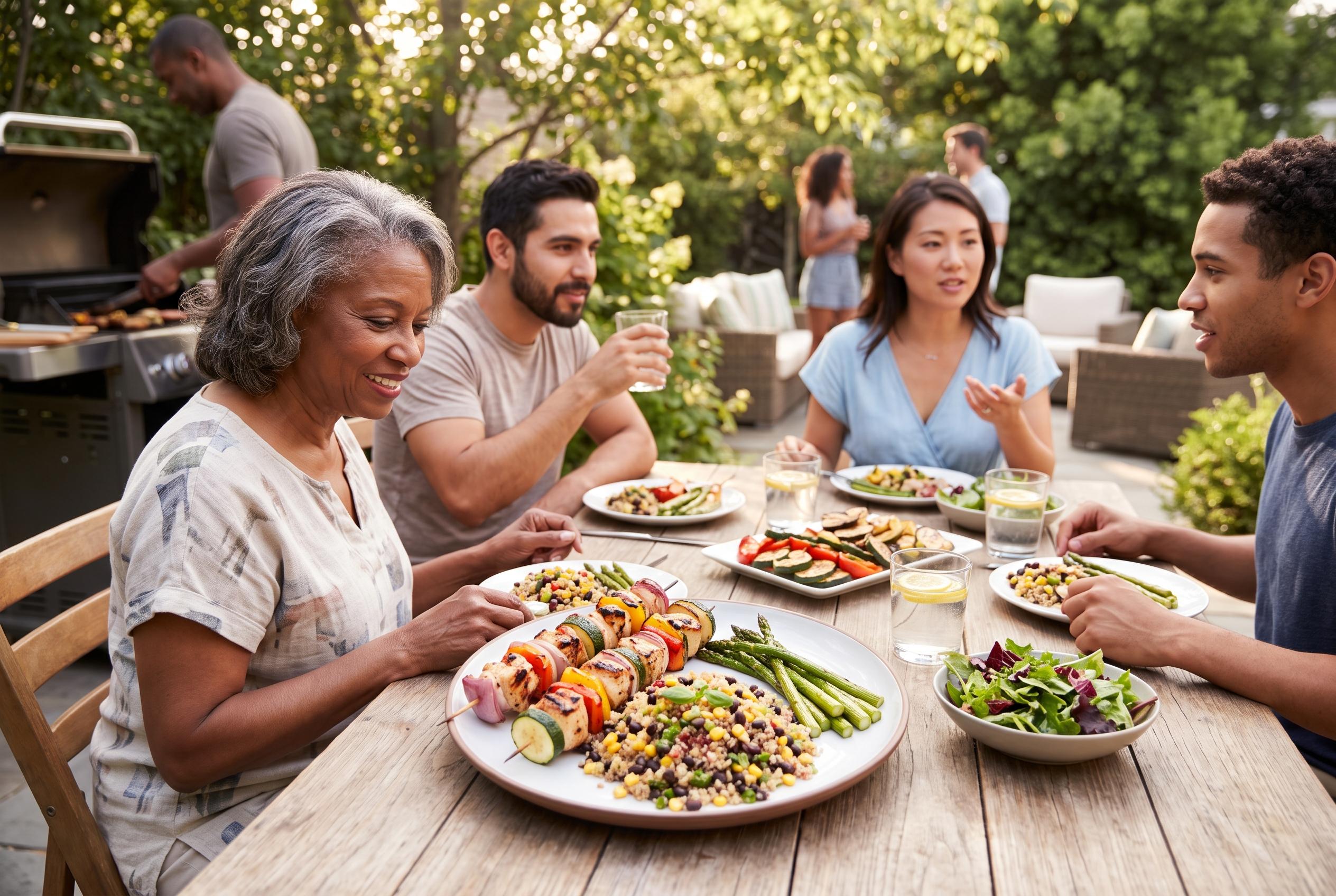

Guidance from health agencies emphasises balance, portion control, and smart food choices to enable people living with diabetes to enjoy seasonal gatherings safely and deliciously.
Summer cookouts can be a source of pleasure and pressure in equal measure for people living with diabetes. The usual spread of ribs, potato salad, baked beans, macaroni cheese, sweet drinks and dessert can make it feel as if every plateful is a calculation. But the bigger issue is often not one dish on its own, it is the combination of carbohydrate-heavy foods piled together. That is why the most useful approach is usually balance rather than avoidance.
The American Diabetes Association says carbohydrates have the biggest effect on blood glucose because they are broken down into glucose during digestion. In practice, that means a burger on a bun, potato salad, baked beans, corn and sweet tea can add up quickly when they are all eaten together. The ADA advises people to think about total carbohydrate intake rather than treating individual foods as automatically off-limits, which makes portion control and meal planning more useful than rigid rules.
Starting with protein can help set the tone for the rest of the plate. Grilled chicken, fish, turkey burgers, beef burgers, ribs and kebabs with meat and vegetables are all common cookout choices, and protein can slow digestion when it is eaten alongside carbohydrates. Diabetes educators often recommend building meals around protein and fibre, since that combination can help support steadier blood sugar and keep people fuller for longer. The CDC also notes that grilled, baked, steamed or broiled foods are generally better choices when eating out.
The sides do not have to disappear completely. Instead of loading the plate with every carb-heavy dish on offer, it is usually smarter to choose one or two favourites and keep the servings modest. A small scoop of potato salad or macaroni cheese, for example, can still fit into a balanced plate when paired with protein and vegetables. The CDC recommends that people attending buffet-style meals survey the table first, choose foods that align with their goals and focus on smaller portions of rich or sugary items.
Drinks deserve particular attention because liquid sugar can drive blood glucose up quickly. Sweet tea, lemonade, fruit punch and regular soda are common at summer gatherings, but water, sparkling water and unsweetened tea are easier choices. If watermelon or dessert is part of the occasion, there is no need to treat them as forbidden. A moderate serving of fruit or a small portion of peach cobbler can work as long as the rest of the meal is planned with some care. The CDC and other diabetes education resources stress that portion size matters just as much as food choice.
Perhaps the most practical advice is not to arrive hungry enough to lose perspective. Eating a small protein-rich snack beforehand, such as nuts, Greek yoghurt or cheese, can make it easier to avoid overeating once the food is served. Abbott and other diabetes-focused guidance also recommend planning ahead, watching sauces and creamy sides, and choosing lighter options where possible. In the end, the cookout is about more than the plate. For people managing diabetes, the aim is to enjoy the food, the company and the season without feeling deprived.
Disclaimer: This content is for informational purposes only and is not intended to be a substitute for professional medical judgment, advice, diagnosis, or treatment.