

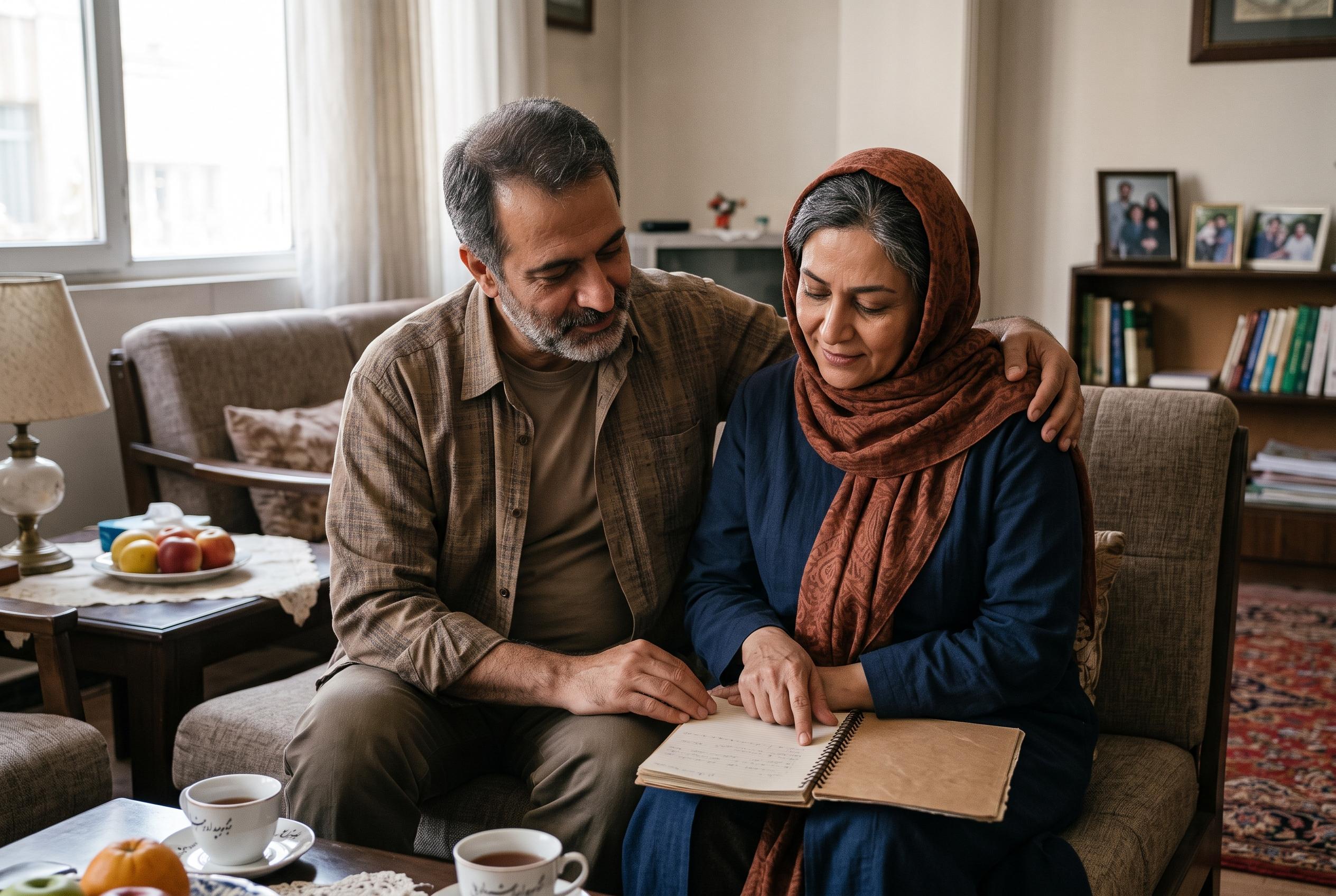

A comprehensive three-year Iranian study reveals that strong family and significant other support can influence the progression of pre-diabetes to diabetes, suggesting social support plays a pivotal role in diabetes management and prevention.
A three-year study of 1,458 Iranian adults has found that the kind of support people feel they can rely on may matter to whether raised blood sugar worsens. Writing in Scientific Reports on 6 September 2026, researchers reported that greater support from a “significant other” was linked to lower odds that pre-diabetes would progress to diabetes, while in men stronger family support was associated with a smaller chance of moving from normal glucose levels into an abnormal range. Intervention and qualitative research from Iran has already suggested that family-backed diabetes care can change behaviour and glucose measures, giving the new observational findings practical weight. (nature.com)
The paper also suggests that social support is not a simple proxy for good metabolic health. Over follow-up, the share of participants with normal glycaemic status fell in both sexes, by 8.72% in men and 5.72% in women, even though perceived support scores rose overall. Family remained the strongest source of support for both sexes and friends the weakest. That pattern fits later Tehran research in adults with type 2 diabetes showing that total support can remain broadly steady even when individual subscales move in different directions. (nature.com)
Earlier work from the same Tehran research setting had already pointed to a wider health effect. A 2018 analysis of 1,036 adults in the Tehran Lipid and Glucose Study, using the same Iranian version of the Multidimensional Scale of Perceived Social Support, found that higher perceived support tracked with better physical and mental health-related quality of life in both men and women. The study reported few sex differences in support scores apart from the family subscale, yet men still recorded higher quality-of-life scores across every domain. Being married was associated with stronger perceived support in both sexes, and younger age was linked to higher support in men. (pubmed.ncbi.nlm.nih.gov)
A 2025 follow-up focused on 321 Tehran adults with type 2 diabetes added a post-pandemic twist. Support totals did not significantly change before and three to four months after COVID-19 reached Iran, but the composition shifted: women reported more family support afterwards, both sexes more support from significant others, and women less support from friends. At the same time, mean mental quality-of-life scores dropped to 44.2 from 49.7, while physical scores rose to 48.5 from 45.7, with women showing the clearest physical improvement. The authors argued that family-centred support may have cushioned some practical burdens even as mental strain worsened. (link.springer.com)
If that sounds abstract, intervention studies give a sense of what “more support” can look like on the ground. In a 2022 BMC Public Health study of 106 Iranian adults with type 2 diabetes, a social cognitive theory-based programme combined six group sessions lasting 60 to 80 minutes with two or three monthly home visits. Three months later, the intervention group’s mean support score had climbed to 28.86 from 15.62, while HbA1c fell to 6.28 from 8.29 and fasting blood sugar dropped to 127.96 from 193.64. Quality-of-life scores also rose to 57.40 from 40.50. That study cannot prove why outcomes improved, but it shows support can be built deliberately rather than treated as a fixed background trait. (link.springer.com)
The Iranian context helps explain why family emerged so strongly in the new paper. A 2020 meta-synthesis in BMC Health Services Research, which reviewed 12 qualitative studies under PRISMA methods, concluded that diabetes care barriers in Iran stretch from leadership and service delivery to workforce, financing, and information gaps. An earlier qualitative study based on in-depth interviews with 15 Iranian patients found that adaptation to type 2 diabetes was helped by relatives, good communication with doctors, access to sport and leisure facilities, and clear, consistent information from media and health staff. The authors of that interview study cautioned against broad generalisation, but its themes make the latest findings less surprising. (pubmed.ncbi.nlm.nih.gov)
Similar signals have been reported outside Iran, especially where diabetes management collides with economic strain. News-Medical’s report on a 2020 Touro University California study said perceived support rose as diabetes-related distress fell among 101 patients aged 40 to 80 at Solano County Family Health Services Clinics in Vallejo and Fairfield; nearly three quarters had annual incomes below $20,000. Clipper Young, an associate professor and clinical pharmacist at Touro University California College of Osteopathic Medicine, said: “Strong social support supplements effective diabetes self-management behaviors”. He argued that clinicians should ask about support networks as well as prescriptions and blood sugar. (news-medical.net)
The new Scientific Reports paper does not show that support itself prevents diabetes, and the version published on 6 September 2026 is an early, citable manuscript that Nature says will still undergo final copy-editing. Even so, taken alongside Tehran quality-of-life studies, home-visit intervention data and patients’ own accounts, it strengthens the case for matching diabetes prevention and care to the kind of support people actually have – from household help and partner support to clearer contact with health services. In practice, that means social support is looking less like a soft add-on and more like part of diabetes management infrastructure. (nature.com)
Disclaimer: This content is for informational purposes only and is not intended to be a substitute for professional medical judgment, advice, diagnosis, or treatment.



