

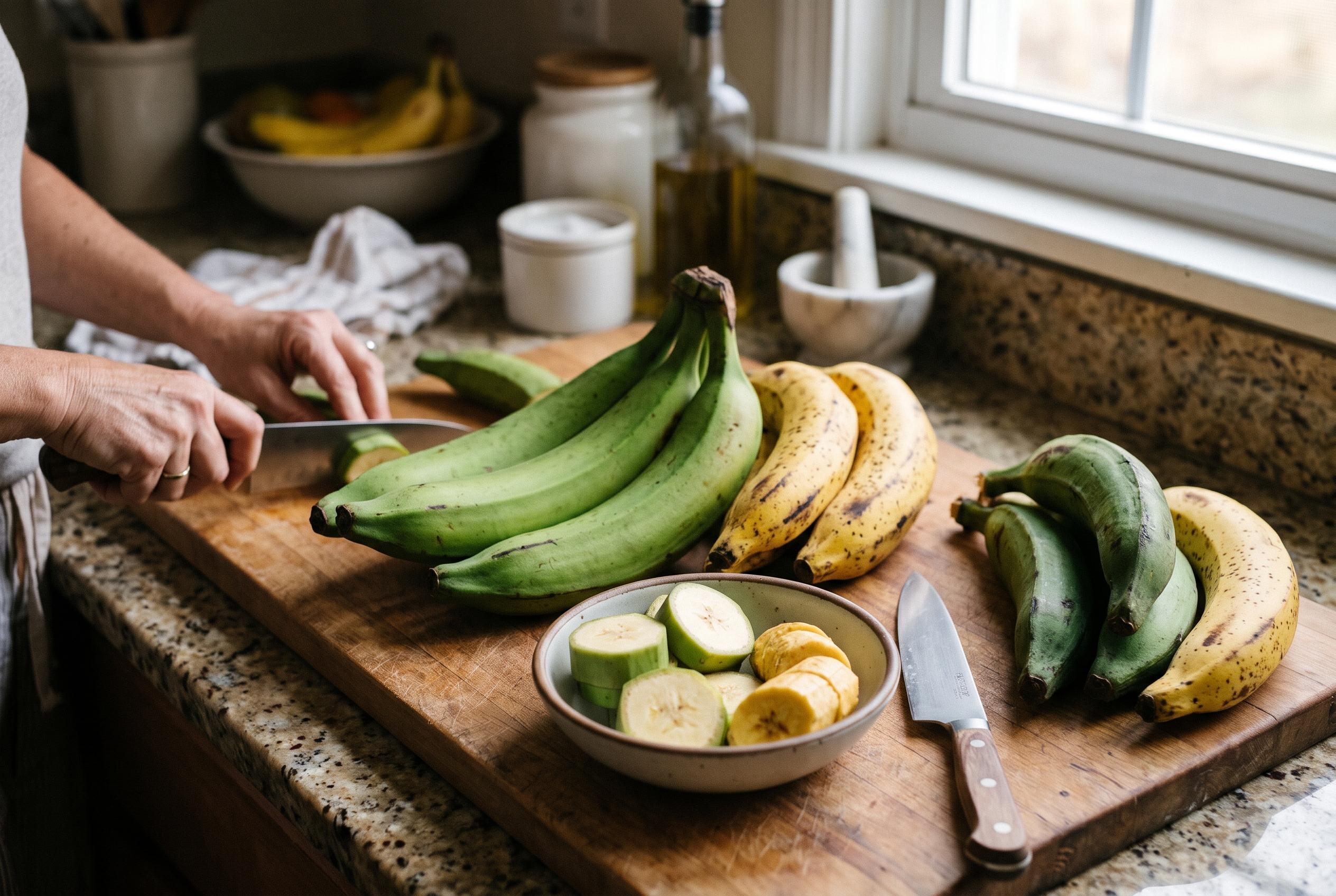

As plantains ripen, resistant starch gives way to more readily absorbed sugars, potentially causing a faster and higher glucose rise.
A ripe plantain may look like the same food as a green one, but its effect on the body can be very different. According to El Diario, nutrition specialist Leonardo de León argues that the fruit changes character as it ripens, with the mature version sending blood sugar higher and faster than its unripe counterpart. He says the green plantain is better suited to a balanced meal, particularly when paired with protein.
The distinction matters because the starch inside the fruit changes as heat and ripening do their work. Health sites including Bioguia and El Independiente say green plantains are valued for resistant starch, a type of carbohydrate that behaves more like fibre and can support gut bacteria, digestion and steadier glucose levels. In contrast, a ripe plantain contains more readily absorbed sugars, which is why it tends to produce a sharper blood sugar response.
That is also the message behind a study published in Diabetic Medicine and indexed on PubMed, which El Diario cited in its report. Researchers found that, in people with type 2 diabetes, a serving of ripe plantain could trigger a quicker and higher glucose rise than a similar portion of green plantain, even when the carbohydrate content was comparable. The findings reinforce the idea that ripeness can be as important as portion size for anyone trying to manage blood sugar.
De León also draws a line between cooking methods. He says frying can intensify the sugar load while adding extra fat, whereas other methods may be less disruptive, although he still warns that overcooking can alter the plantain’s structure. Other nutrition writers have made a more moderate case for green plantains, describing them as a useful everyday food rather than a miracle ingredient. However they are prepared, the practical lesson is the same: a plantain is not just a plantain once it ripens, and people watching their glucose levels may want to treat the green and yellow versions as two different foods.
Disclaimer: This content is for informational purposes only and is not intended to be a substitute for professional medical judgment, advice, diagnosis, or treatment.



