

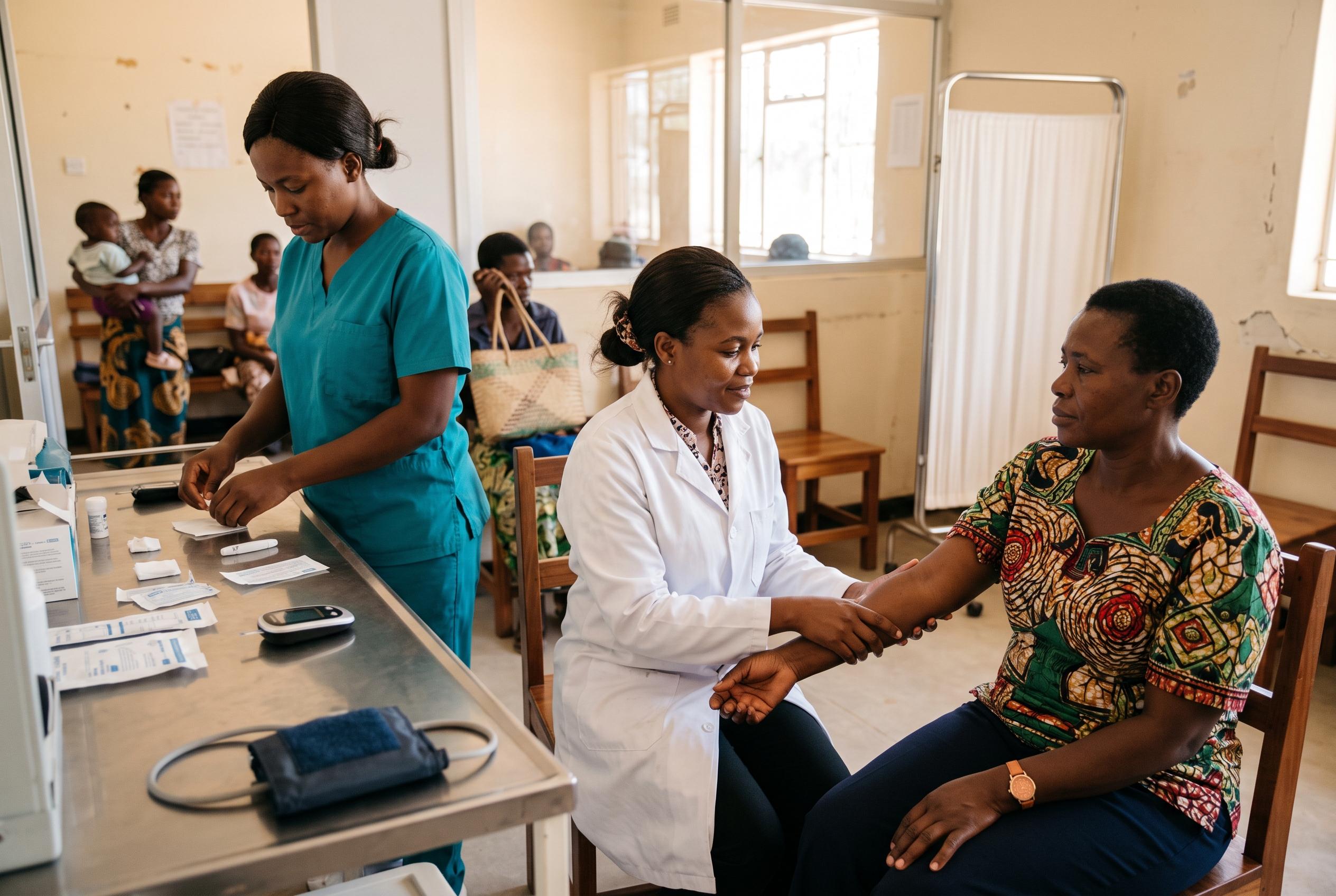

A pioneering study from Lusaka, Zambia, uncovers how metabolic and clinical factors interplay to influence early vascular complications in type 2 diabetes, highlighting urgent diagnostic and treatment challenges in low- and middle-income countries.
Type 2 diabetes is placing a growing strain on health systems across low- and middle-income countries, where more than three-quarters of adults with the condition now live. A study from the University Teaching Hospital in Lusaka, Zambia, examines how metabolic and clinical factors shape the later development of vascular complications in patients with type 2 diabetes, aiming to generate locally relevant risk estimates for a setting where evidence has been limited.
The wider burden is substantial. A systematic review and meta-analysis in PLOS Global Public Health found that, among newly diagnosed patients in low- and middle-income countries, 12% already had retinopathy, 15% nephropathy and 16% neuropathy, while 10% had ischaemic heart disease, 6% peripheral arterial disease and 2% stroke. Research at the University Teaching Hospital in Lusaka has also described increasing numbers of adults facing difficulties in getting diagnosis and treatment, underlining the pressure on Zambia’s diabetes services. Global data from the DISCOVER programme similarly show that vascular complications are common early in the course of type 2 diabetes, with a median diabetes duration of 4.1 years and a median HbA1c level of 8.0%, a marker of poor glucose control.
Against that backdrop, the Zambian study set out to estimate the incidence of vascular complications, identify the metabolic and clinical factors linked to their onset, and test whether some predictors modified the effect of others. The authors say they used a time-to-event approach, which tracks how long it takes for an outcome to occur rather than simply whether it happens or not. They also say the analysis was built on a formally justified sample size, with 315 patients selected to support more reliable estimates and reduce the risk of overfitting, a problem that can make prediction models appear more accurate than they really are.
The emphasis on interaction effects is important because diabetes complications are rarely driven by one factor alone. Poor glucose control, hypertension, dyslipidaemia, obesity, age, sex and the length of time a person has had diabetes can all shape risk, but their relative importance may differ across populations. Earlier work from Zambia has largely focused on prevalence and glycaemic control, while studies in other African settings have shown that the timing of macrovascular complications can vary according to patient characteristics. By focusing on routine clinical data from Lusaka, the new research is intended to support earlier detection, more targeted treatment and better-informed public health planning in a country where diabetes care remains under pressure.
Disclaimer: This content is for informational purposes only and is not intended to be a substitute for professional medical judgment, advice, diagnosis, or treatment.



