

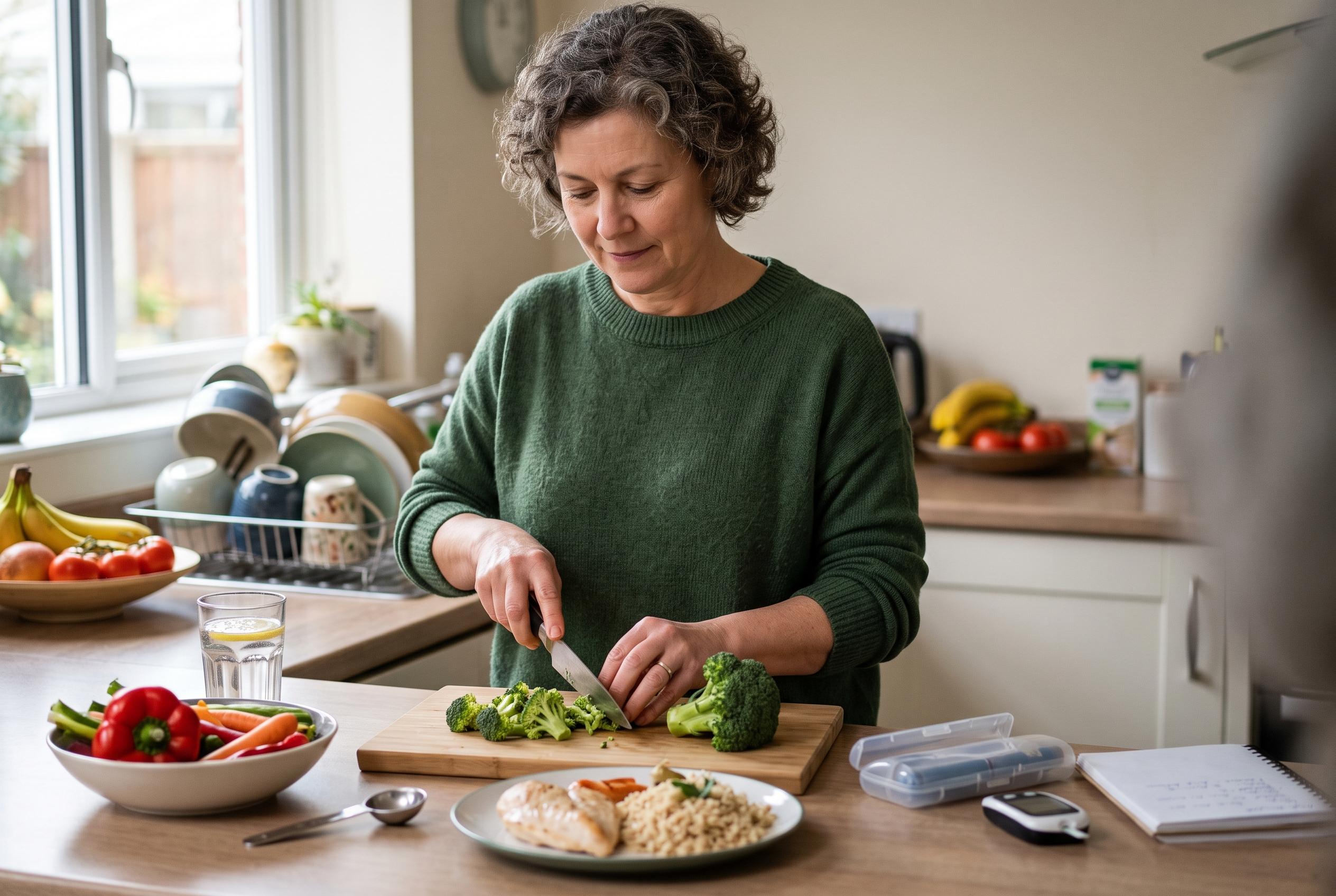

Current clinical guidance emphasises balanced routines, mindful portion control, and gradual weight loss over extreme dieting to manage prediabetes and lower HbA1c levels effectively and sustainably.
For people trying to bring down glycated haemoglobin, or HbA1c, the clearest message from current clinical guidance is that the safest gains usually come from steady routines, not crash dieting. Official US health advice and specialist dietitians describe prediabetes as a stage that can often be improved, and sometimes reversed, through changes that are practical enough to keep up: regular meals, better portion control, more movement and gradual weight loss rather than cutting out whole food groups. (health.harvard.edu)
That matters because HbA1c is not a score that should simply be pushed as low as possible at any cost. Nebraska Medicine says the test reflects average blood sugar over the previous three months, and its endocrinologist Gunjan Arora notes that there is no single target that suits everyone. For most adults with diabetes, the American Diabetes Association goal is below 7% if that can be achieved safely, but age, other illnesses and the risk of hypoglycaemia all affect what is sensible. Nebraska Medicine adds that some people may get to about 6% through diet and lifestyle alone, while trying to drive levels below 6% with medicines is usually not advised because of the danger of low blood sugar. (nebraskamed.com)
The most concrete food advice is less dramatic than many social-media fixes suggest. The US Centers for Disease Control and Prevention recommends planning meals around a 9-inch plate, with half filled by non-starchy vegetables, one quarter by lean protein and one quarter by carbohydrate foods. It also advises eating broadly similar amounts of carbohydrate at each meal, choosing water or another low-calorie drink, and paying attention to portions, especially when eating out. The CDC notes that fruit juice raises blood sugar faster than whole fruit, while protein, fat and fibre can slow the rise when carbohydrates are eaten as part of a balanced meal. Harvard Health echoes that structured approach, arguing that what matters is a pattern a person can stick to rather than a short burst of restriction. (cdc.gov)
Several sources stress that there is no single “prediabetes diet”. Harvard Health says Mediterranean, DASH, plant-based and lower-carbohydrate approaches can all be adapted successfully, provided they are built around healthier eating habits and realistic portions. Mayo Clinic makes the same point in broader diabetes guidance, describing a diabetes diet as a healthy eating plan rather than a special regime, and recommending regular mealtimes so the body can better use insulin. Johns Hopkins Medicine likewise warns against fad diets, urging a balanced, sustained approach and highlighting the Mediterranean diet for its mix of whole grains, lean protein and healthier fats. (mayoclinic.org)
Weight and activity are central to the longer-term picture. Harvard Health says lifestyle changes and more activity are the first-line response to prediabetes, and reports that losing around 7% of body weight may be enough to lower the risk of progressing to diabetes. Johns Hopkins gives a similar target of 5% to 7% weight loss, adds that 5% to 10% loss can significantly lower A1c, and recommends at least 150 minutes a week of moderate-to-vigorous exercise or roughly 10,000 steps a day. It also points to another often neglected factor: seven to eight hours of sleep, because sleep deprivation can increase cravings for sugary foods. (health.harvard.edu)
Food quality matters as much as the raw carbohydrate total. Mayo Clinic recommends choosing healthier carbohydrates, fibre-rich foods, legumes, nuts, whole fruits and low-fat dairy, and says weight loss can make blood sugar easier to manage for many people with type 2 diabetes while also improving other aspects of health. It also distinguishes between fat types, noting that monounsaturated and polyunsaturated fats from foods such as avocados, nuts and olive oil can help improve cholesterol, though all fats remain calorie-dense. Johns Hopkins similarly advises cutting back on added sugars and saturated fats and choosing high-fibre foods, while the CDC stresses fewer refined grains and more whole foods. The common thread is moderation and substitution, not deprivation. (cdc.gov)
The American Heart Association adds an important wider warning: eating for blood sugar control is also eating for the heart. Its guidance says people with type 2 diabetes often need to think about heart disease and stroke risk at the same time, but it also argues that healthier eating does not have to be costly. Among its lower-cost suggestions are frozen or canned fruit and vegetables without added sugar or salt, more plant proteins such as beans and lentils, fewer takeaways and more meals cooked at home. For everyday snacks, it suggests options such as a small apple with peanut butter, unsalted nuts, or raw vegetables with hummus or cottage cheese. (heart.org)
What all of this adds up to is a more nuanced message than simply “lower your sugar naturally”. Professional support matters: the CDC recommends diabetes self-management education, while Mayo Clinic, Johns Hopkins and the American Heart Association all point readers towards a registered dietitian for an eating plan that fits medicines, budget, lifestyle and other health risks. Harvard Health says HbA1c can be used to track whether changes are working over time, and notes that repeat checks may be needed sooner for some people depending on their risk. In practice, the safest route is not a punishing menu, but a repeatable one. (cdc.gov)
Disclaimer: This content is for informational purposes only and is not intended to be a substitute for professional medical judgment, advice, diagnosis, or treatment.