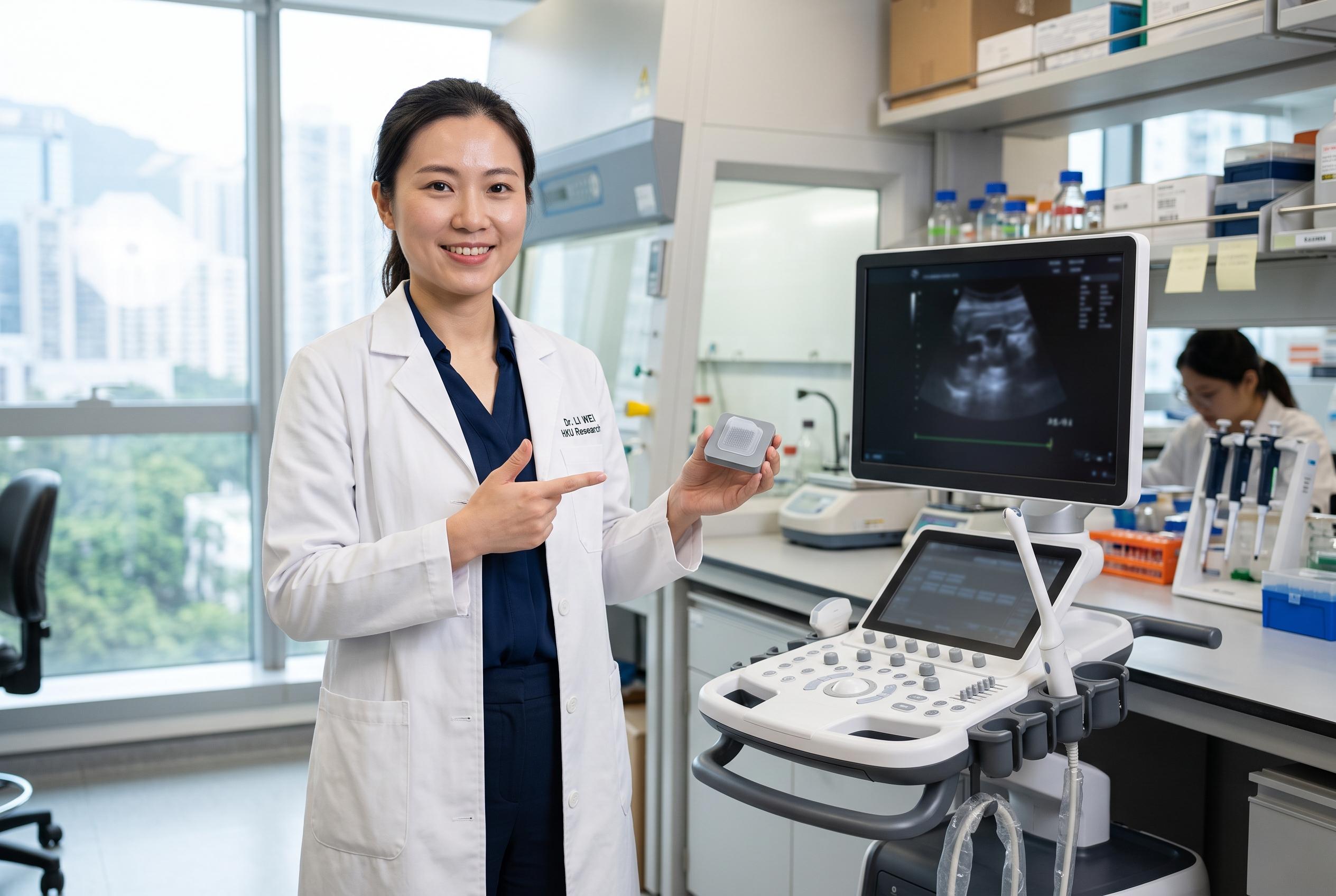

A team in Hong Kong has developed a microneedle patch that uses ultrasound to track blood glucose levels, offering a low-cost, enzyme-free alternative to traditional sensors with potential applications for broader health monitoring.
Researchers in Hong Kong say they have developed a wearable microneedle patch that could make continuous glucose monitoring easier, cheaper and less dependent on disposable enzyme sensors.
The device, called ARMPatch, was created by a team at The Hong Kong Polytechnic University working with collaborators at the Shenzhen Institutes of Advanced Technology and the Korea Advanced Institute of Science and Technology. In a paper published in Science Advances, the researchers describe a glucose-responsive hydrogel patch that sits on the skin and can be read by a standard ultrasound probe, allowing blood sugar changes to be tracked without the need for custom hardware.
Unlike many commercial continuous glucose monitoring systems, which rely on biological enzymes and need regular replacement, the new patch uses microneedles made from phenylboronic acid-based hydrogel. As glucose levels rise and fall, the microneedles swell and contract. Ultrasound measures those changes and converts them into glucose readings. According to the paper and the university’s account of the work, the system showed a linear response across glucose concentrations from 0 to 40 millimoles and remained stable for up to 56 days in laboratory testing.
The researchers also reported encouraging animal results. In tests on freely moving nude mice, the patch tracked blood glucose continuously for 7 days, stayed attached during movement and left no visible inflammation or scarring after removal. The response time measured in laboratory experiments was about 30 to 60 minutes, and the signal remained selective enough to distinguish glucose changes reliably.
The team said the appeal of the design is that it can work with ultrasound systems already in use at home or in clinics, potentially avoiding the cost and complexity of dedicated monitoring hardware. They also believe the same platform could be adapted to track other biomarkers, including pH, proteins and bacteria, opening the door to broader home-health applications if further development and human testing prove successful.
Disclaimer: This content is for informational purposes only and is not intended to be a substitute for professional medical judgment, advice, diagnosis, or treatment.