

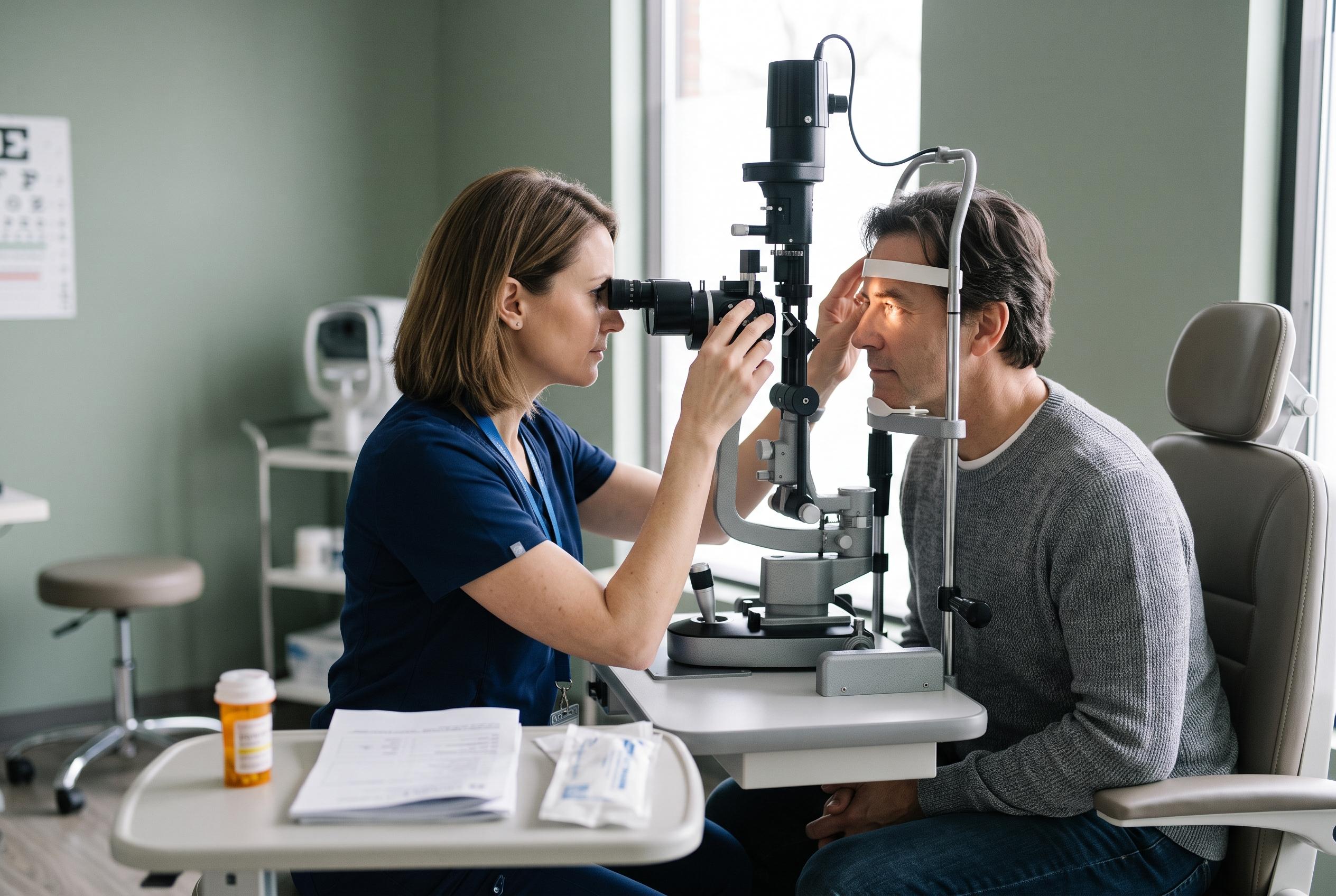

While recent studies suggest a potential link between GLP-1 receptor agonists and rare optic nerve damage, eye specialists emphasise that the overall risk remains extremely low and current treatment guidelines favour continued use with vigilance.
Evidence from recent studies suggests that glucagon-like peptide-1 receptor agonists, or GLP-1 drugs, may carry a small association with a rare form of optic nerve damage, but eye specialists say the chance of serious harm remains extremely low. At the Academy 2026 meeting in Anaheim, California, Leonard V. Messner, an optometrist and professor at the Illinois College of Optometry, said the data do not support stopping treatment over fear of nonarteritic anterior ischaemic optic neuropathy, or NAION, and argued that patients and clinicians should respond to evidence rather than alarm. The overall message from the meeting was clear: vigilance matters, but panic does not.
Messner pointed to two recent analyses that have added to the discussion. One retrospective study of more than 16,000 patients with type 2 diabetes, overweight or obesity found semaglutide users had a markedly higher relative risk of NAION, particularly among those taking the drug for weight loss. A separate analysis drawing on 14 databases and more than 37 million patients found only a modest increase in risk, and the authors said that signal was smaller than earlier reports. Messner said the difference may reflect how the studies were designed, with one focused on patients seen at a tertiary eye centre and the other based on a far broader population.
That broader context is important. A systematic review and meta-analysis published in Neurology also found that semaglutide was associated with a higher risk of NAION, especially in people with diabetes, yet it stressed that the absolute number of cases remained very low. A separate study in Diabetes, Obesity and Metabolism reported that semaglutide appeared to carry a higher risk than other GLP-1 drugs, but again concluded that the overall risk was low. A nationwide cohort study in the Annals of Internal Medicine reached a similar conclusion, finding a higher risk of anterior ischaemic optic neuropathy, a category that includes NAION, compared with SGLT-2 inhibitors, while still describing the absolute risk as too small to justify stopping GLP-1 treatment.
The concern has also reached regulators and litigants. Reuters reported that Novo Nordisk updated labels in Europe for Wegovy and Ozempic after the European Medicines Agency’s safety committee reviewed the NAION signal, and lawsuits have been filed in the United States against Novo Nordisk and Eli Lilly over similar claims. Even so, the American Optometric Association says the condition remains rare and advises patients to seek immediate eye care if they notice sudden, significant vision loss. A consensus statement from the North American Neuro-Ophthalmology Society and the American Academy of Ophthalmology similarly says the possible risk is small and recommends monitoring for visual symptoms rather than routine discontinuation of the drugs.
For patients who already have a history of NAION, Messner said the decision becomes more individualised and should weigh the benefits of treatment against any personal risk factors. He also said there is no evidence at present to recommend stopping GLP-1 drugs solely because a patient has crowded optic nerves, a structural feature that can raise susceptibility to optic nerve problems. For now, the emerging expert view is that GLP-1 medicines should be used with awareness, not fear.
Disclaimer: This content is for informational purposes only and is not intended to be a substitute for professional medical judgment, advice, diagnosis, or treatment.



