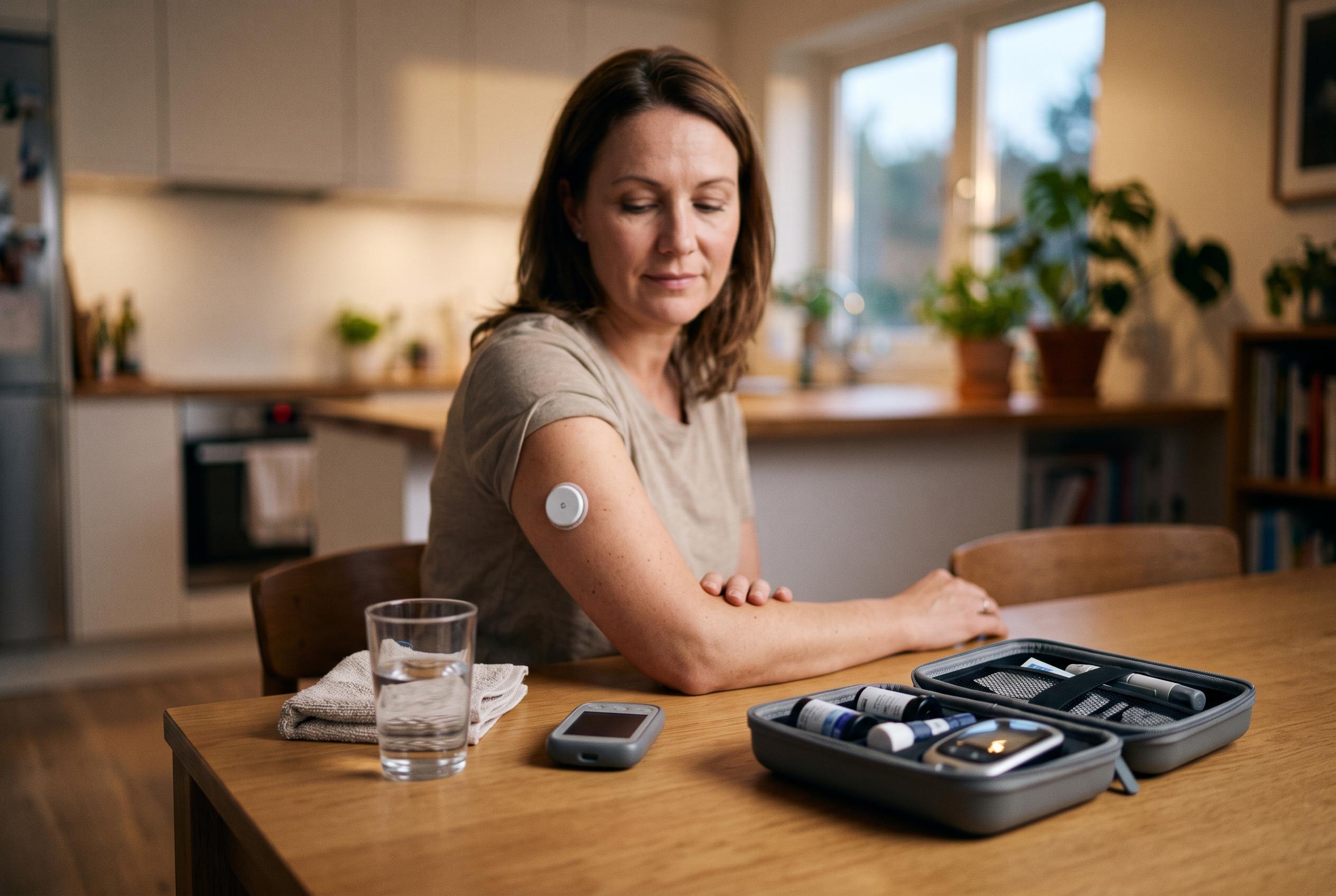

Abbott’s latest FDA-approved wearable introduces continuous real-time monitoring of both glucose and ketones, potentially transforming diabetes management and early detection of ketoacidosis.
Victoria Song’s memory of a teenage hospital dash is not just an anecdote about a foolish diet. It is a reminder of how quickly diabetic ketoacidosis can turn dangerous. The condition develops when the body does not have enough insulin, forcing it to burn fat and produce ketones, which can build up to toxic levels and make the blood dangerously acidic. The Mayo Clinic says symptoms can arrive quickly and may include vomiting, stomach pain, weakness, shortness of breath, fruity breath and confusion.
That personal history makes Abbott’s latest diabetes device more than another wearables launch. The US Food and Drug Administration has authorised the Libre Duo 10 Day Continuous Dual Glucose Ketone Monitoring System, which Abbott says is the first wearable in the country to continuously monitor both glucose and ketones. The sensor is intended for people aged two and older living with diabetes, and it is designed to give real-time alerts before diabetic ketoacidosis becomes a medical emergency.
Abbott says the sensor measures beta-hydroxybutyrate, a key ketone, and works through the same app and smartwatch ecosystem used by its existing glucose monitors. The company also says caregivers can track readings remotely, which could matter for children and for families managing diabetes at home. Dr David Ahn of Hoag Hospital told The Verge that ketone monitoring is already part of diabetes education for many children, but it is not routinely prescribed for most adults.
Ahn said the device may be especially useful for insulin pump users, whose insulin supply can be interrupted by leaks or connectivity problems, and for patients taking SGLT2 inhibitors, a class of drugs that can lower blood sugar while masking the warning sign of high glucose in diabetic ketoacidosis. That is one reason regulators have been cautious about wider use of those medicines in type 1 diabetes, even though they can improve glucose control.
Still, the technology is likely to create its own problems. Continuous glucose monitors have already shown that more data does not always mean more clarity: users often complain about false alarms, confusing readings and alert fatigue. Ahn told The Verge that ketone data may be even harder to interpret, especially because a recent expert consensus used 3 mmol/L as a practical cutoff but treated it as a best guess rather than a settled rule. Illness, fasting, pregnancy and heavy exercise can all raise ketones without meaning a patient is in diabetic ketoacidosis.
That uncertainty is why the Libre Duo may become as much a test of behaviour as of engineering. It could help doctors and families spot trouble earlier, but it could also normalise a flood of new health data that most people do not need every day. For Song, whose own brush with ketoacidosis came from a reckless diet rather than diabetes, the device is a reminder that wearables can be useful without being universally necessary. The question, as ever, is not just what a sensor can measure, but whether those measurements will actually help the person wearing it.
Disclaimer: This content is for informational purposes only and is not intended to be a substitute for professional medical judgment, advice, diagnosis, or treatment.