

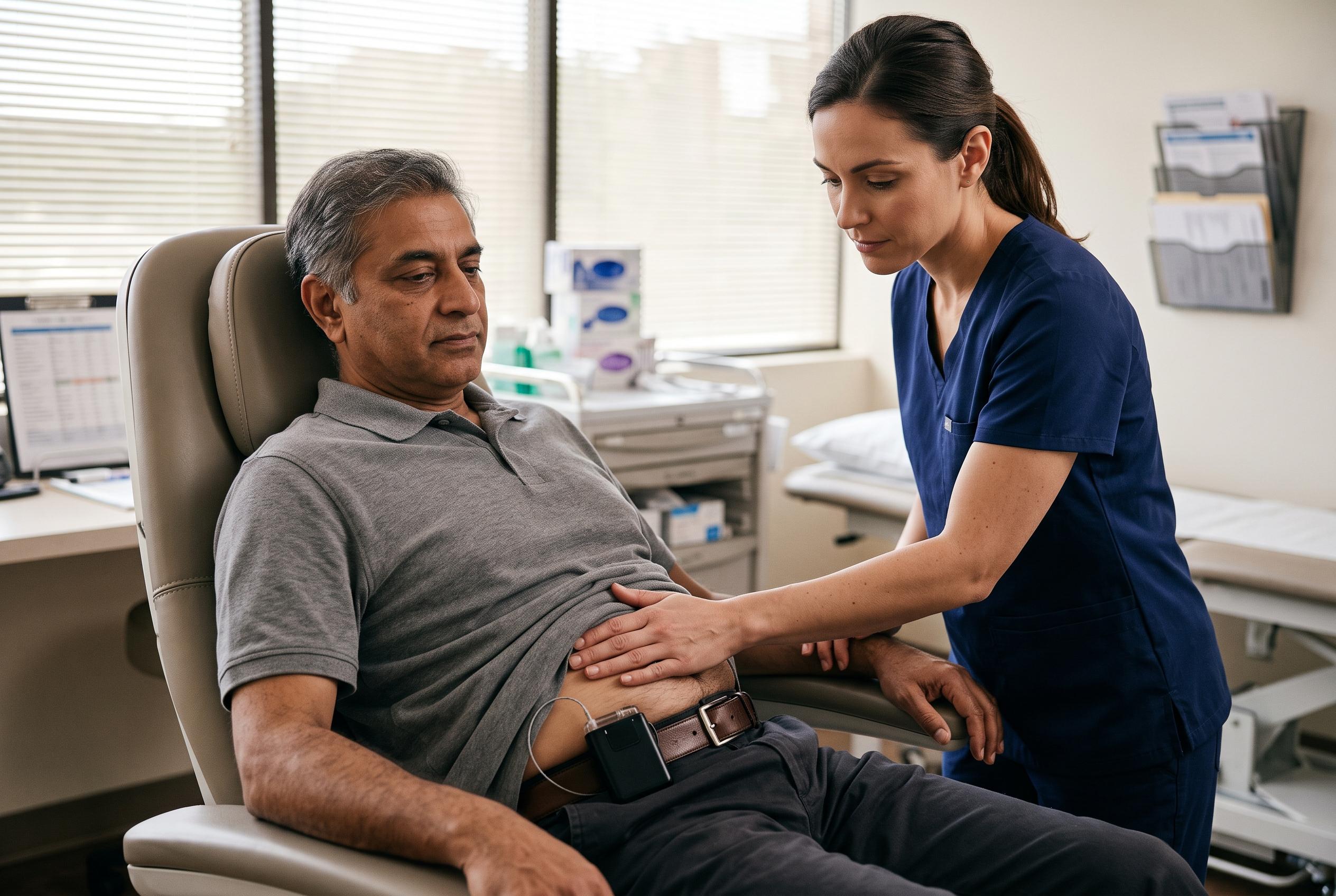

Recent research reveals that spinal cord stimulation can significantly reduce pain and improve sensory function in adults with diabetic neuropathy unresponsive to standard treatments, potentially transforming care for a severe complication of diabetes.
Spinal cord stimulation may offer meaningful relief for people with painful diabetic neuropathy, according to research published in Diabetes Care and reported by Wake Forest University School of Medicine.
In the study, 91 adults with diabetes and nerve pain that had not responded well to standard treatment were enrolled at 13 hospitals across the United States. Half were assigned to receive a spinal cord implant, a device that delivers electrical pulses through thin wires placed near the spinal cord and a pulse generator implanted under the skin. Researchers followed participants for six months to assess pain, sleep, quality of life and sensory function.
The results were striking. Nearly 80% of patients who received stimulation had at least a 50% reduction in lower-limb pain, compared with 4% in the usual-care group. Among those who went on to receive a permanent implant, 93% achieved that level of pain relief after six months. More than half also showed meaningful gains in their ability to sense touch, temperature, vibration and body position, while 25% of those given standard treatment improved on those measures.
The findings are notable because diabetic neuropathy can progress beyond pain to numbness, balance problems, foot ulcers and, in severe cases, amputation risk. Robert Hurley, the study’s lead researcher, said in Wake Forest’s news release that many patients continue to struggle despite medication and other therapies. He added that the sensory gains and improvements in nerve fibre density were especially encouraging, because they hint that the treatment may be doing more than simply masking pain.
The study also found an average 56% increase in nerve fibre density in lower-calf skin biopsies among patients who received stimulation, with no comparable change in the control group. That adds to a growing evidence base for spinal cord stimulation in painful diabetic neuropathy. Recent meta-analyses indexed on PubMed have also concluded that the treatment can significantly improve pain and quality of life, while earlier multicentre research reported high rates of relief with 10 kHz stimulation in patients with refractory disease. Researchers said participants will be followed for up to a year to see whether the benefits last and to better understand how the therapy works.
Disclaimer: This content is for informational purposes only and is not intended to be a substitute for professional medical judgment, advice, diagnosis, or treatment.



