

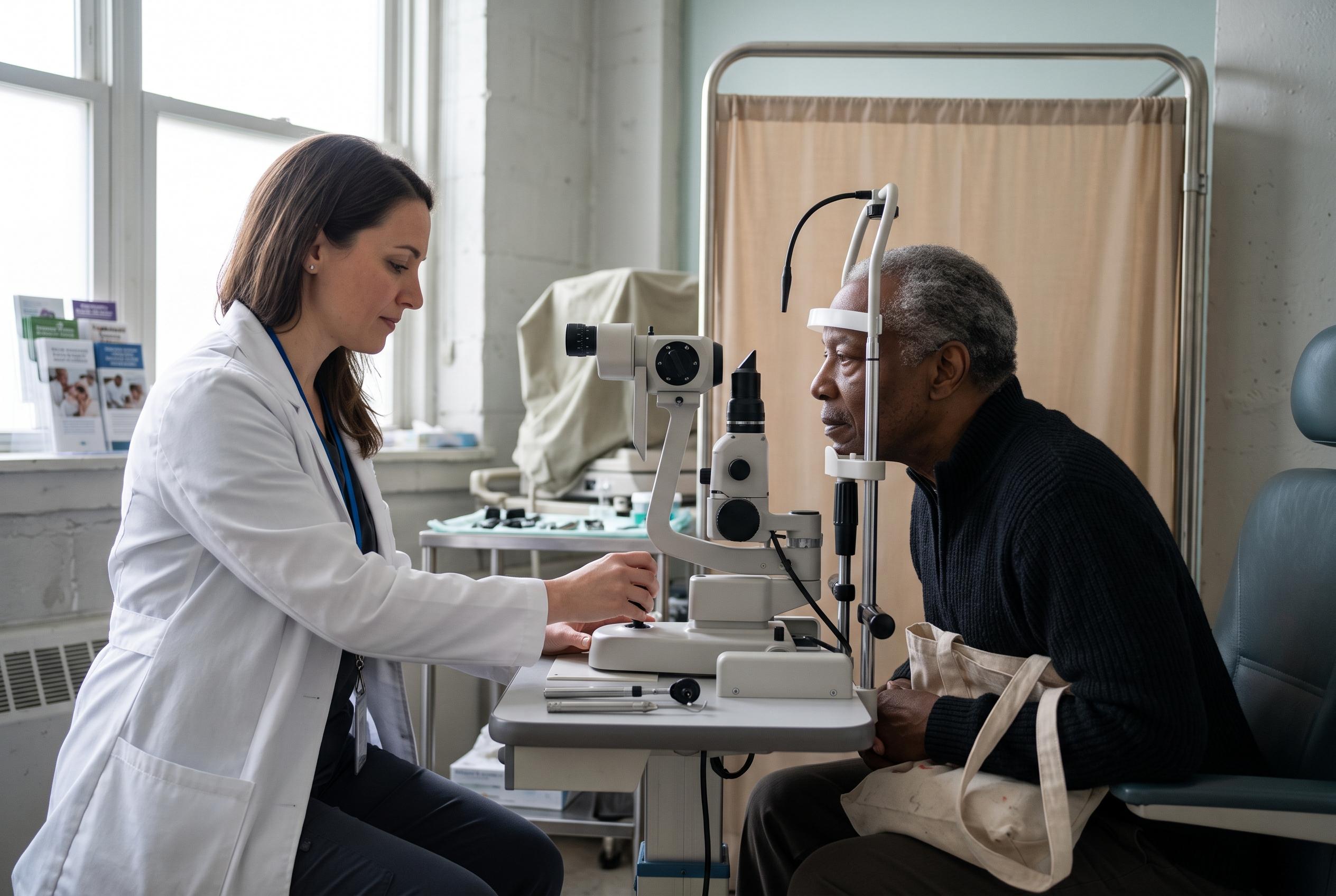

A study from Zuckerberg San Francisco General Hospital reveals that housing insecurity, age, smoking history and insurance status significantly influence the severity of diabetic retinopathy at initial diagnosis, highlighting the need for earlier social barrier identification in eye care.
A new analysis from Zuckerberg San Francisco General Hospital suggests that social factors, not just medical ones, shape how advanced diabetic retinopathy is when patients first reach eye care. In the study, published by Dove Press, researchers reviewed electronic health records for 2,044 patients and found that housing insecurity, age, smoking history and insurance status were linked to worse outcomes at the time of diagnosis. The findings add to broader evidence that social determinants of health can influence whether diabetic eye disease is caught early enough to prevent vision loss.
Diabetic retinopathy remains a major cause of blindness among working-age adults in the United States, and the National Eye Institute has said people in rural areas and Hispanic and Black patients with existing diabetic retinopathy are less likely to receive annual eye exams than white patients. Separate work in JAMA Ophthalmology has also linked race, income, education and insurance coverage to lower adherence to screening guidance. The San Francisco study extends that concern by looking not at screening alone, but at how severe disease is when patients finally arrive for care.
Among the patients analysed, 13.7% had proliferative diabetic retinopathy, the most advanced stage, at their first presentation, and 24.3% had visual impairment or blindness. The average patient was 55.8 years old, just over half were male, and many were publicly insured: 41.6% had Medicaid, 30.4% had Medicare and 18.4% were uninsured. The researchers also reported that 20.8% of patients had housing or economic problems, underscoring the level of social need in the safety-net population studied.
In adjusted analyses, housing or economic insecurity was associated with a 35% higher risk of presenting with proliferative disease. Each additional 10 years of age was linked with a 26% lower risk of severe retinopathy at first diagnosis, while former smokers also faced higher risk. Patients described as other race or ethnicity, a category that included American Indian or Alaska Native patients and those not otherwise specified, had a higher risk than non-Hispanic Asian patients. For vision, older age, Cantonese language preference, Medicaid or Medicare coverage and hypertension were all associated with worse visual acuity at presentation.
The authors cautioned that the study reflects one urban safety-net system and may not generalise to the wider US population. Even so, its message aligns with CDC guidance on vision health equity and with earlier studies showing that poor housing, low income and lack of regular care are tied to worse diabetic eye outcomes. The practical implication is straightforward: clinicians may need to look beyond blood sugar control alone and identify social barriers earlier, so patients are referred and treated before retinopathy reaches a sight-threatening stage.
Disclaimer: This content is for informational purposes only and is not intended to be a substitute for professional medical judgment, advice, diagnosis, or treatment.



