
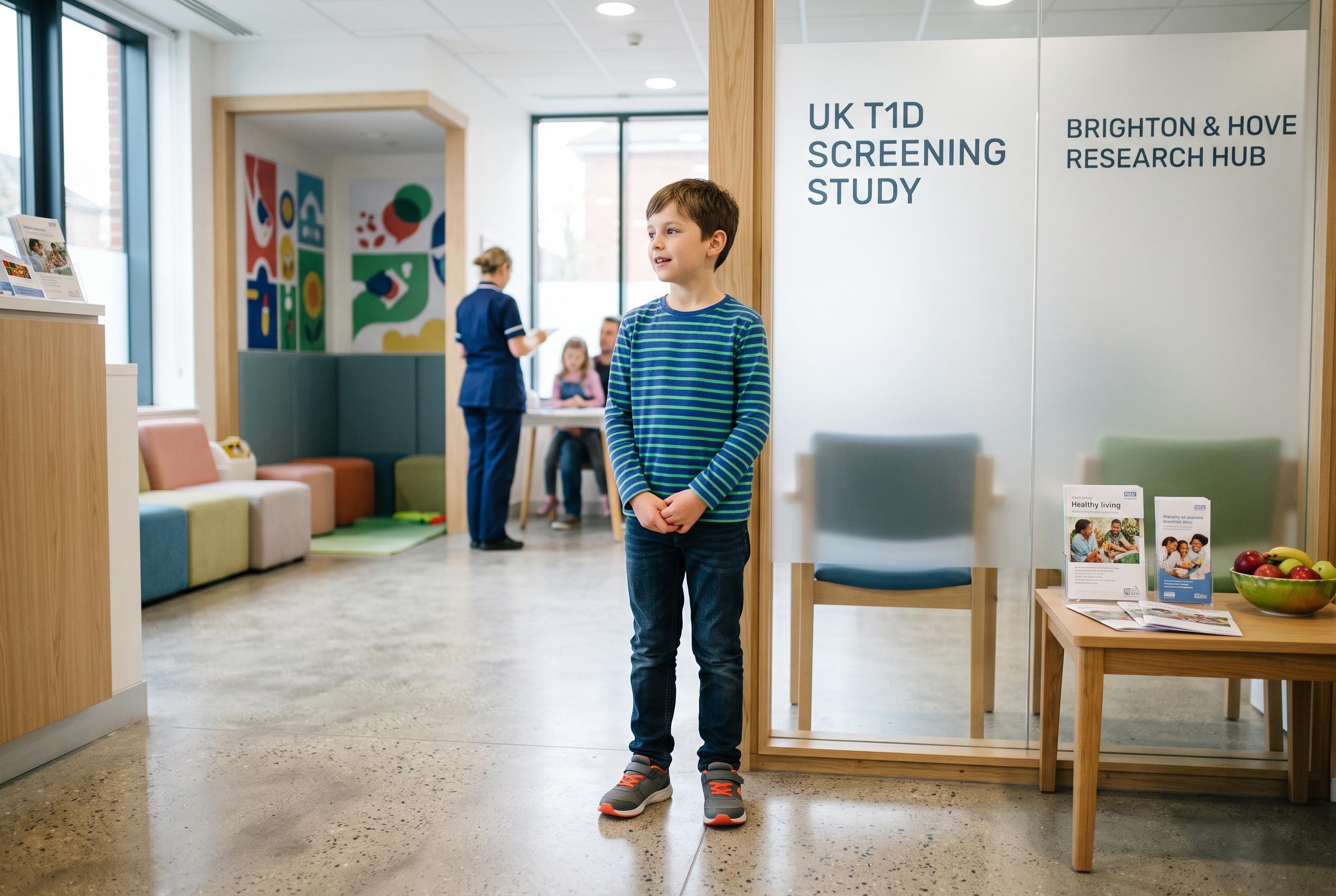

A nine-year-old boy from East Sussex has participated in a groundbreaking UK study aimed at detecting early signs of type 1 diabetes in children, as researchers explore new approaches for early diagnosis and prevention.
A nine-year-old boy from East Sussex has taken part in a study designed to detect early signs of type 1 diabetes in children, as researchers step up efforts to spot the disease before symptoms appear.
David joined the ELSA study, short for EarLy Surveillance for Auto-immune Diabetes, which checks for blood markers linked to a higher risk of developing type 1 diabetes. The screening uses a finger-prick test to look for autoantibodies, proteins made by the immune system that can signal the start of the disease process.
His mother, Kate, said David wanted to take part on his own. “David really consented for himself. He was excited about being part of a study and helping other people of his age. He was a bit nervous but the staff were brilliant – they explained everything to him and let him be in control of the whole process.”
The ELSA project, led by the University of Birmingham, is intended to test whether large-scale screening of children aged three to 13 is practical and acceptable in the UK. Published study material says the trial plans to screen 20,000 children using dried blood spot samples collected at home, in hospitals or in community settings, with children who show two or more autoantibodies then offered further testing to stage their risk.
David is among more than 878,000 people who took part in research supported by the National Institute for Health and Care Research in 2025/26. Of those participants, 13,960 were in Sussex. Dr Stephen Barnett, network director at the NIHR South East Regional Research Delivery Network, said the figures represented local people helping to improve care for future generations.
Disclaimer: This content is for informational purposes only and is not intended to be a substitute for professional medical judgment, advice, diagnosis, or treatment.