

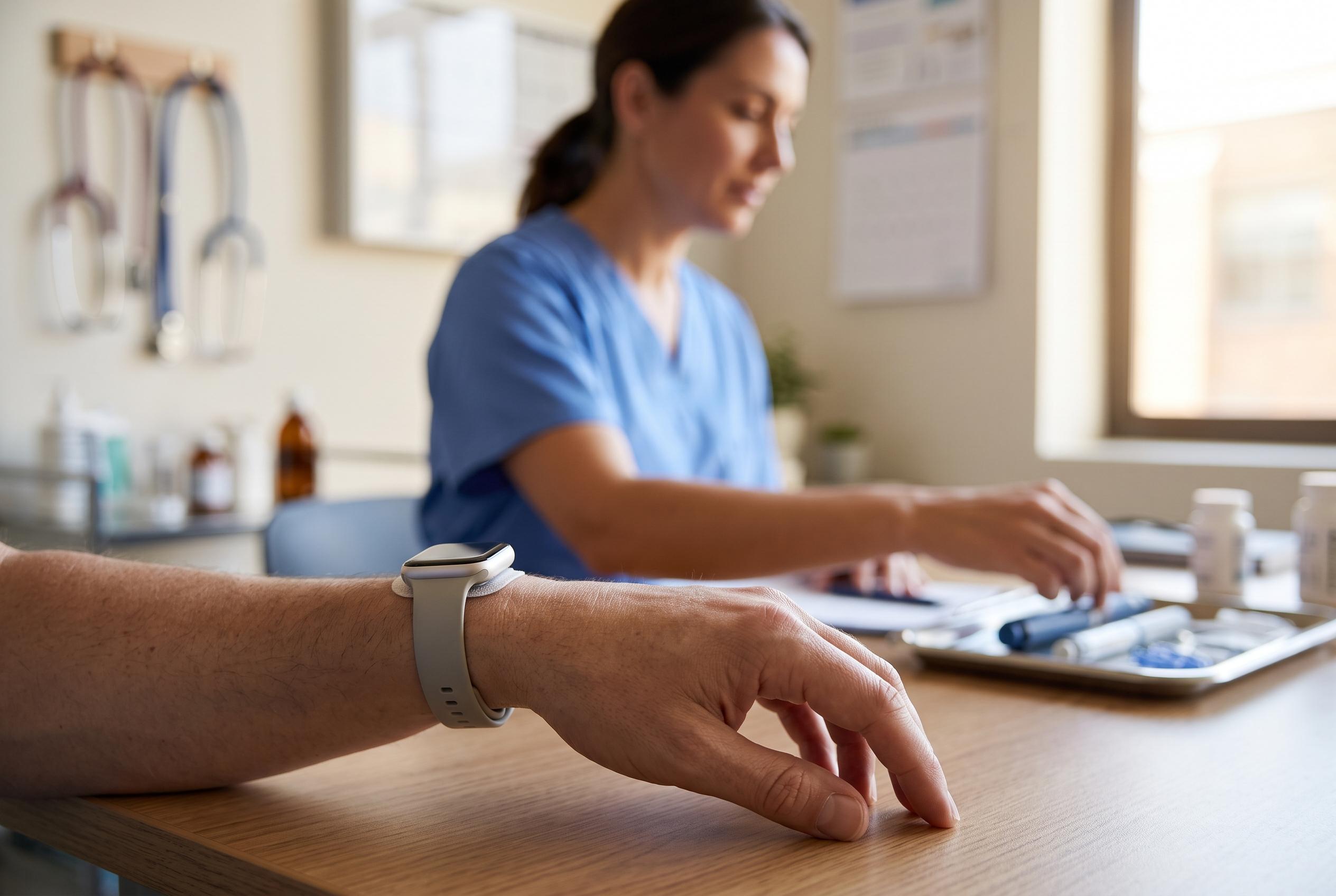

Huawei signals progress in developing a finger-prick-free blood glucose measurement device, potentially transforming diabetes management amid longstanding industry challenges.
Huawei has signalled that it is working on a blood glucose measurement device that would not require a finger prick, reviving one of the most elusive promises in consumer wearables. He Gang, head of Huawei’s consumer business, confirmed on 25 September 2026 that the company has spent four years researching the technology and now considers it ready for industrialisation, according to Frandroid and the Chinese technology site Ithome. No launch date, product name or regulatory status has been disclosed.
The claim lands in a field that has frustrated the industry for more than a decade. Apple, Samsung and a long list of start-ups have all chased non-invasive glucose monitoring, usually through near-infrared spectroscopy, which tries to read glucose levels through the skin. In practice, the method is vulnerable to interference from skin hydration, temperature and tissue thickness, making accuracy difficult to guarantee without invasive calibration. Bloomberg has reported that Apple’s own work remains unresolved, while Samsung has previously backed away from similar claims after regulatory hurdles.
Huawei’s comments come as the company continues to expand its health-tech ambitions. The firm already sells watches that track heart rate and blood oxygen levels, and its Watch D3 includes a built-in inflatable cuff for blood pressure measurement. That model has recently appeared in Europe at €449, underscoring Huawei’s push towards more clinically oriented wearables rather than simple fitness trackers. Frandroid also noted that Huawei has experimented with a screenless bracelet format and previously offered a Watch 4 feature that estimated hyperglycaemia risk without directly measuring glucose.
Even so, the difference between a useful consumer feature and a medical device remains crucial. A non-invasive reading shown on a watch would not carry the same weight as a certified continuous glucose monitor, such as Abbott’s FreeStyle Libre, which measures glucose from under the skin. Frandroid noted that German regulators have already taken action against more than 1,200 smartwatch models over false glucose claims, a reminder of how closely this market is policed. The potential payoff is large: the Federation of Diabetics says more than 4.4 million people in France were living with diabetes in 2024, which helps explain why Huawei’s latest promise has drawn such attention.
Disclaimer: This content is for informational purposes only and is not intended to be a substitute for professional medical judgment, advice, diagnosis, or treatment.



