

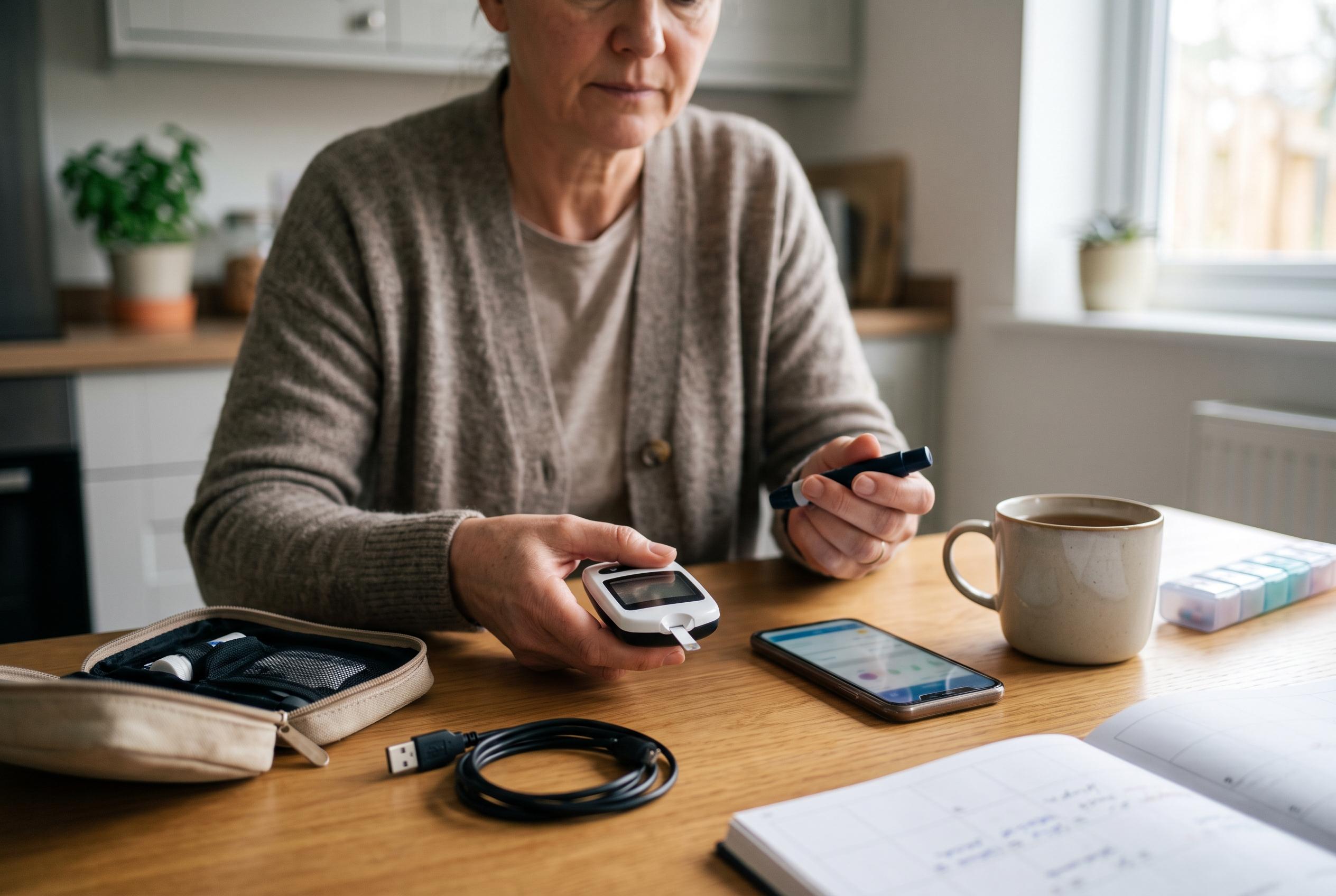

As Tenovi promotes its connected Trividia Blood Glucose Meter for remote patient monitoring, recent FDA safety alerts and recalls cast doubt on device reliability, underscoring the complexities of home diabetes care.
Tenovi’s guide to the Trividia Blood Glucose Meter presents the device as a simple remote patient monitoring tool for people managing diabetes, but the broader context is more complicated than the product page suggests. The meter is part of a wider shift towards home-based glucose tracking, where readings can be shared with clinicians between appointments rather than waiting for the next visit. Tenovi says the system uses its cellular gateway to send results automatically, reducing the need for app downloads or manual pairing, while the kit itself includes the meter, lancing device, lancets, test strips and carrying case.
That pitch comes at a time when blood glucose monitoring remains under close scrutiny. The US Food and Drug Administration issued a safety communication on April 28, 2026, warning about risks tied to TRUE METRIX blood glucose monitoring systems made by Trividia Health. The agency said users and healthcare providers should consider alternative testing methods because an E-5 error code could be misunderstood, potentially leading to delays in treatment when glucose is high. In a separate notice, the FDA said Trividia had begun a correction and updated its instructions to stress that anyone seeing an E-5 error code while experiencing symptoms of high glucose should seek immediate medical attention.
The FDA’s recent warnings were not the only action involving the brand. On February 6, 2026, Trividia initiated a labelling correction for all TRUE METRIX blood glucose monitoring systems, and on May 1, 2026, the company expanded that correction after notifying regulators. Earlier, on October 7, 2025, Trividia announced a voluntary recall of a limited number of TRUE METRIX Self-Monitoring Blood Glucose Meters sold under the Good Neighbor Pharmacy brand because of possible faults with the LCD display. The FDA also recorded an earlier recall in 2020 involving a TRUE METRIX AIR meter with an incorrect factory-set unit of measure. Together, those notices underline why patients and clinicians are being urged to check model details carefully rather than treating all glucose meters as interchangeable.
Against that backdrop, the basic instructions in Tenovi’s article are straightforward: gather the supplies, wash and dry the hands, insert the strip, use the lancet on the side of a finger, place the blood on the strip and wait for a reading. Tenovi says the gateway provides a green light when data are transmitted and a red reminder each morning to prompt testing. It also claims that remote support is available for patients and clinicians, which may help with setup and troubleshooting. But any discussion of using a connected glucose meter now needs to be read alongside the FDA’s recent cautions, especially for people relying on TRUE METRIX devices for day-to-day diabetes management.
Disclaimer: This content is for informational purposes only and is not intended to be a substitute for professional medical judgment, advice, diagnosis, or treatment.



