

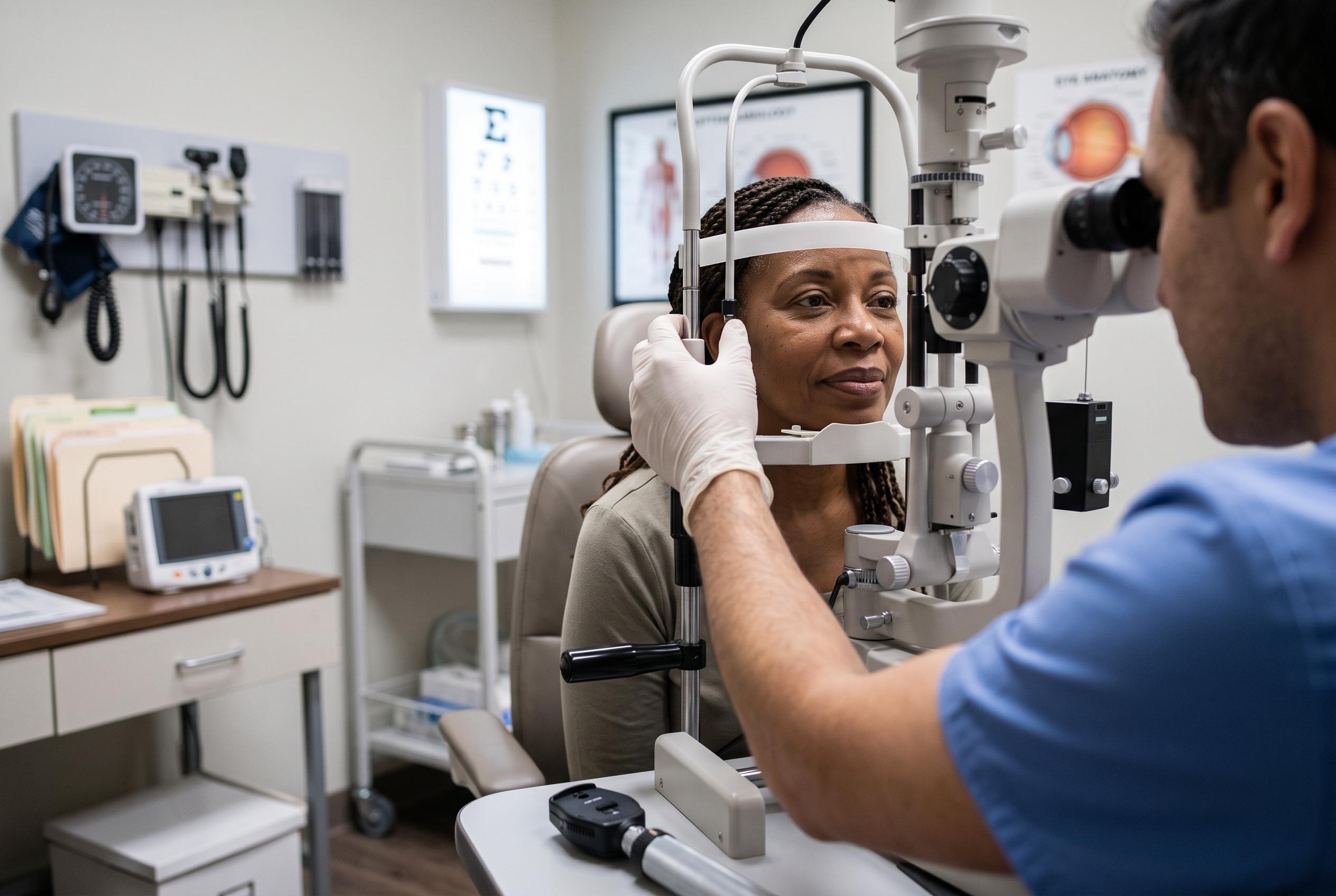

A comprehensive eye check-up can uncover hidden health risks, including high blood pressure and diabetes, highlighting the importance of integrated eye and systemic care.
A routine eye appointment can reveal far more than whether someone needs spectacles. In a blog post for the Vision Science Academy, Ghanaian optometrist Naa Shome Okwei described a case in which a young adult arrived with blurred vision and ongoing headaches, only for the examination to show swollen optic discs in both eyes and dangerously high blood pressure, triggering urgent medical referral. The point of the case is clear: an eye check should not stop at visual acuity or refraction alone.
The retina offers a rare clinical advantage because its blood vessels can be inspected directly through the pupil without surgery. That makes the eye a useful window on the rest of the body, particularly when vascular disease is involved. The World Health Organisation says eye care should be integrated into health systems and delivered in a way that is centred on people’s wider needs, rather than treated as an isolated service. The organisation has also pressed governments to make eye care part of universal health coverage.
High blood pressure is one of the clearest examples of why this matters. According to ophthalmic and public health guidance cited by the blog, hypertensive retinopathy can be the first visible sign of a hypertensive emergency. Retinal changes may include narrowed arterioles, haemorrhages, cotton-wool spots and, in severe cases, optic disc swelling. Where those findings appear in someone without a known history of hypertension, clinicians are advised to check blood pressure immediately and arrange urgent medical assessment.
Diabetes presents a different but equally important risk. The World Health Organisation says more than 2 billion people globally live with vision impairment, reinforcing the need for earlier detection and better integration of eye services. In diabetic retinopathy, damage to the small retinal vessels may begin with microaneurysms and retinal haemorrhages before progressing to abnormal new vessel growth in advanced disease. Diabetic macular oedema can develop at any stage and remains a major cause of sight loss, which is why regular examinations are central to prevention and monitoring.
Neurological disease can also first come to light in the consulting room. Optic neuritis, an inflammation of the optic nerve, often affects one eye and may cause vision loss over several days alongside pain on eye movement. However, bilateral swelling, recurrent episodes or unusually severe vision loss may point to a less typical presentation and demand broader investigation. For optometrists and other first-contact eye clinicians, the lesson is that careful examination, prompt blood-pressure measurement when indicated, clear communication with other health professionals and timely referral can be as important as any prescription for glasses.
Disclaimer: This content is for informational purposes only and is not intended to be a substitute for professional medical judgment, advice, diagnosis, or treatment.



