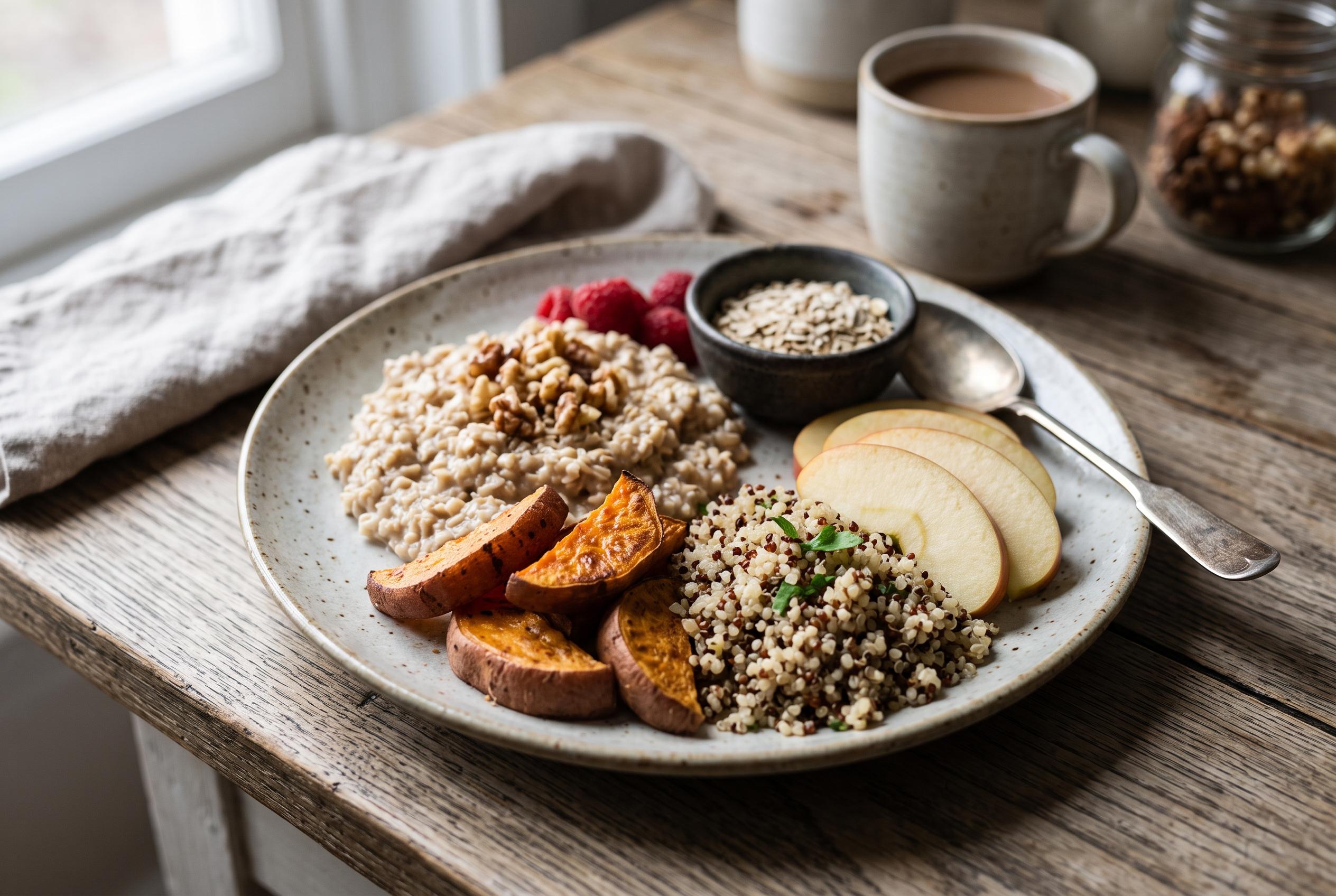

A range of foods such as steel-cut oats, sweet potatoes, quinoa, and apples are gaining recognition for their ability to maintain energy levels and control blood sugar, offering practical options for health-conscious consumers.
Nutritionists often point to low-glycaemic carbohydrates as a practical way to keep energy levels steadier through the day while avoiding sharp rises in blood sugar. According to WebMD, steel-cut oats are less processed than rolled oats, which helps them retain more fibre and gives them a lower glycaemic index. That makes them a strong breakfast choice for people who want a filling start without a sugar surge.
Sweet potatoes are another favourite, but their effect depends partly on how they are cooked. Healthline says they generally produce a slower rise in blood sugar than regular potatoes, while boiling tends to keep the glycaemic impact lower than baking. They are also rich in beta carotene and can be served in many forms, from simple roasted wedges to mash or soup.
Quinoa has gained popularity for good reason. It combines carbohydrate with complete protein, meaning it contains all nine essential amino acids, and it adapts easily to salads, grain bowls and side dishes. Its mild, nutty flavour and fluffy texture make it a useful alternative when rice or pasta feels too heavy.
Brown rice remains a dependable whole grain because it keeps the bran and germ that white rice loses in processing. That gives it more fibre and a firmer bite, which can help meals feel more satisfying. It works well in stir-fries, pilafs and dishes where a plain starch needs to carry other flavours without dominating them.
Lentils are among the most efficient low-glycaemic staples in the kitchen. They are high in both plant protein and fibre, which helps slow digestion and supports a more gradual release of energy. They also absorb spices well, so they suit everything from soups and stews to cold salads with lemon, garlic and cumin.
Wholewheat pasta offers a heartier alternative to refined pasta while keeping much of the familiar comfort. Its denser texture and slightly nutty taste pair well with tomato sauces, olive oil and vegetables. Served al dente, it can form the base of a balanced meal without feeling bland or overly processed.
Black beans bring more than fibre and protein to the table; they also add depth, creaminess and a natural sweetness that works in both Latin American and Mediterranean-style dishes. Rinsing canned beans helps reduce sodium, while dried beans reward a little patience with a richer flavour. They fit easily into soups, tacos, salads and chilli.
Apples round out the list as a naturally sweet low-glycaemic fruit that travels well and needs little preparation. Firm varieties such as Granny Smith or Fuji are especially crisp when eaten raw, while baking brings out a softer, more dessert-like flavour. Paired with cinnamon, nuts or sharp cheese, they offer sweetness without the blood-sugar spike associated with many processed snacks.
Disclaimer: This content is for informational purposes only and is not intended to be a substitute for professional medical judgment, advice, diagnosis, or treatment.