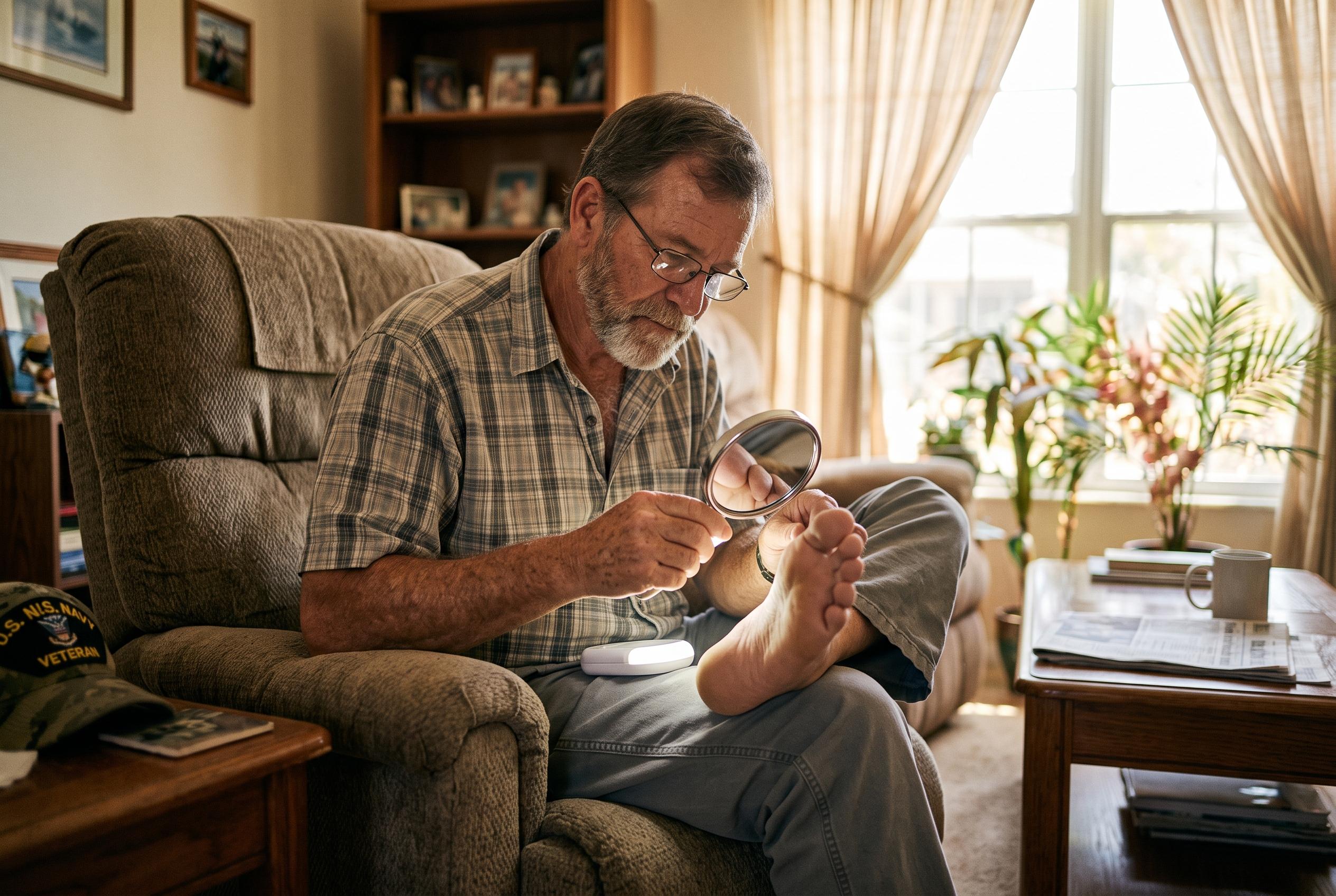

Veterans in southwest Florida face a higher-than-average risk of diabetes-related foot complications, prompting a shift towards immediate, specialised care and proactive self-monitoring to prevent severe outcomes like amputations.
Veterans in South-West Florida are facing a diabetes burden that is higher than the wider population, and that makes foot care a practical necessity rather than a routine extra. The Centers for Disease Control and Prevention says around one in four veterans under Veterans Affairs care has diabetes, close to twice the rate seen in the general public, while research indexed by the National Center for Biotechnology Information says up to 15% of people with diabetes will develop a foot ulcer at some point in their lives. Those numbers explain why podiatry services aimed at veterans are increasingly focused on speed, screening and early intervention rather than simple maintenance.
The medical concern is straightforward: diabetes can damage nerves and reduce circulation, so a small blister, cut or rubbing shoe seam may go unnoticed until it has already become serious. The NCBI review notes that diabetic neuropathy can dull sensation in the feet, while peripheral arterial disease can slow blood flow and make wounds harder to heal. Together, those problems raise the risk of infection, hospital admission and, in severe cases, amputation.
That is why advocates of diabetic foot care for veterans in the region stress access to a specialist quickly, not weeks later. The Naples Podiatrist guide says veterans should look for same-day or urgent evaluation, screening for both neuropathy and circulation problems, and wound-care capability under one roof. It also argues that continuity matters in a corridor where many older residents move between Naples, Fort Myers, Cape Coral, Port Charlotte and Sarasota.
The guide also recommends more than one-off appointments. It says annual comprehensive foot examinations should be paired with daily self-checks at home, because numbness can mask the early signs of trouble. It further advises against generic comfort footwear and drugstore diabetic socks that do not address pressure points, while supporting properly fitted diabetic shoes and custom orthotics to reduce friction. The NCBI review backs the broader approach, saying multidisciplinary care, patient education and prompt treatment of abnormalities are central to preventing ulcers from worsening.
For veterans, the practical message is to treat foot changes as time-sensitive. A sore, dark patch, drainage, swelling or warmth that does not settle quickly should be assessed promptly, not watched for days on end. The guiding principle is simple: because diabetes can remove pain as an early warning system, looking at the feet every day may do more to prevent serious harm than any single product or piece of equipment.
Disclaimer: This content is for informational purposes only and is not intended to be a substitute for professional medical judgment, advice, diagnosis, or treatment.