

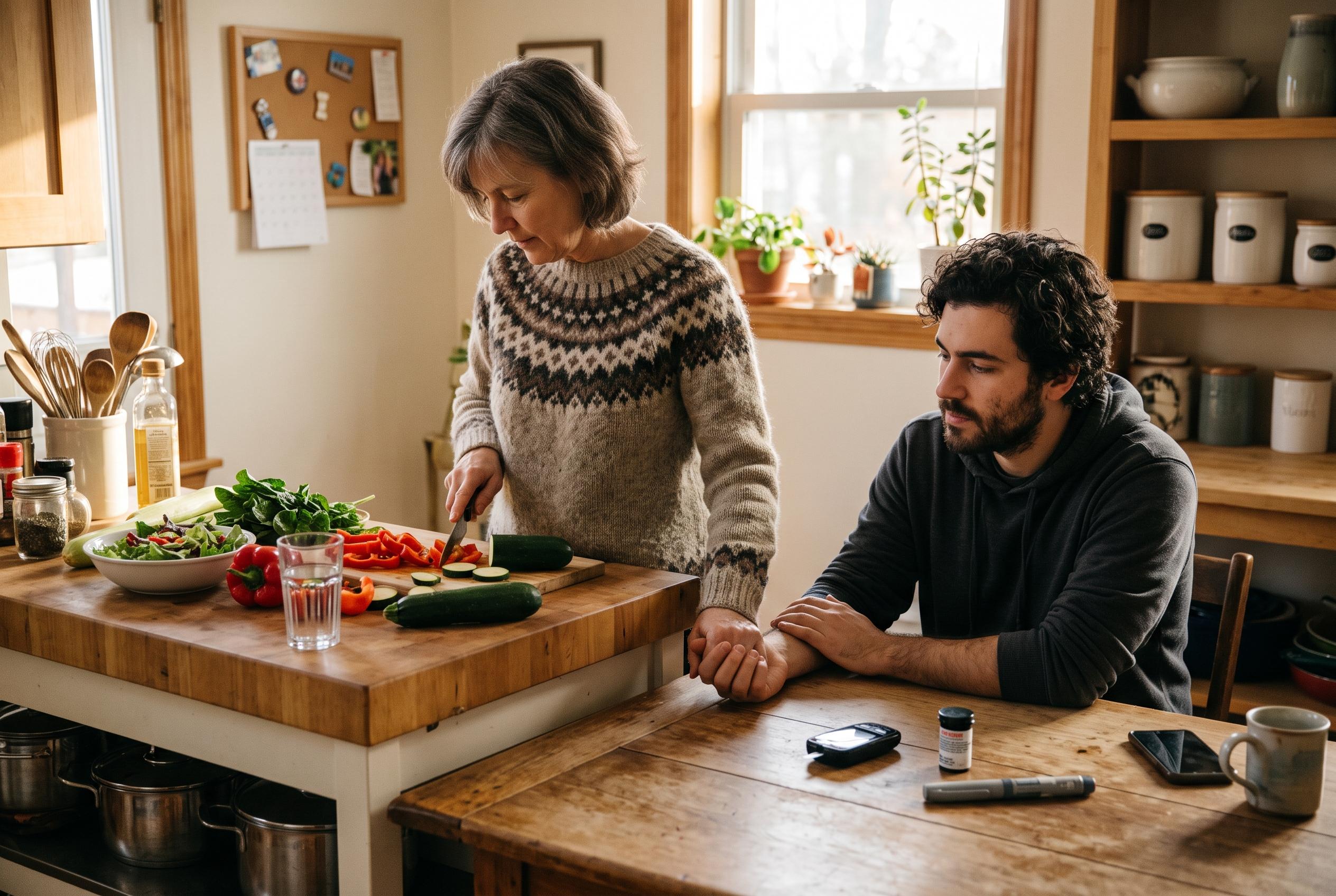

From blood sugar checks and meal planning to medication routines and emotional support, everyday diabetes care is built on countless acts of vigilance that often go unseen.
Before the household is fully awake, the day is already organised around a blood sugar check, a log on the refrigerator and the quiet discipline of diabetes care. In Abby Duke’s Heartland Living Magazine piece, caregiving is shown not as a single task but as a relentless routine: recording readings, watching insulin doses and trying to keep meals steady enough to prevent the day from slipping off course. The article’s opening scenes are intimate and specific, but they also reflect a broader reality described by the Mayo Clinic and the Centers for Disease Control and Prevention, both of which say day-to-day food choices, portion control and medication timing are central to keeping blood glucose in range.
That discipline extends into the kitchen, where small adaptations can matter as much as medicine. Duke describes a locked pantry, not as punishment but as a safeguard against late-night eating and repeated snacking that can derail carefully planned meals. The CDC advises structured meal planning, including carbohydrate counting and the plate method, which divides a meal into non-starchy vegetables, lean protein and healthy carbohydrates. The Mayo Clinic similarly recommends balancing meals with medication and paying attention to portion sizes, while the CDC says caregivers can play a practical role by helping families stick to a plan and, when needed, seek diabetes education.
The human side of that labour is just as important. WebMD’s caregiver guidance for diabetes stresses that support goes well beyond food: it can include checking blood sugar, keeping routines stable, encouraging exercise, watching for signs of complications and offering emotional steadiness when frustration sets in. The CDC likewise advises caregivers to learn the person’s treatment plan, attend appointments when possible, avoid blame and understand that blood sugar will not always behave predictably. Duke’s account captures that emotional strain in domestic detail, showing how caregiving can become a constant negotiation between patience, vigilance and hope.
For older adults and people living with memory loss, the challenge can become even more complicated. Southern California Home Health recommends fixed medication times, routine checks, quick sources of sugar for low blood glucose and daily foot checks to reduce the risk of complications. The Caregiver Action Network notes that dementia can make eating and drinking irregular, so meals may need to be made more manageable with finger foods, familiar routines and a calmer dining setting. Taken together, those recommendations help explain the broader significance of Duke’s piece: caregiving is often invisible, but it is built from repeated, necessary acts that protect health long before a crisis becomes visible.
Disclaimer: This content is for informational purposes only and is not intended to be a substitute for professional medical judgment, advice, diagnosis, or treatment.



