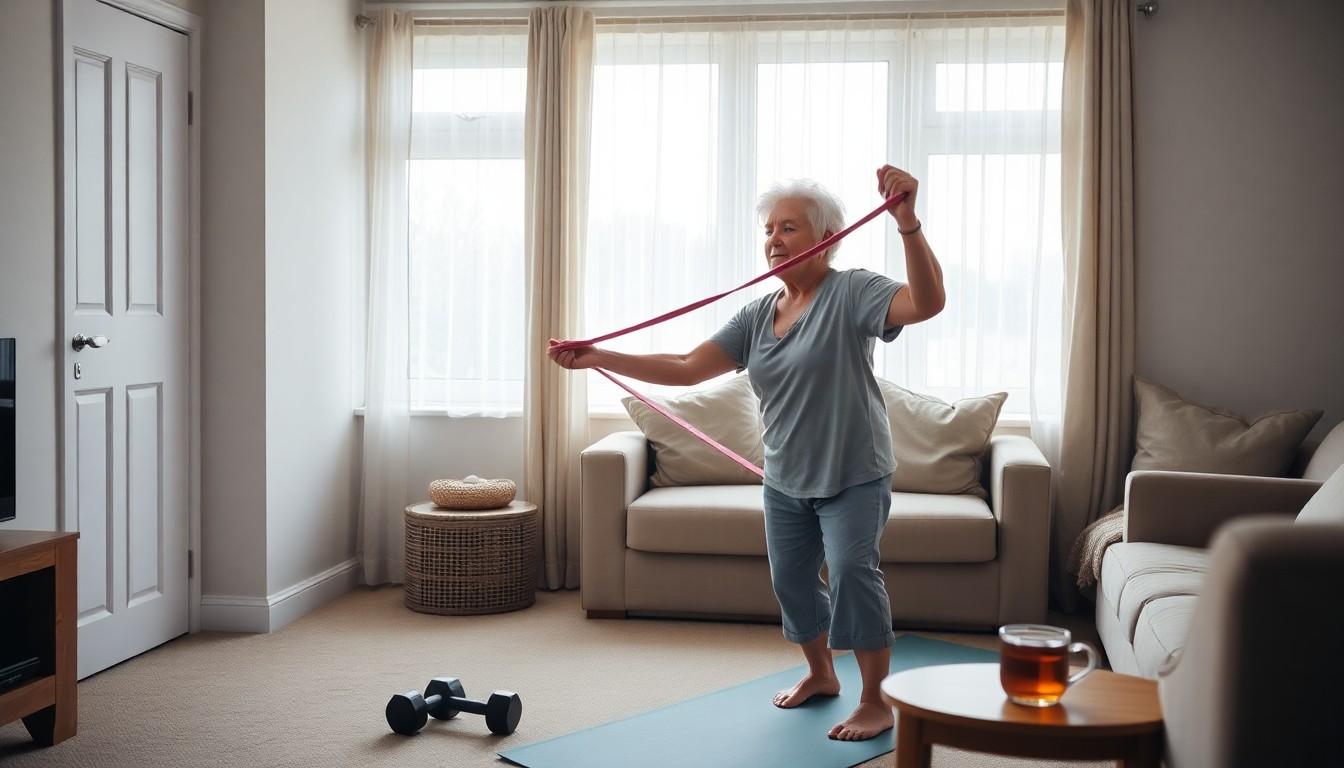

As sleep becomes lighter with age, research suggests that simple resistance exercises at home can improve sleep quality, offering a practical, manageable solution for those over 50 seeking better rest.
If you are over 50 and finding yourself awake in the small hours, you are far from alone. Sleep can become lighter and more fragmented with age, thanks to hormonal changes, aches, stress and the general mental load of modern life. That matters because deep sleep is when the body repairs tissue, the brain consolidates memories and the immune system resets.
The encouraging news is that movement appears to help, and not just in the broad sense. According to the Sleep Foundation, exercise of several kinds can improve sleep quality, but resistance training stands out. A separate systematic review in the Archives of Public Health found that combined aerobic and resistance training had the largest effect on sleep quality in adults aged 50 and over, suggesting that structured exercise may bring clinically meaningful benefits for older sleepers.
For people who do not want a gym membership, the message is reassuringly practical. The Sleep Foundation says resistance work can be done with bands or bodyweight, while its report on weight training notes that even a few weekly sessions of under an hour may help if done consistently. Simple, low-impact movements such as rows, presses, squats and curls can be adapted to fitness level, and other trainers interviewed by TechRadar have highlighted beginner-friendly options such as chair squats, banded rows and carries for building strength safely at home.
The key, experts say, is not intensity for its own sake but routine. Two or three short sessions a week may be enough to start nudging sleep in the right direction, particularly if the exercises are manageable and repeated over time. For anyone dealing with persistent insomnia or other health concerns, it remains sensible to check with a doctor before beginning a new exercise plan.
Disclaimer: This content is for informational purposes only and is not intended to be a substitute for professional medical judgment, advice, diagnosis, or treatment.