

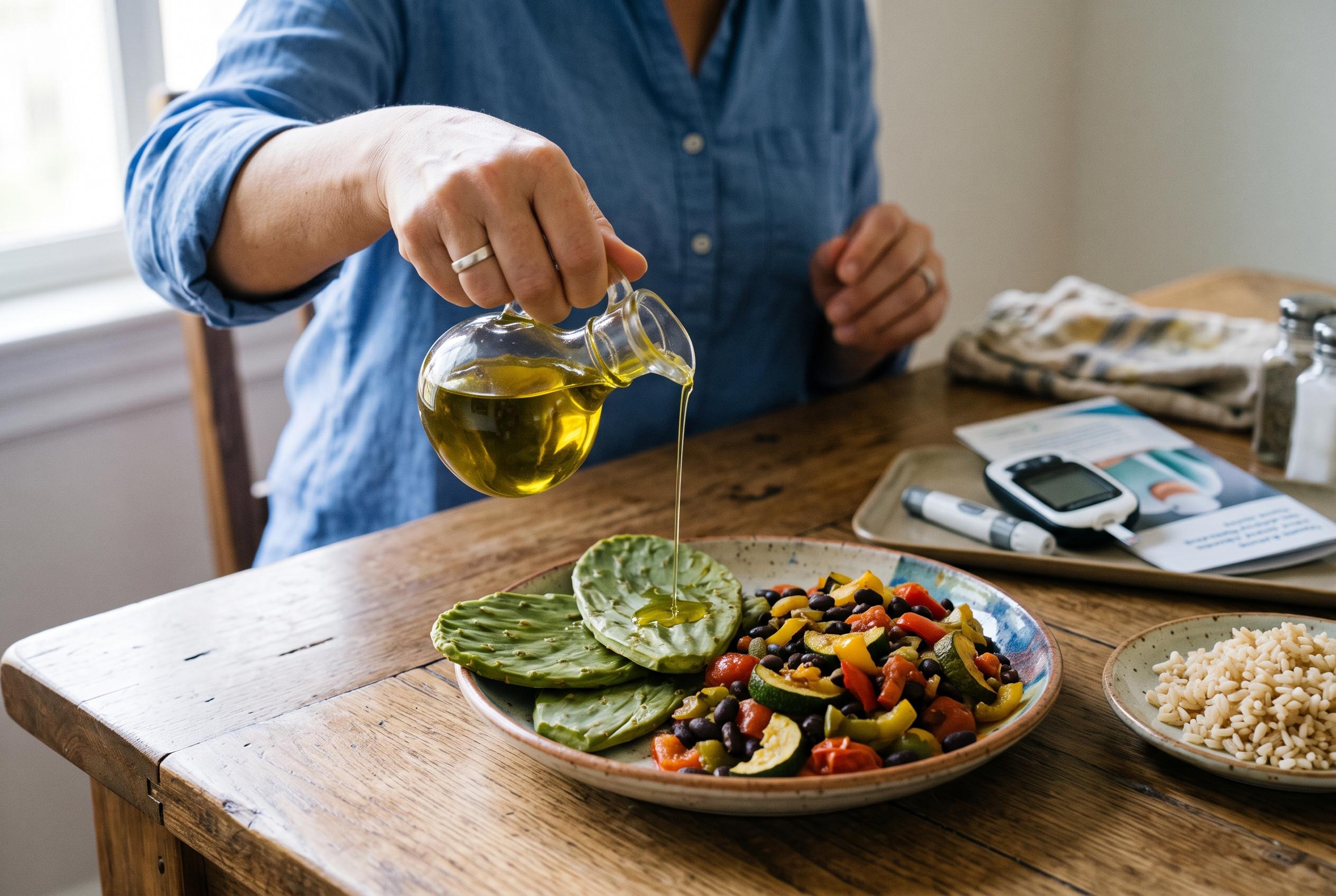

Emerging research suggests that extra-virgin olive oil and nopal, the prickly pear cactus leaf, may support blood glucose regulation through enhancing GLP-1 hormone response, offering potential dietary tools within comprehensive diabetes management.
Interest in foods that may help blunt blood sugar swings is rising, and two of the most discussed are extra-virgin olive oil and nopal, the prickly pear cactus leaf widely eaten in Mexico. In a recent article, El Diario NY said the pair may help stimulate GLP-1, a hormone released in the gut after eating that plays a role in insulin response, appetite and blood sugar control. The claim is broadly consistent with research showing that certain dietary fats and fibre-rich plant foods can influence incretin hormones, although experts stress that such foods are supports rather than replacements for medical care.
Olive oil’s potential value appears to lie in its composition. Studies indexed by PubMed have found that monounsaturated fats, such as those in olive oil, can produce higher GLP-1 responses than saturated fats in people with type 2 diabetes and in healthy volunteers. Another PubMed study found that olive oil and related oils reduced appetite and increased satiety, although it did not show a stronger GLP-1 effect when olive oil was combined with another oil. Earlier animal research also suggested that diets rich in olive oil improved glucose tolerance compared with saturated-fat-heavy diets.
Nopal has its own evidence base. PubMed research published in 2014 found that nopal reduced post-meal blood glucose and insulin levels in people with type 2 diabetes after a carbohydrate-heavy breakfast, while other research has suggested that its viscous soluble fibre may slow glucose absorption and may influence gut hormones involved in insulin regulation. The food is often described as a practical addition to meals rather than a supplement in capsule or powder form, because much of its benefit is tied to its natural fibre structure.
Even so, the message from clinicians is one of caution rather than hype. The article quotes diabetes reversal specialists saying these foods may fit into a broader lifestyle plan, but should not prompt anyone to change medication on their own. That warning matters particularly for people taking metformin or GLP-1 drugs such as semaglutide, where any adjustment should be made with a doctor. For readers looking for a modest, evidence-backed change, the best takeaway is not that olive oil or nopal are miracle cures, but that they may be useful tools within a wider, medically supervised approach to steadier glucose control.
Disclaimer: This content is for informational purposes only and is not intended to be a substitute for professional medical judgment, advice, diagnosis, or treatment.



