

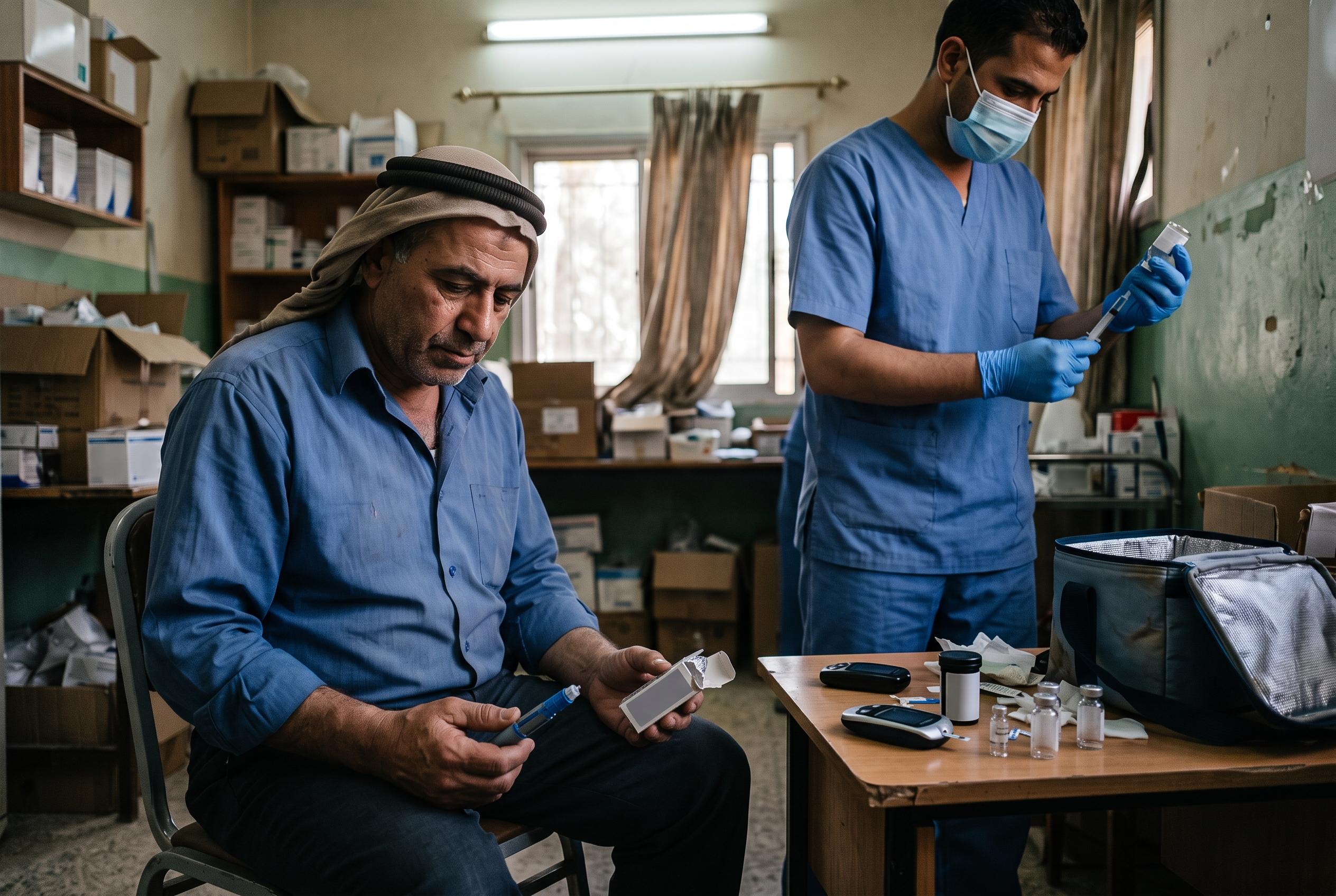

Amid ongoing conflict and a tightening blockade, Palestinians with chronic illnesses like diabetes face dire shortages of medicine and disrupted healthcare, forcing some to risk dangerous crossings for treatment, revealing the brutal toll of Gaza’s worsening health emergency.
Before the war in Gaza widened, Mahmoud Mushtaha had begun to turn his health around. He had been living with diabetes and hypertension, and by committing to a disciplined routine of medication, exercise and diet, he was steadily improving, his family says. Doctors were optimistic enough to tell him that he could expect a striking change if he kept going.
That progress collapsed after the fighting and blockade tightened around the enclave. By late 2023, Gaza was split in two, movement became perilous and basic essentials grew harder to find. For people with diabetes, the daily work of staying alive became much more fragile. MedGlobal has warned that about 350,000 people in Gaza live with chronic illnesses and face severe supply restrictions, while Human Rights Watch and Al Jazeera have both described insulin shortages, soaring prices and the near breakdown of routine care for patients who need constant monitoring.
For Mushtaha, the problem was not only medicine but everything that medicine depends on. Food became scarce and expensive, places to exercise shut down, and even walking could be dangerous. Insulin pens became difficult to obtain, then impossible to rely on, with some spoiling because refrigeration was not dependable. Testing supplies also ran short, leaving him without a practical way to check his blood sugar. MedGlobal and the Palestinian Central Bureau of Statistics have separately described a wider collapse in chronic-disease care across Gaza, where shortages of equipment, damaged health facilities and repeated disruptions to aid have put patients with diabetes, kidney failure and cancer at heightened risk.
Faced with worsening health, he left Gaza for Egypt in April 2024 to stay with his daughter and get steadier access to treatment. But the separation carried its own strain. Family calls brought some comfort, yet they also deepened the ache of being away from home while relatives remained under bombardment and siege. On those calls, according to the account in Progressive, he spoke often about missing his family and grandchildren, even as he continued taking medicine more regularly than he had been able to in Gaza.
By August, he decided to return. After waiting at Israeli and Egyptian checkpoints, he made it back on August 12, only to find that the hardship he had left behind was still everywhere. Some of the medicines he brought from Egypt were taken, and those he managed to keep did not last long. Still, when asked whether he regretted coming home, he said, “So long as you are around me, I am the happiest, and I regret nothing.” In that answer lies the central cruelty of Gaza’s health crisis: for many patients, the choice is not between safety and danger, but between one form of suffering and another.
Disclaimer: This content is for informational purposes only and is not intended to be a substitute for professional medical judgment, advice, diagnosis, or treatment.



