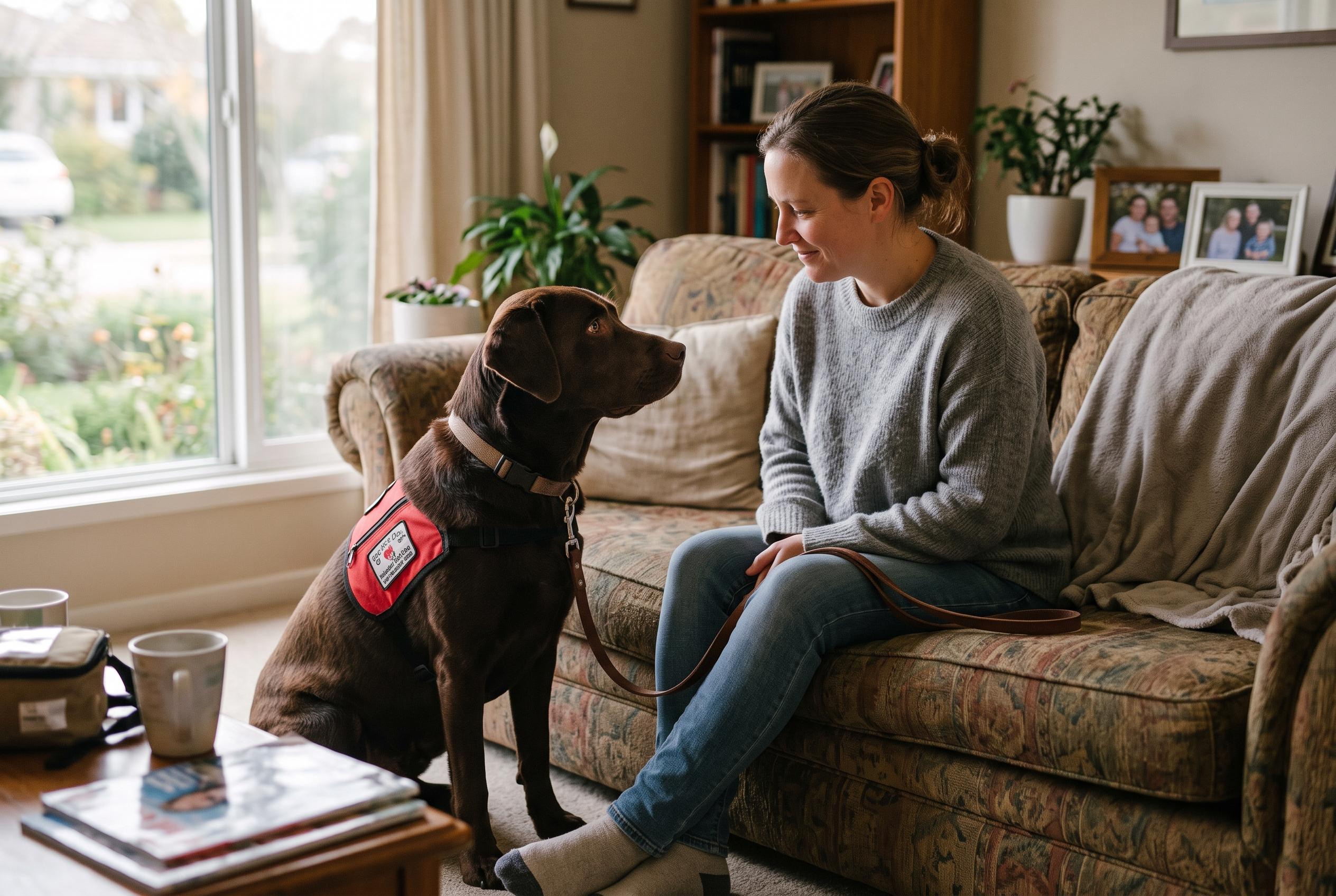

New advances in training emphasise accuracy and reliability in diabetic alert dogs, providing a valuable supplementary tool for managing blood sugar levels alongside medical devices.
Diabetic alert dogs are trained service animals that use scent to detect dangerous shifts in a handler’s blood sugar and sound the alarm before a low or high becomes an emergency. According to guidance from the US Service Animal Registrar, the dogs are taught to recognise changes linked to hypoglycaemia and hyperglycaemia, then respond with a learned cue such as nudging, pawing or fetching a testing kit.
The basic idea is simple, but the training is not. Medical Mutts says the process combines scent work with public-access manners, so the dog can work reliably in everyday settings as well as at home. The American Kennel Club says trainers typically use sweat or other scent samples collected during blood sugar events, while some programmes also build in retrieving glucose tablets, bringing a phone or waking a sleeper during an overnight episode. Positive reinforcement is central, with treats and praise used to make the alert consistent.
Experts and service-dog organisations broadly agree that these dogs can be life-changing, but they are not a substitute for medical devices. WebMD notes that reliability can vary and that diabetic alert dogs should be treated as a complement to glucose monitoring, not a replacement. The US Service Animal Registrar also says no dog alerts to every event, which is why handlers are still advised to use standard diabetes management tools alongside the animal.
There is also a practical and legal side to the issue. LegalClarity says diabetic alert dogs are protected under the Americans with Disabilities Act when they are trained to perform a specific task, and no federal registry or certificate is required to make that status official. Medical Mutts says people may obtain a fully trained dog, train an existing pet or learn to train a dog themselves, but in every case the work takes time, consistency and significant commitment. For families living with diabetes, especially those dealing with hypoglycaemia unawareness or overnight lows in children, the appeal is early warning, greater confidence and an added layer of safety.
Disclaimer: This content is for informational purposes only and is not intended to be a substitute for professional medical judgment, advice, diagnosis, or treatment.