

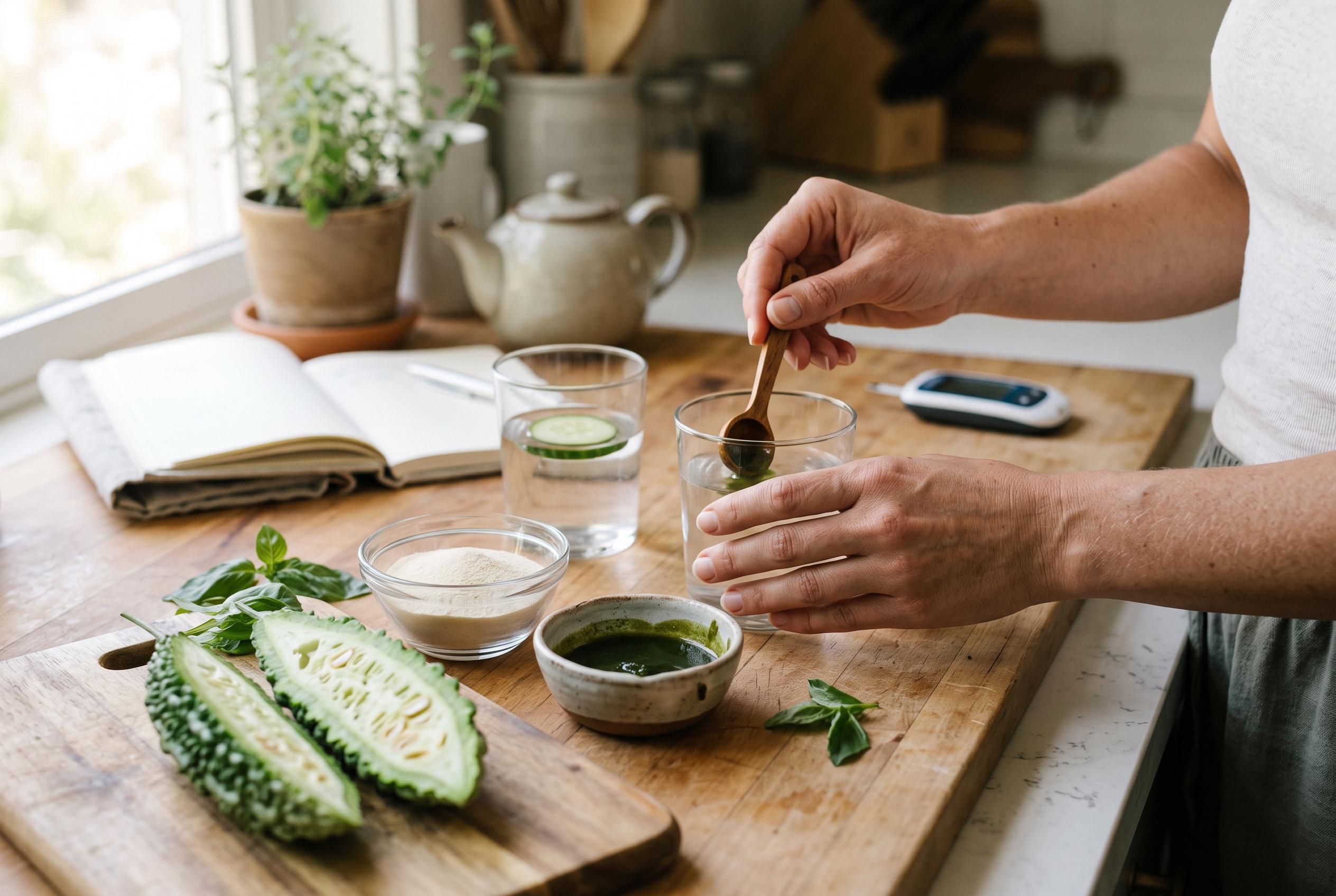

New research suggests that collagen peptides from cowhide, when combined with bitter melon extract, may offer a more effective approach to managing high blood sugar, potentially opening up novel functional food options for diabetes care.
Cowhide, usually treated as little more than an industrial by-product, is emerging as an unlikely source of interest in diabetes research. In a study published in the Journal of Agriculture and Food Research, scientists in China reported that collagen peptides taken from cowhide worked better against high blood sugar when paired with bitter melon extract than when used on their own. The work, led by Long He at Gansu Agricultural University, adds to a growing body of evidence that food-derived compounds can sometimes be strengthened through careful combination rather than used in isolation.
The idea is not entirely new. Previous research indexed by PubMed has already shown that cowhide collagen peptides can display antioxidant activity and other useful functional properties, while separate clinical work on bitter melon has suggested blood-sugar-lowering potential in people with diabetes. Other studies have also identified collagen-derived peptides from cowhide with DPP-IV inhibitory activity, a mechanism linked to improved insulin signalling, and have explored bitter melon proteins as possible adjuncts to standard treatment. The new paper builds on that background by testing whether the two ingredients might reinforce each other in a single formulation.
In laboratory experiments, bitter melon extract outperformed the collagen peptides in free-radical scavenging tests and also showed stronger, if not always statistically significant, inhibition of alpha-amylase, an enzyme that helps break starch down into sugar. The researchers then found that the two ingredients appeared to bind together rather than simply mix. Spectroscopy, thermal analysis and molecular docking all suggested a stable molecular complex held together largely by hydrophobic interactions and hydrogen bonding, while imaging showed the material assembling into larger flake-like structures. The implication is that the bitter melon extract may not merely add its own effects, but also help protect the peptides from breakdown.
That mattered in simulated digestion. The plain peptides held up reasonably well in stomach-like conditions, but intestinal enzymes reduced their activity more sharply. The combined formulation retained more of its antioxidant strength and alpha-amylase inhibition after digestion, suggesting it may survive the gut more effectively. In diabetic mice, the results were broadly consistent. After four weeks, fasting blood glucose fell in both the peptide-only and combined-treatment groups, with the mixture performing slightly better, though metformin remained more potent. The combination also improved glucose tolerance and eased signs of oxidative stress in the liver, including damage linked to lipid peroxidation.
The study further pointed to a possible metabolic pathway involving AMPK, a key energy-sensing enzyme that helps restrain the liver’s production of glucose. In diabetic mice, the treatment restored AMPK activity and reduced proteins associated with gluconeogenesis, the process by which the liver makes new glucose. The researchers also reported shifts in gut bacteria and related metabolites, though they stressed that those findings were correlational rather than proof of cause and effect. Even so, the work supports a broader trend in diabetes research: interest is moving beyond single compounds towards combinations that may work better together. The findings remain limited to animals and laboratory testing, but they suggest that discarded animal material and traditional plant extracts could one day contribute to functional foods aimed at blood sugar control.
Disclaimer: This content is for informational purposes only and is not intended to be a substitute for professional medical judgment, advice, diagnosis, or treatment.



