

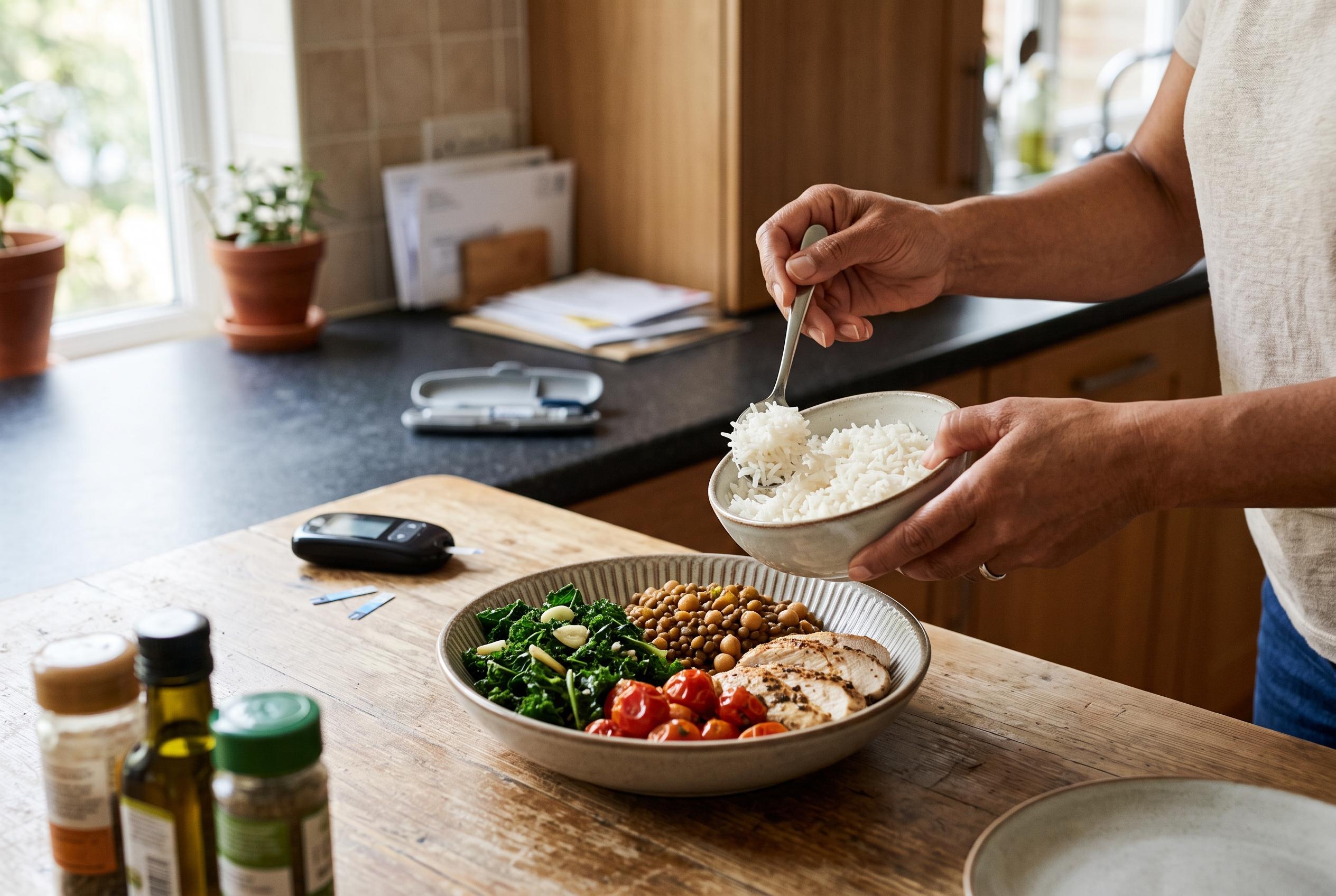

New insights reveal that combining white rice with fibre-rich foods and choosing specific rice varieties can reduce its impact on blood sugar levels, offering practical strategies for those managing diabetes.
White rice remains a staple across much of the world, but it can raise blood sugar quickly because it has been stripped of much of the bran and germ that slow digestion. Megan Wroe, a dietitian and wellness manager at Providence St. Jude Medical Centre, told readers that the milling process removes most of the grain’s fibre, along with some vitamins, protein and fat. That leaves a starch-heavy food that the body breaks down more rapidly than whole grains, helping explain why the blood sugar rise after a meal of white rice can be sharper than many people expect.
That does not mean rice has to be off the menu. Healthline notes that people with diabetes can still eat rice if they pay attention to portion size and choose higher-fibre foods alongside it. The same article suggests looking beyond white rice to grains such as oats, barley, quinoa and buckwheat, which offer more fibre and tend to produce a steadier rise in blood glucose. Harvard Medical School has also warned that a serving of white rice can trigger a blood sugar spike similar to that of table sugar, underlining why it is wise to treat it as a food that needs balancing rather than eating in large amounts on its own.
One of the simplest ways to soften the effect of white rice is to pair it with foods that slow digestion. Nutrition guidance cited by several health sites recommends combining rice with protein, vegetables and other sources of fibre so the meal is absorbed more gradually. Smaller portions also matter. Even when the rice itself has a relatively high glycaemic index, the overall impact on blood sugar depends on how much is eaten and what else is on the plate. In practice, that means a modest scoop of rice alongside beans, fish, chicken or vegetables is likely to be a better choice than a large bowl eaten alone.
There is also growing interest in the type of rice chosen and in the way it is prepared. Some varieties, including basmati, may produce a gentler glucose response than other kinds, while cooling cooked rice before eating can increase resistant starch, a form of carbohydrate that is digested more slowly. That makes rice less likely to cause a rapid spike, though it does not turn it into a low-carbohydrate food. For people watching blood sugar, the key lesson is not to fear rice entirely, but to treat white rice as one part of a meal that works best when balanced, measured and varied.
Disclaimer: This content is for informational purposes only and is not intended to be a substitute for professional medical judgment, advice, diagnosis, or treatment.



