

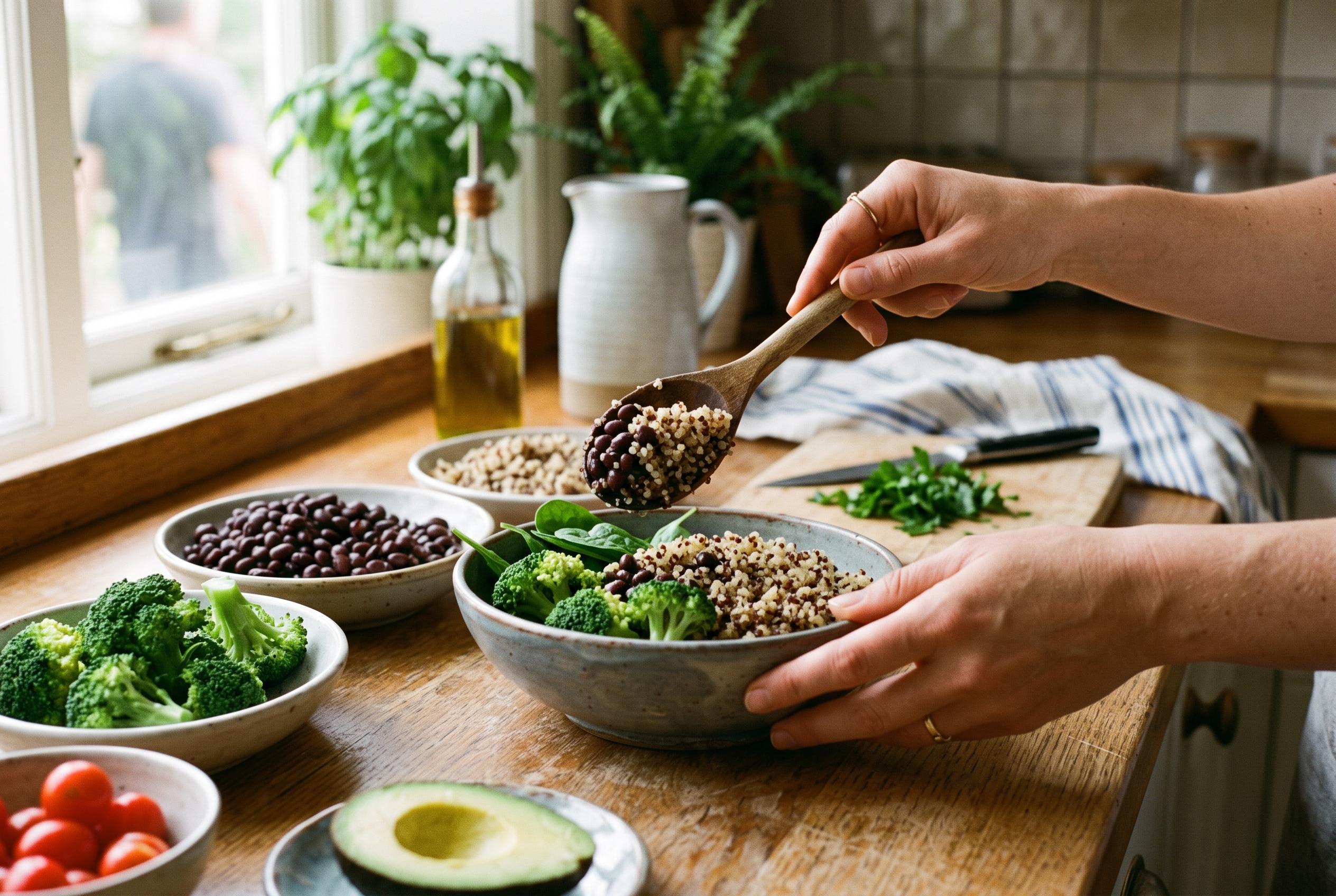

Incorporating fibre into lunch through simple substitutions like beans, whole grains, and vegetables offers a practical way to improve digestion, blood sugar stability, and overall health without overhauling your diet.
Building more fibre into lunch does not have to mean a major diet overhaul. The easiest gains often come from small swaps: adding beans or lentils to a salad, choosing whole grains instead of refined starches, and packing the plate with vegetables, fruit and seeds. Nutrition guidance from Mayo Clinic, Cleveland Clinic and Healthline all points to the same broader picture: fibre supports digestion, helps with fullness, and can contribute to steadier blood sugar and better cholesterol levels.
That makes lunchtime a practical place to start. A half-cup of black beans, kidney beans or chickpeas can add both fibre and plant protein to soups, stir-fries and grain bowls. Switching from white rice or standard sliced bread to brown rice, quinoa, barley or wholemeal bread can lift the fibre count further without changing the meal’s basic structure.
Vegetables do even more of the heavy lifting. Broccoli, cauliflower, cabbage and spinach are among the easiest additions to salads, sandwiches and side dishes. Fresh fruit can also work well at the end of a meal or folded into the main course, while chia seeds, flaxseeds and sunflower seeds add texture as well as an extra fibre boost.
The wider health case for fibre is strong. Healthline and the Mayo Clinic say it helps feed beneficial gut bacteria, supports bowel regularity, may ease constipation and can help people feel satisfied for longer, which may assist with weight management. The key is consistency: modest changes repeated at lunch each day can make it much easier to meet fibre goals without sacrificing taste or convenience.
Disclaimer: This content is for informational purposes only and is not intended to be a substitute for professional medical judgment, advice, diagnosis, or treatment.



