

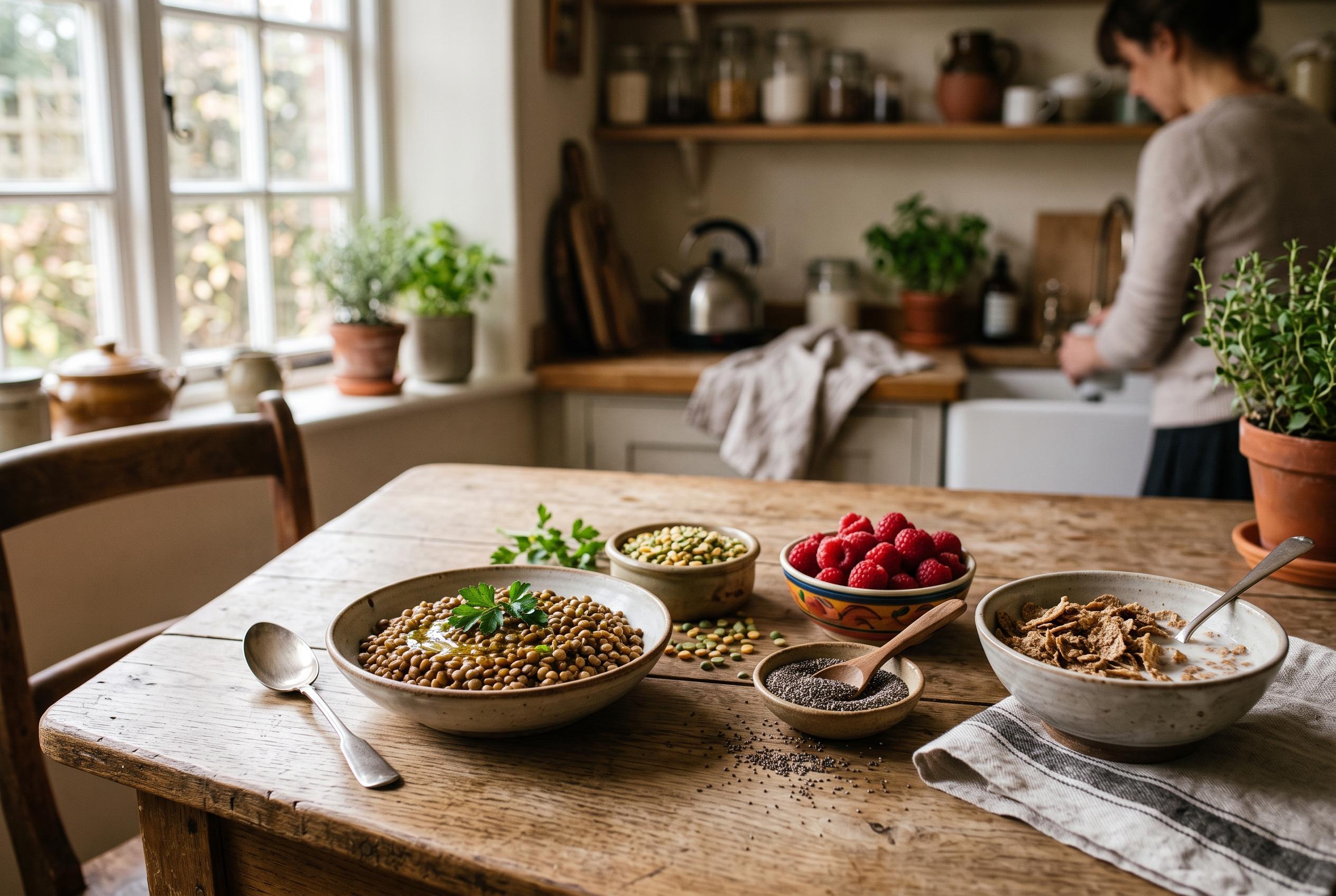

From lentils and split peas to raspberries, chia seeds and bran cereal, these affordable everyday foods can make reaching higher fibre targets simpler.
Lentils sit near the top of any practical list of high-fibre foods because they do more than simply add bulk to a meal. According to research published in Nutrients in 2024, daily lentil consumption was linked with lower LDL and total cholesterol, reduced post-meal glucose and lower inflammatory markers, with no reported gastrointestinal side effects. That makes lentils a rare combination of convenient, affordable and metabolically useful, especially in soups, rice dishes or grain bowls.
Split peas offer a similarly strong case, and are often overlooked in favour of better-known legumes. Nutrition sources cited by Consumer Reports and Verywell Fit put a cooked cup at about 16 grams of fibre, alongside meaningful protein, while also describing them as shelf-stable, inexpensive and useful in soups, stews and purées. Their mild flavour is part of the appeal: they can add fibre without changing a dish dramatically.
Chickpeas have become a pantry regular for good reason. A cup delivers about 12.5 grams of fibre, according to the source article, along with enough plant protein to make meals feel more complete. They work equally well roasted for a snack, blended into hummus or folded into salads and curries, which helps explain why dietitians often treat them as one of the easiest legume swaps in everyday cooking.
Among fruits, raspberries stand out for giving a lot of fibre without much sugar. The source article says a serving provides around 8 grams of fibre, and the Mayo Clinic has pointed to a breakfast of raspberries, oatmeal and almonds as an example of how quickly fibre can accumulate in a single meal. That matters for anyone trying to reach a daily target without relying on supplements or heavily processed foods.
Chia seeds are tiny, but they add up quickly. A tablespoon contains about 4.1 grams of fibre, and because the seeds absorb liquid, they can thicken yoghurt, smoothies or puddings while helping a meal feel more filling. One sports dietitian quoted by Food Network favours chia pudding with milk, berries and almond butter as a practical breakfast for people trying to raise their fibre intake.
Artichokes deserve more attention than they usually get at the supermarket. A single artichoke provides about 7 grams of fibre, according to the source material, and can be served steamed, chopped into pasta or used as part of a larger vegetable dish. Their appeal is not just nutritional; they also bring variety at a time when many people depend too heavily on the same few vegetables.
Black beans belong in the same conversation as lentils and split peas, especially for batch cooking. The source article notes that legumes often deliver fibre in the double digits per cooked cup, and black beans are valued for holding their texture after reheating. That makes them useful across tacos, salads and grain bowls, particularly for households that want one ingredient to cover several meals.
Oats occupy a slightly different fibre category because much of their fibre is soluble beta glucan, a type linked to cholesterol benefits. A 2020 review in Nutrients associated higher fibre intake with healthier gut bacteria, better regularity, improved heart health and a lower risk of type 2 diabetes. Oatmeal on its own is a sound start, but fruit, nuts or seeds can turn it into a far more substantial fibre source.
For speed and simplicity, whole grain bran cereal remains one of the most efficient options on the list. The source article says a half-cup serving of high-fibre bran cereal contains 14 grams of fibre, which is close to half the lower end of a typical daily target before milk or fruit are added. It may not be the most exciting breakfast, but it is easy to keep on hand and easy to scale into a realistic routine.
Disclaimer: This content is for informational purposes only and is not intended to be a substitute for professional medical judgment, advice, diagnosis, or treatment.



