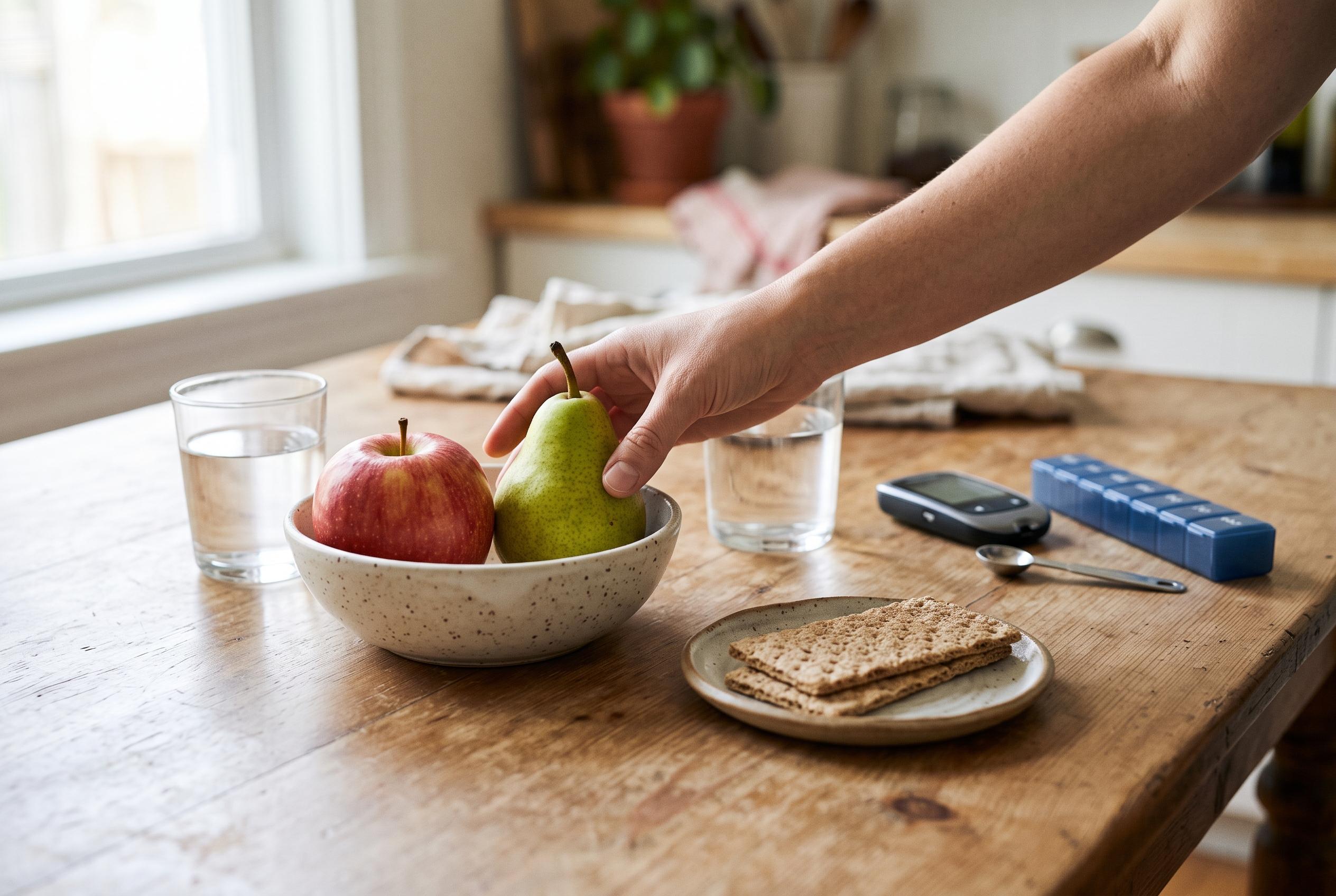

Recent research highlights that both apples and pears, rich in fibre and antioxidants, can be fitting choices for blood sugar management, with their benefits largely dependent on how they are consumed.
Fruit is often treated with suspicion in blood sugar discussions, but the evidence points to a more measured view. In an Adom Online article comparing apples and pears, registered dietitian Jamie Lee McIntyre said whole fruit brings fibre, water and antioxidants in a package that is very different from added sugar alone, helping to explain why these everyday snacks can still fit into a blood-sugar-friendly diet.
On apples, the key advantage is fibre, especially pectin, a soluble fibre that slows digestion and helps glucose enter the bloodstream more gradually. Healthline says apples also contain polyphenols and fructose, which may further soften the blood sugar response. The article also notes that eating an apple before a carbohydrate-heavy meal may reduce the post-meal glucose rise.
Pears follow a similar pattern. The Adom Online piece says a medium pear provides about 6 grams of fibre, with much of it concentrated in the skin, while Cleveland Clinic and WebMD both describe pears as a low-glycaemic fruit that supports steadier blood sugar. The fibre in pears also feeds gut bacteria, which may produce compounds that help with longer-term glucose control, although researchers say more human evidence is still needed.
So which is better? In practical terms, it is close to a tie. Both fruits are low on the glycaemic index, both offer soluble fibre and water, and both can be part of a balanced diet for people trying to keep blood sugar stable. The differences are small enough that the better choice is usually the one that is eaten whole and enjoyed regularly.
What matters most is how fruit is eaten. Pairing apples or pears with protein or healthy fat can slow digestion further and make a snack more filling, whether that means apple slices with nut butter or a pear with cottage cheese. Eating the skin when possible also preserves some of the fibre that helps blunt a sharper blood sugar rise.
Disclaimer: This content is for informational purposes only and is not intended to be a substitute for professional medical judgment, advice, diagnosis, or treatment.