

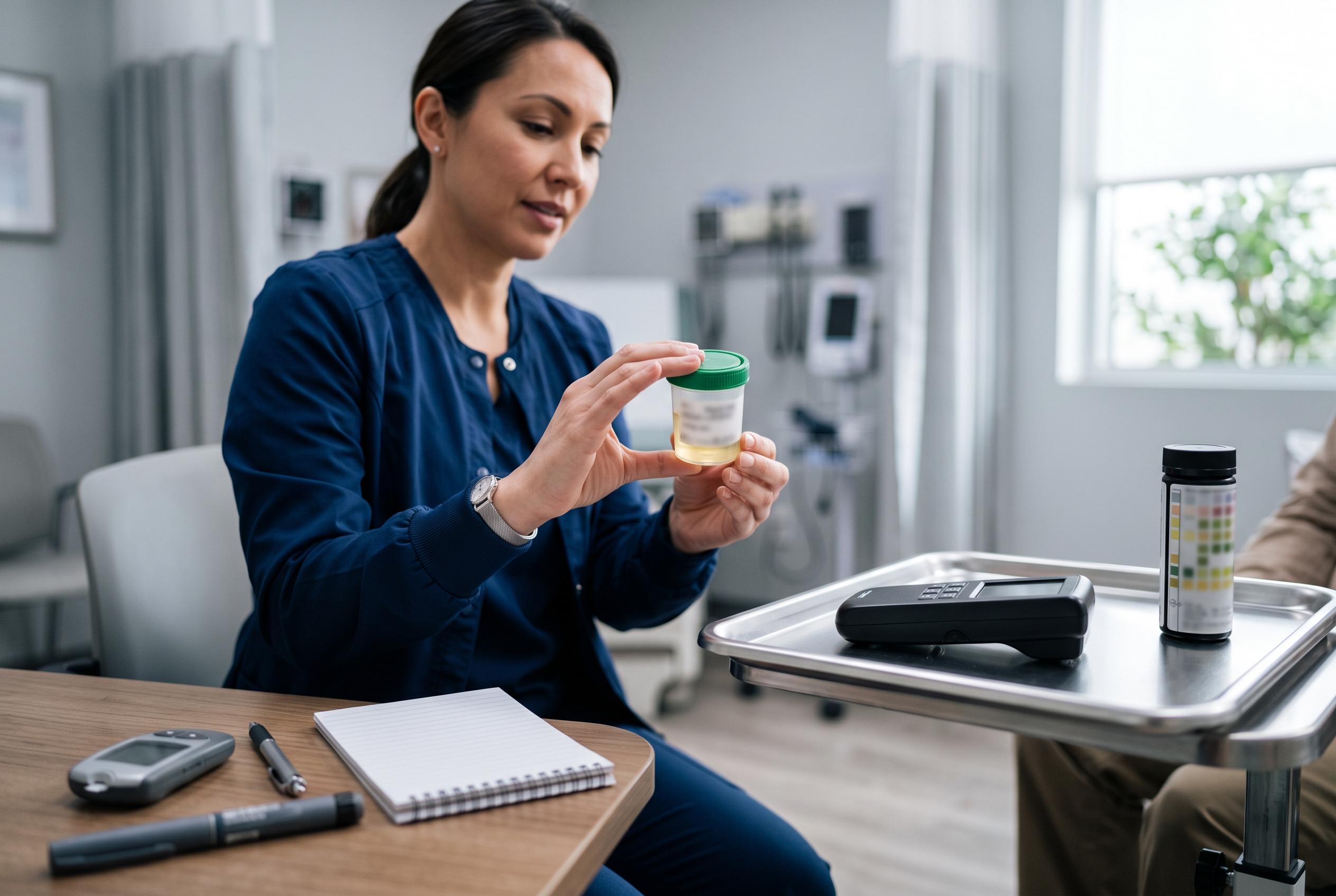

A recent study indicates that GLP-1 receptor agonists and SGLT-2 inhibitors slow kidney decline in adults with type 2 diabetes and albuminuria, highlighting the importance of urine testing to tailor treatments.
In adults with type 2 diabetes and moderate cardiovascular risk, two widely used newer drug classes were linked to a slower decline in kidney function when albuminuria was present, according to a study published in The BMJ and reported by HealthDay. The analysis compared glucagon-like peptide-1, or GLP-1, receptor agonists and sodium-glucose cotransporter-2, or SGLT-2, inhibitors with dipeptidyl peptidase-4, or DPP-4, inhibitors, a common second-line diabetes treatment. Researchers said the findings suggest that urine albumin testing may help doctors choose therapies that better protect the kidneys in people at higher risk of deterioration.
The study, led by Alexander Turchin of Brigham and Women’s Hospital in Boston, used a target trial emulation design and drew on data from 75,455 adults with type 2 diabetes, moderate cardiovascular risk and an estimated glomerular filtration rate of at least 45 mL/min/1.73 m², all of whom were taking metformin alone when they entered the analysis. Participants were followed for a median of 32 months. The main kidney outcome was a marked worsening of renal function, defined as a doubling of serum creatinine or an estimated glomerular filtration rate below 15 mL/min/1.73 m², according to the study abstract indexed in PubMed.
Among the 61,583 participants without albuminuria, the estimated five-year risk of the kidney outcome was 2.4% for those taking GLP-1 receptor agonists or SGLT-2 inhibitors and 2.1% for those taking DPP-4 inhibitors, a difference the researchers did not describe as clinically meaningful. But in the group with albuminuria, the five-year risk was 3.2% for people treated with GLP-1 receptor agonists or SGLT-2 inhibitors, compared with 5.4% for those on DPP-4 inhibitors. The study reported a risk ratio of 0.60 in the albuminuria group, pointing to a materially lower risk of kidney deterioration when either of the newer drug classes was used.
The authors said their results “underscore the importance of considering albuminuria when making treatment decisions for people with type 2 diabetes at risk of declining renal function”. That view fits with earlier research suggesting kidney benefits from both drug classes, although other comparative studies have sometimes found SGLT-2 inhibitors to have a stronger effect on renal preservation than GLP-1 receptor agonists. A separate report from Pharmacy Times noted that the benefit seen in the BMJ study appeared confined to patients with albuminuria, while people without albuminuria did not show the same pattern, reinforcing the idea that kidney risk is not the same across all patients with diabetes.
Disclaimer: This content is for informational purposes only and is not intended to be a substitute for professional medical judgment, advice, diagnosis, or treatment.



