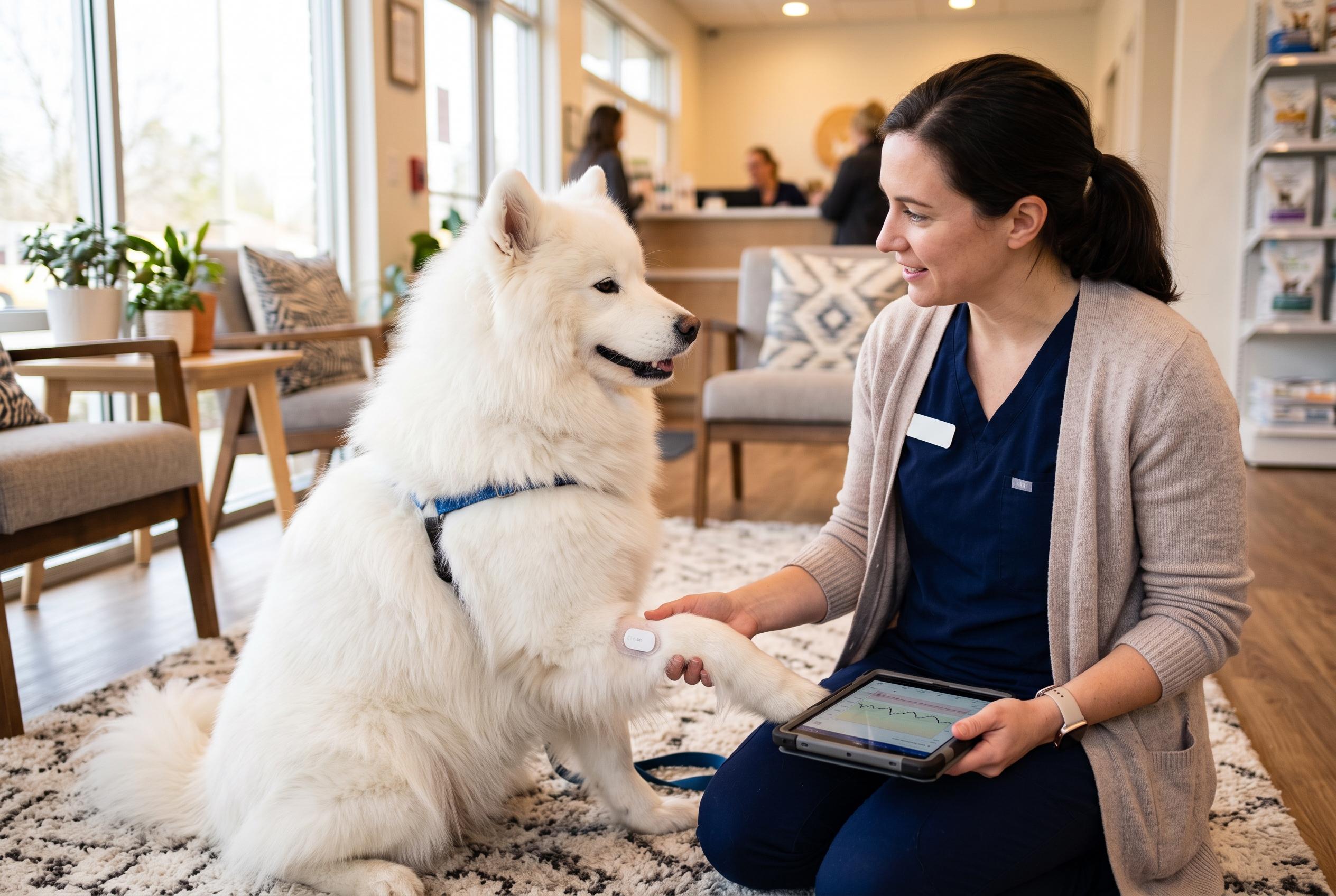

Innovations in continuous glucose monitoring are making diabetes care safer and less stressful for Samoyeds, but challenges remain due to their dense coat and active nature. Veterinary experts highlight that, with proper guidance, these devices can provide valuable insights into blood sugar patterns, supporting more effective treatment plans.
A continuous glucose monitor can make life easier for owners managing a diabetic Samoyed, but it is not a plug-and-play fix. SamoyedGuide says the appeal is straightforward: fewer ear pricks and paw sticks, less stress for the dog, and a steadier picture of blood sugar over time. That matters for a breed with a thick coat, a lively temperament and a talent for hiding discomfort.
Veterinary researchers have long argued that the main value of continuous glucose monitoring is the detail it provides. A paper in the Journal of Veterinary Internal Medicine says these systems measure glucose in the fluid under the skin and can reveal patterns that ordinary spot checks miss, without the need for repeated hospital visits. SingleCare, in a separate overview of the FreeStyle Libre in dogs, says vets have adapted human devices for canine use, but that professional guidance remains essential because readings can be imperfect.
For Samoyeds, the practical obstacles are often physical rather than medical. The breed’s dense double coat can make sensor placement harder, and the device may need careful clipping, skin preparation and extra protection to stay attached for the full wear period. SamoyedGuide says active dogs may also rub or scratch sensors loose, which is why some owners use wraps, shirts or adhesive aids to help keep the device in place.
That convenience has helped make CGMs increasingly attractive in veterinary practice. A blog from Veterinary Internal Medicine Nursing says the systems offer a less invasive alternative to repeated blood curves and can reduce stress for pets and owners alike. Commercial veterinary platforms have gone further, with companies such as Adapet Medical, ALR Technologies and Vepalabs promoting pet-focused monitors that send frequent readings to apps or cloud portals, though those products are positioned around veterinary supervision rather than owner-led guesswork.
Even so, a CGM should be seen as one tool in a broader diabetes plan, not a replacement for veterinary judgement. The biggest warning from the veterinary sources is that interstitial glucose can lag behind true blood glucose, so a suspicious reading may still need confirmation. For Samoyed owners, the best result is usually a compromise: less handling, better trend data and closer coordination with a vet who can turn the numbers into safe insulin and feeding decisions.
Disclaimer: This content is for informational purposes only and is not intended to be a substitute for professional medical judgment, advice, diagnosis, or treatment.