

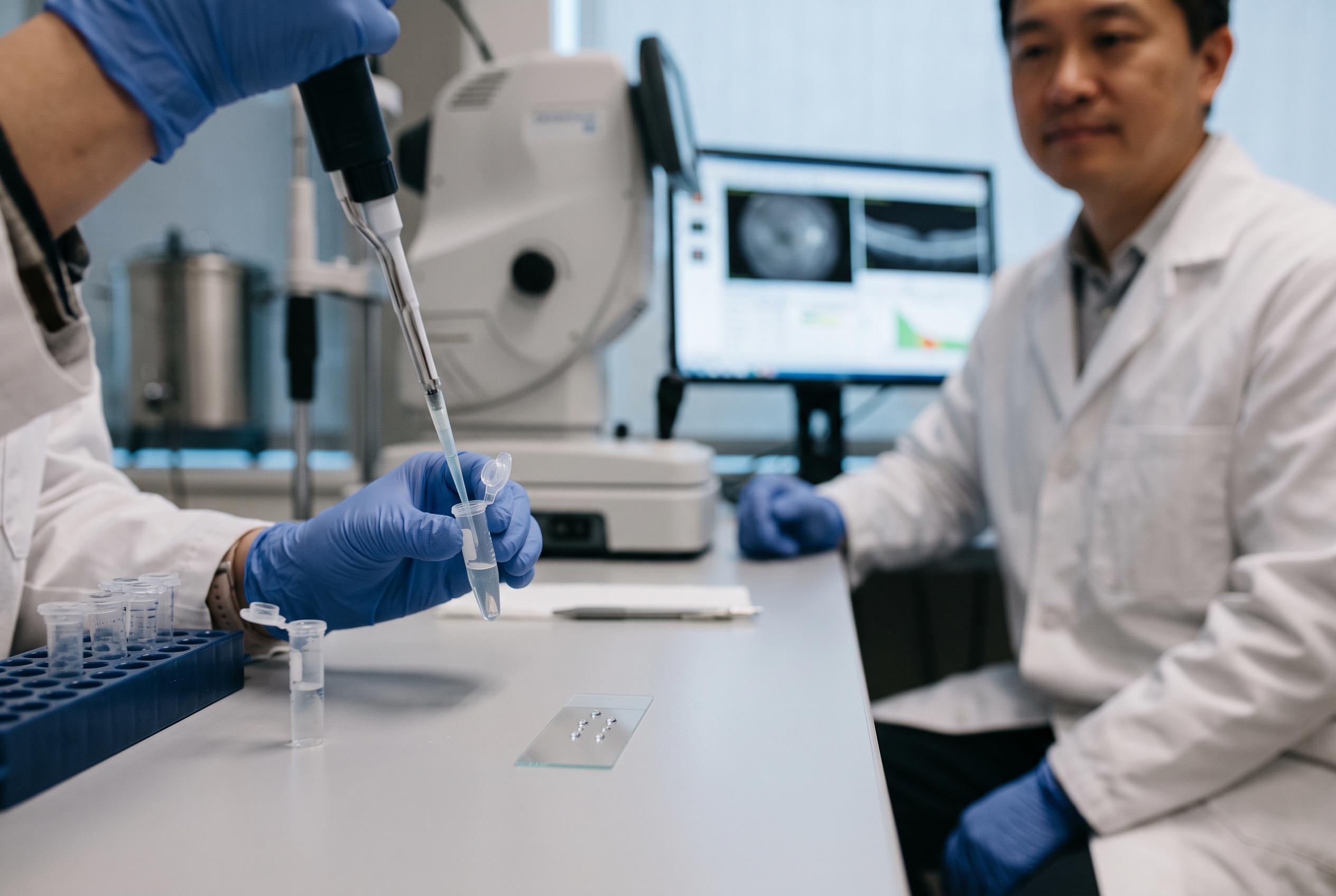

Researchers in China have developed a ginger-derived nanoparticle system that delivers a DNAzyme targeting VEGFA mRNA, potentially paving the way for earlier and less invasive treatments for diabetic retinopathy.
Researchers in China have reported a ginger-derived nanoparticle system that may offer a new way to deliver a DNA-cleaving molecule into the eye and dampen the signals that drive diabetic retinopathy. In a paper published in the International Journal of Nanomedicine, the team describes a formulation that pairs plant-based exosome-like particles with a DNAzyme designed to cut VEGFA messenger RNA, the genetic template for vascular endothelial growth factor A, a key protein linked to abnormal blood vessel growth in the retina.
The work builds on a long-standing problem in diabetic eye disease: anti-VEGF injections can be highly effective, but they act only after VEGF protein has been made and released, which means treatment often has to be repeated. The authors argue that a DNAzyme-based approach could intervene earlier, at the level of gene expression, while the ginger-derived carrier may help protect the nucleic acid drug from breakdown and improve delivery to retinal tissue.
In cell and animal experiments, the researchers found that the ginger nanoparticles were roughly 130 nanometres across, carried a negative surface charge and showed low toxicity in retinal endothelial cells, red blood cells and major organs in mice. They reported that loading the DNAzyme into the particles did not damage its structure, and that the resulting formulation entered human retinal microvascular endothelial cells efficiently. In high-glucose conditions, the combined system reduced cell migration and tube formation more effectively than either the free DNAzyme or the empty nanoparticles alone.
The mouse data pointed to a short-term biological effect in diabetic retinopathy. According to the study, retinal VEGFA protein levels fell after treatment, while mRNA suppression lasted for up to two weeks after a single intravitreal injection before fading by day 21. Fluorescence imaging also suggested that the nanoparticle formulation kept the DNAzyme signal in the eye longer than the free molecule. The authors likewise reported lower signals for the inflammatory markers IL-1β and TNF-α, hinting that the ginger carrier may contribute an anti-inflammatory effect as well as acting as a delivery vehicle.
Still, the findings stop short of proving clinical benefit. The study was exploratory, used a single injection schedule and did not include direct readouts of retinal blood vessel leakage, flat-mount vascular changes or visual function. That means the work supports a promising molecular strategy rather than a confirmed treatment for diabetic retinopathy. Even so, the authors say the platform could form a basis for future retinal gene-silencing therapies that reduce the need for frequent injections and combine anti-angiogenic and anti-inflammatory actions in one system.
Disclaimer: This content is for informational purposes only and is not intended to be a substitute for professional medical judgment, advice, diagnosis, or treatment.



