

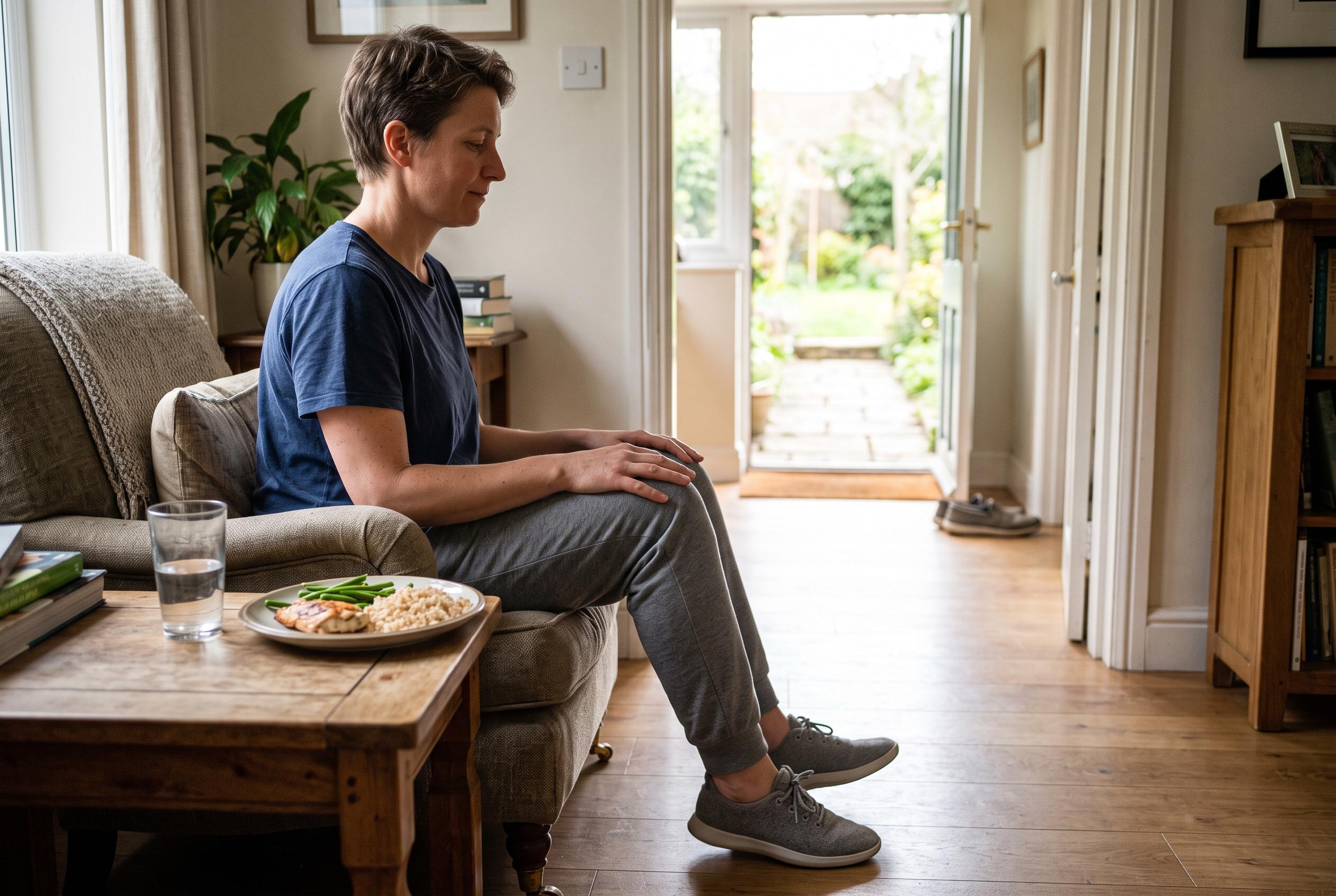

Research suggests that sustained muscle activity, such as prolonged calf movements, significantly reduces post-meal glucose levels more than brief exercises like seated heel raises. The most effective approach remains a moderate walk soon after eating, highlighting the importance of timing and duration in post-meal activity for blood sugar control.
Researchers say the easiest way to blunt a post-meal blood sugar rise may not be to avoid carbohydrates altogether, but to move the body soon after eating. A 2022 study from the University of Houston, published in iScience, found that sustained soleus muscle activation, a seated calf movement aimed at the deep calf muscle, was associated with a sharp reduction in post-meal glucose levels and a lower insulin response. But the research also shows an important caveat: the exercise protocol was far more prolonged than the quick heel-raise routines being promoted online.
That distinction matters because blood glucose changes after a meal follow a fairly predictable pattern. In healthy adults, levels usually peak about an hour after eating and then return towards baseline within two to three hours, with the rise itself generally remaining within a normal range. The body releases insulin to help move glucose from the bloodstream into tissues, but muscle contraction can also drive glucose uptake independently of insulin, which is why movement after eating has such a measurable effect.
The strongest practical evidence still favours walking. Reviews and meta-analyses cited in the broader literature show that even a short stroll after a meal can reduce the postprandial glucose response, particularly when the walk begins within 30 to 60 minutes of eating. That benefit comes from activating large muscle groups such as the quadriceps, hamstrings and glutes, which increase the body’s demand for fuel and help clear glucose from the blood more efficiently.
Soleus push-ups have attracted attention because they can be done seated and require no equipment, making them appealing for people who spend long periods at a desk. Yet the evidence does not support the idea that a few minutes of casual heel raises will reproduce the full effect seen in the University of Houston experiment. The study’s glucose reduction came from continuous, extended muscle activity, not a brief burst of movement, so claims that the same benefit can be achieved instantly should be treated with caution.
Other short bouts of movement, including body-weight squats, are plausible for the same biological reason: contracting muscle draws on glucose. But the research base for very brief post-meal squat sets is thinner than it is for walking, and the results are less clearly established. The same is true of more ambitious eating patterns such as one meal a day, or OMAD. Some studies suggest intermittent fasting can improve insulin sensitivity, but the evidence is mixed, and for some people, especially those taking glucose-lowering medication, compressing food intake into a single meal may create more problems than it solves.
For most people, the lesson is simpler than the hype around any single tactic. Post-meal movement can help the body handle glucose more efficiently, and the best-supported version is still an ordinary walk. Seated calf raises may be useful as a low-effort option, but the dramatic numbers circulating online come from a much more demanding laboratory protocol than a few casual reps at the dinner table.
Disclaimer: This content is for informational purposes only and is not intended to be a substitute for professional medical judgment, advice, diagnosis, or treatment.



