

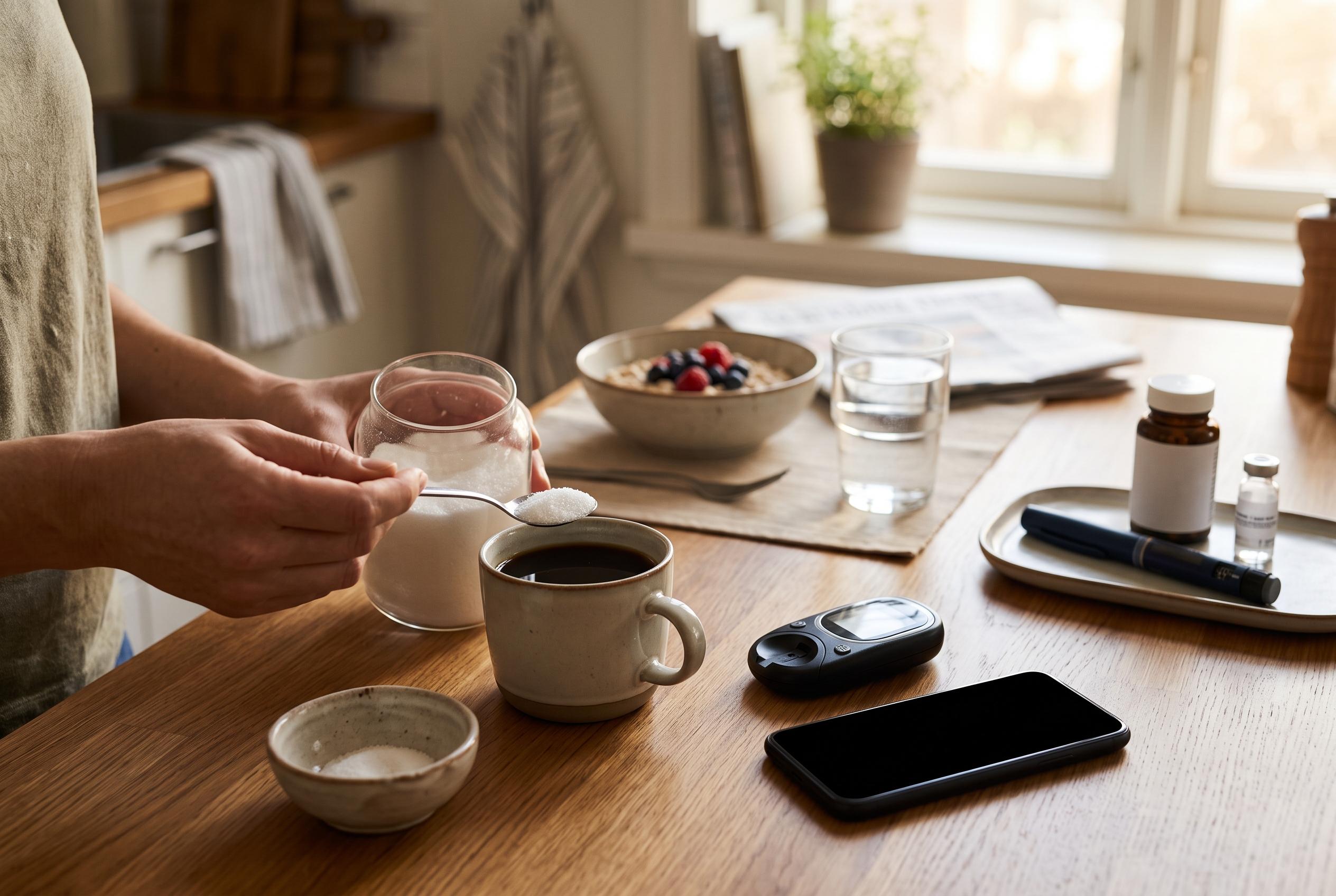

New studies suggest that non-caloric sweeteners like saccharin and sucralose may alter gut bacteria and affect glucose handling, with effects varying between individuals and raising concerns over long-term health impacts.
Researchers have added to a growing body of evidence suggesting that some non-caloric sweeteners may do more than simply replace sugar. A report in The Mirror, citing work discussed by Tim Spector, pointed to a human study from the Weizmann Institute’s Elinav laboratory that found saccharin and sucralose had the strongest effect on glucose handling, while all four sweeteners tested altered the gut microbiome in some way. The study, which involved 120 adults who said they had largely avoided artificial sweeteners, also found that the effects varied from person to person.
The findings fit with earlier research published in Nature, which showed that saccharin, sucralose and aspartame could trigger glucose intolerance in mice by changing the intestinal microbiota. That 2014 paper also reported similar effects in healthy human volunteers, helping to establish the idea that sweeteners may influence metabolism indirectly through the gut rather than only through their taste or calorie content.
A later review in Advances in Nutrition reached a similar broad conclusion after examining experimental studies and clinical trials: non-nutritive sweeteners can alter the composition and function of gut microbes, with possible consequences for host metabolism. More recent work has added a further layer of complexity. A 2022 study in Cell found that the impact of these sweeteners on glucose tolerance is not uniform, but appears to depend on the individual’s existing microbiome, meaning different people may respond very differently to the same product.
The new report, as summarised by The Mirror, said that the researchers observed changes in both the structure and activity of the microbiome after just two weeks of exposure to the sweeteners. It also said the team detected shifts in small molecules released by gut bacteria into the bloodstream. According to the researchers, the changes were not identical across the sweeteners tested, suggesting that each one may affect the body through distinct biological pathways.
Spector said on the Zoe Science and Nutrition podcast that one of the key takeaways was the possibility that saccharin and sucralose could, over time, raise the risk of diabetes. He also said all four sweeteners appeared to disturb the gut microbiome, producing what researchers describe as dysbiosis, or an imbalance in the microbial community. Sarah Berry, a nutrition professor at King’s College London, said on the same podcast that consumers may be taking in more sweeteners than they realise because they are hidden in many foods and drinks, including tea and coffee.
The researchers stressed that their results should not be read as a recommendation to switch back to sugar. They said the study does not show that ordinary sugar is healthier than non-caloric sweeteners, and the NHS continues to describe approved sweeteners in the UK as safe when consumed within established limits. Johns Hopkins Medicine has also said that artificial sweeteners generally appear safe at permitted levels, although it notes they do not provide nutrients and that questions about long-term health effects remain under investigation. That broader uncertainty is reflected in the research itself: while short-term studies often suggest that sweetened drinks can help reduce calorie intake compared with sugar-sweetened alternatives, longer observational studies have produced mixed results, leaving the overall picture unresolved.
Disclaimer: This content is for informational purposes only and is not intended to be a substitute for professional medical judgment, advice, diagnosis, or treatment.



