

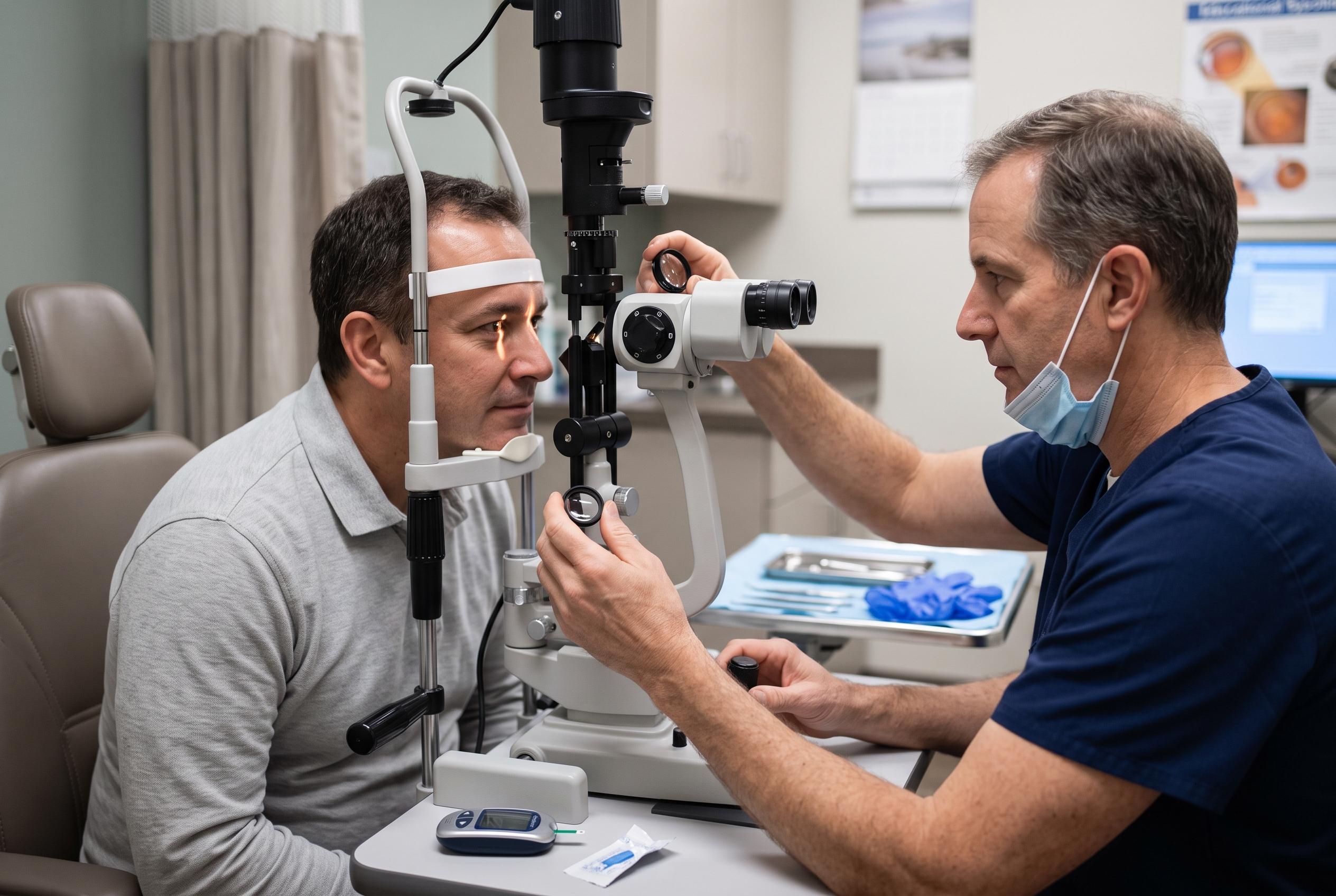

Ophthalmic surgeon Chien Wong highlights how gradual vision changes can serve as early indicators of diabetes, urging regular eye examinations to prevent serious complications.
A gradual change in vision can be an early warning sign of diabetes, according to ophthalmic surgeon Chien Wong, who said the problem is often subtle enough to be missed until it has already progressed. In Ireland, the Health Service Executive estimates that about 300,000 people are living with the condition, including roughly 270,000 with type 2 diabetes and up to 30,000 with type 1, while tens of thousands more may not yet know they have it.
Wong said blurred vision is often one of the first clues. The reason, he explained, is that blood sugar swings can alter the way the eye focuses. When glucose levels rise sharply, fluid can shift in and out of the lens, causing it to swell and producing a temporary blur. The same effect can happen when levels fall too low, leaving vision cloudy in one or both eyes. Diabetes organisations and eye-health groups, including the American Diabetes Association, the US Centers for Disease Control and Prevention and the Macular Society, describe this as a recognised early effect of poorly controlled blood sugar.
The longer-term threat is more serious. According to Wong, persistently high blood sugar can damage the tiny blood vessels at the back of the eye, particularly in the retina, where leaking fluid can lead to swelling and visual disturbance. In more advanced cases, vessels may stop working and fragile new ones can form, raising the risk of bleeding, retinal detachment and glaucoma. Diabetes specialists in the United States and Britain similarly warn that diabetic retinopathy and diabetic macular oedema are among the main causes of vision loss linked to the disease, especially when it is not diagnosed or managed early.
Wong said that nearly all people with type 1 diabetes and about two-thirds of those with type 2 will develop some form of diabetic eye disease within 20 years of diagnosis. He argued that regular eye examinations offer one of the best chances of catching damage early, before sight is permanently affected. Sudden floaters, he added, can be a sign of internal bleeding and should be treated as urgent. The NHS advises people to seek medical help for symptoms such as increased thirst, frequent urination, tiredness, unexplained weight loss or recurring thrush, alongside any persistent or sudden change in vision.
Disclaimer: This content is for informational purposes only and is not intended to be a substitute for professional medical judgment, advice, diagnosis, or treatment.



