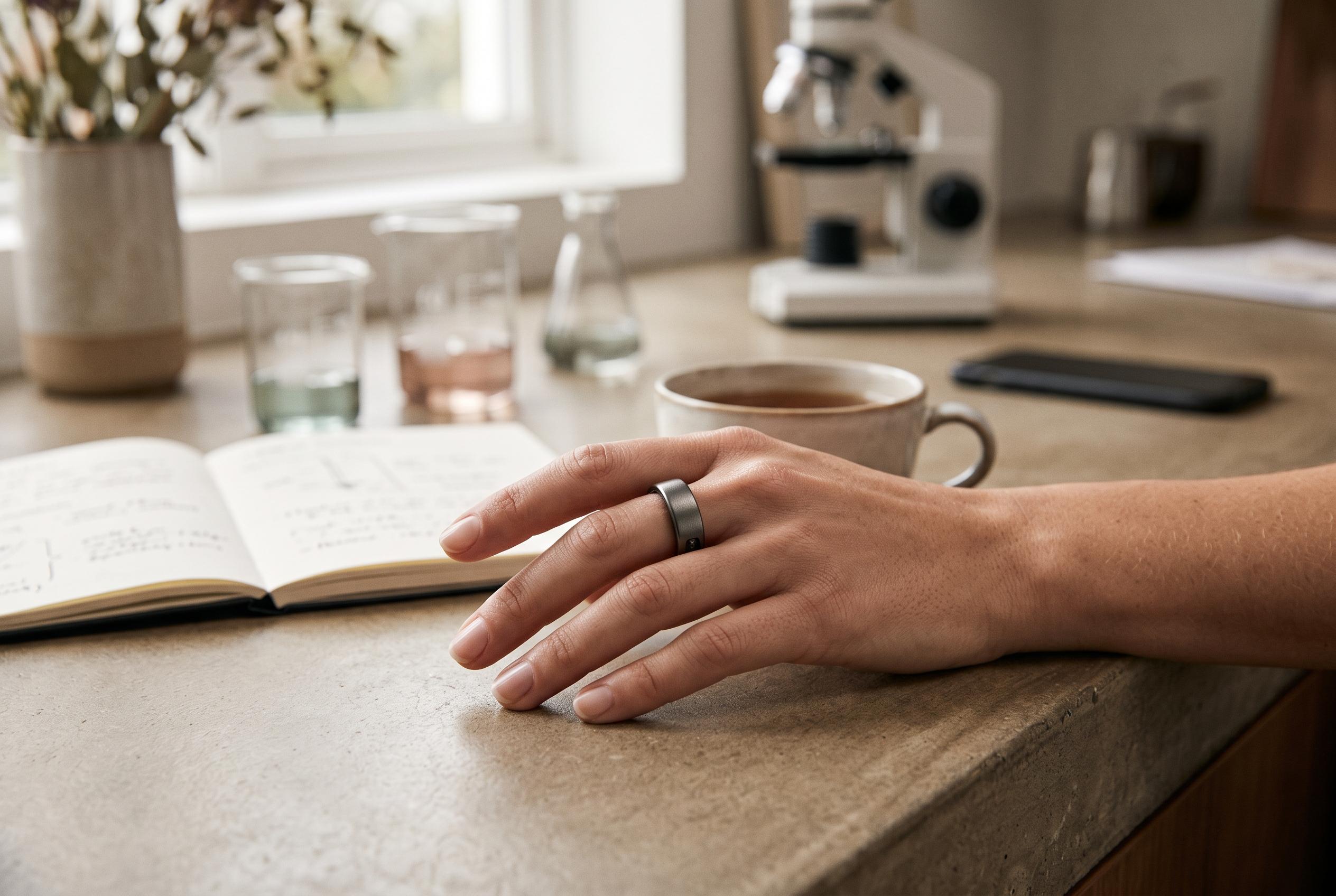

A breakthrough in wearable tech as UC San Diego researchers create a ring that tracks multiple chemical markers from sweat, promising more personalised health insights beyond traditional smartwatches.
A team at the University of California, San Diego has developed a ring-shaped device that could turn jewellery into a continuous health monitor, moving the idea of wearable tech beyond step counts and heart rates. According to the report in Nature, the prototype can track several chemical markers at once by using sweat, with results sent to a smartphone app.
The researchers, working in Professor Joseph Wang’s laboratory, say the compact ring is designed to measure glucose, ketones, vitamin C, uric acid, lactate and alcohol. That is a notable shift from most commercially available smart rings, which largely focus on biophysical signals such as movement or sleep rather than biochemical data.
The key idea is that sweat can carry useful information about the body’s internal state. The device does not rely on blood sampling, and the team says it can analyse markers continuously. For people managing diabetes, the most important potential use is glucose tracking, especially if paired with ketone readings, which could help guide insulin dosing and broader treatment decisions.
The researchers also addressed a practical limitation: some people do not produce enough sweat for all-day monitoring. To get around that, they built in a special gel to support measurement without pain or obvious inconvenience.
The team says the ring can automatically calibrate to its wearer after around two months, making it more personalised than a one-size-fits-all device. That could matter if the technology moves beyond the lab, because the value of any health tracker depends not only on what it measures, but on whether its readings stay reliable over time.
For now, the work points to a broader trend in wearable technology: a search for devices that are smaller, less intrusive and more medically useful than a smartwatch. If the results hold up outside the lab, smart jewellery may eventually become a serious tool for everyday health management rather than just an accessory.
Disclaimer: This content is for informational purposes only and is not intended to be a substitute for professional medical judgment, advice, diagnosis, or treatment.