

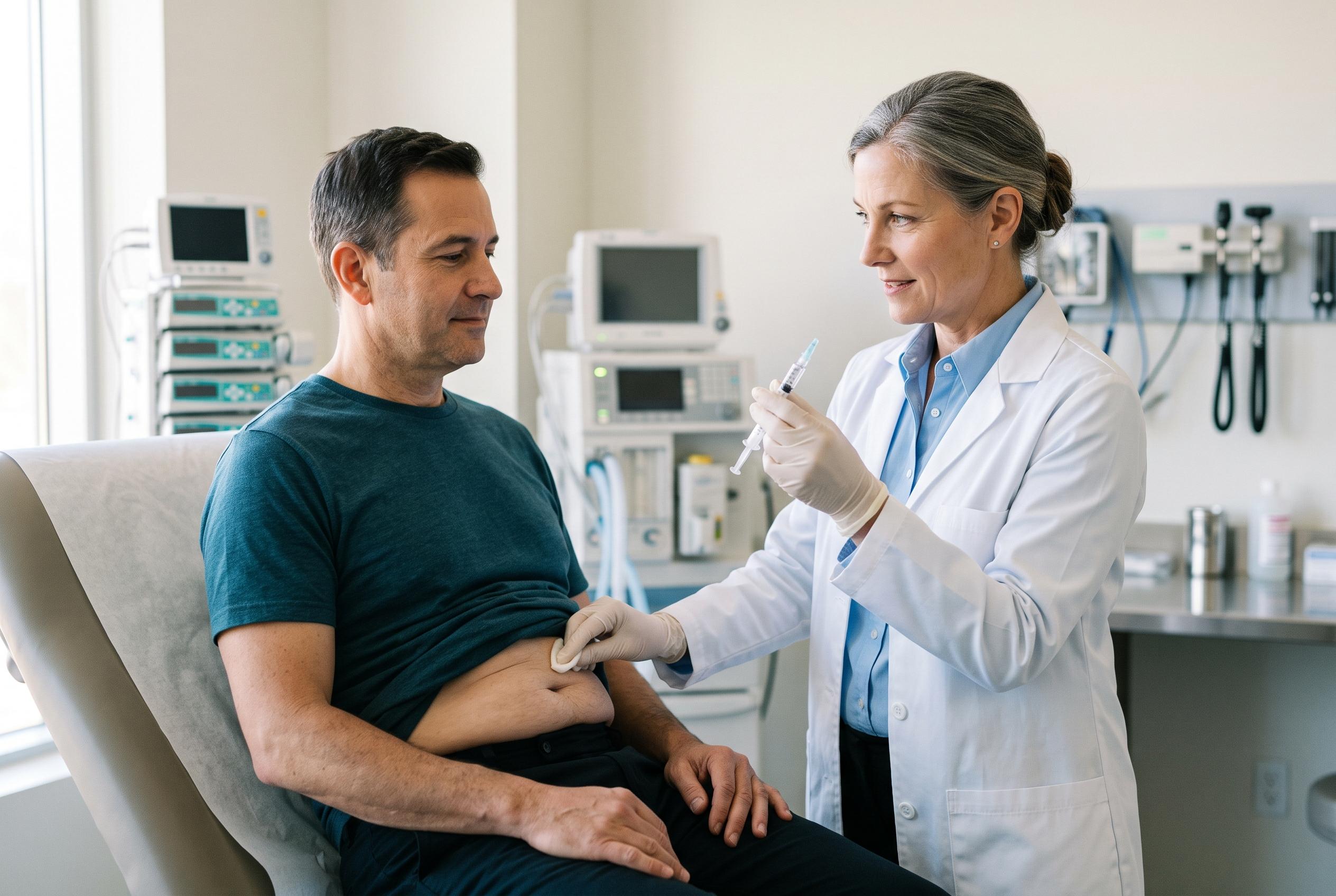

Early trial results suggest CBL-514 reduced visceral fat by about 12 per cent, but larger studies are needed to establish whether the experimental treatment delivers lasting health benefits.
An experimental injection called CBL-514 may offer a way to reduce visceral fat, the deep abdominal fat linked with inflammation, diabetes and heart disease. According to Science News, researchers presented early results at the annual meeting of the European Association for the Study of Diabetes in Milan, where they reported that the compound appears to trigger apoptosis, a form of programmed cell death, in fat cells rather than merely shrinking them.
That distinction matters because ordinary weight loss can make fat cells smaller without removing them, leaving the cells ready to expand again. The studies discussed in Milan built on earlier work showing that CBL-514 can reduce subcutaneous fat, the pinchable layer beneath the skin. The new analysis focused on MRI scans from a subset of participants in two small clinical trials to see whether the drug also affected visceral fat, which sits deeper in the abdomen around internal organs.
Participants in the trials, who ranged from healthy weight to overweight, received injections of CBL-514 or placebo every three weeks for as long as 12 weeks. The groups began with similar visceral fat levels, averaging 642.5 millilitres in the CBL-514 arm and 677.4 millilitres in the placebo arm. Four weeks after treatment, those given the experimental drug had lost nearly 71 millilitres of visceral fat, a drop of about 12 per cent, while the placebo group gained 31 millilitres, or almost 6 per cent, on average. By eight to 12 weeks, the gap had widened further, with the treatment group down by almost 63 millilitres and the placebo group up by more than 78 millilitres from baseline.
Related reports on the same presentation said CBL-514 also produced measurable reductions in subcutaneous fat, with a Phase 2 study published in the Aesthetic Surgery Journal finding that a substantially higher share of treated participants reached a reduction threshold of at least 150 millilitres than those on placebo. A separate trial listing shows that a larger Phase 3 study is now under way to assess the drug’s safety and efficacy in abdominal fat reduction. Even so, the work remains early, and larger trials will be needed before it is clear whether the visceral fat results translate into meaningful health benefits.
Disclaimer: This content is for informational purposes only and is not intended to be a substitute for professional medical judgment, advice, diagnosis, or treatment.



