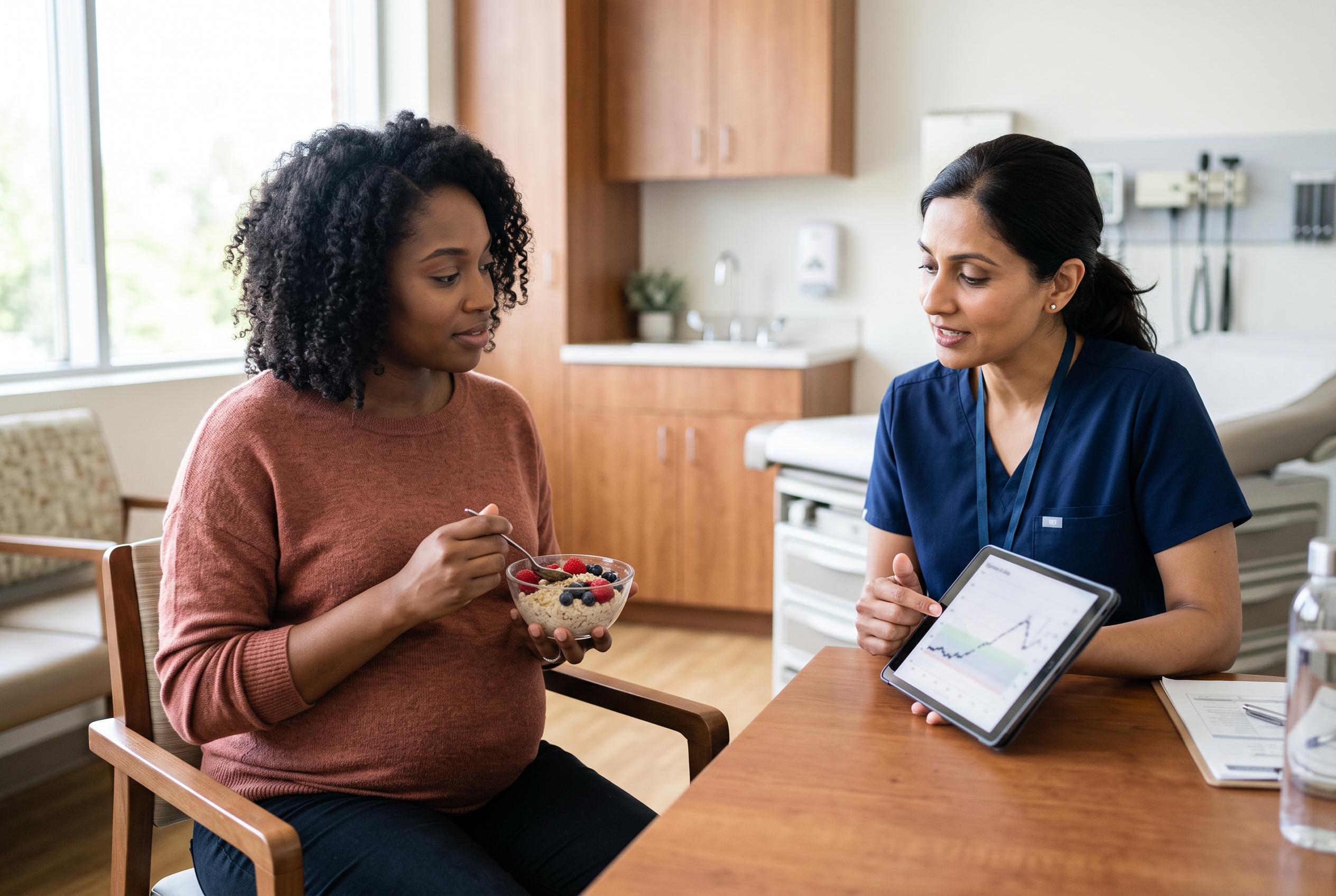

New developments in glucose screening methods and timing are transforming how pregnant women in the US are tested for gestational diabetes, highlighting a shift towards earlier and more accurate detection to improve maternal and neonatal outcomes.
For most pregnant women in the United States, glucose testing is now a routine part of prenatal care, usually offered between 24 and 28 weeks. The aim is simple: to check how the body handles sugar and to pick up gestational diabetes early enough to reduce risks for both mother and baby. The National Institute of Diabetes and Digestive and Kidney Diseases says the initial screening is often a one-hour glucose challenge, followed, if needed, by a longer oral glucose tolerance test that requires fasting and several blood draws.
The first test is a screening tool, not a diagnosis. A patient drinks a sweet solution, then has blood taken an hour later. If that result is above the cut-off set by the practice, the next step is usually the diagnostic test. MedlinePlus and the NIDDK say the follow-up test is typically done after at least eight hours without food, with blood samples taken at set intervals after the drink. Labcorp, citing American Diabetes Association recommendations, also notes that some clinics use a one-step, two-hour 75-gram test instead of the traditional two-step method.
Pregnant women with added risk factors may be tested earlier than the standard window. The NIDDK lists obesity, a family history of diabetes, previous gestational diabetes and polycystic ovary syndrome among the reasons doctors may move sooner. That matters because untreated gestational diabetes can raise the chances of larger babies, delivery complications and a greater long-term risk of type 2 diabetes for both mother and child. UCSF Health and MedlinePlus both stress that the point of screening is not to alarm patients, but to catch a manageable problem before it becomes one.
What many women find hardest is not the procedure itself, but the waiting and the drink. The glucose solution is often described as very sweet and can cause nausea, light-headedness or fatigue, especially in the longer fasting test. Medical guidance and patient-facing resources advise simple preparation: eat normally before the screening test, fast overnight for the diagnostic test, bring a snack for afterwards and wear comfortable clothing for a long appointment. If vomiting occurs during the test, the result may be unreliable and the test usually has to be repeated.
The key threshold is diagnosis, not failure. According to the NIDDK, gestational diabetes on the three-hour test is generally diagnosed when at least two blood sugar readings are elevated. That means a woman who does poorly on the first screen may still pass the follow-up test, which is why the screening step is intentionally sensitive. For patients who are worried about the standard approach, some clinicians may discuss alternatives such as home glucose monitoring, but the central message from medical guidance is consistent: for most pregnancies, glucose testing remains a standard and useful safeguard.
Disclaimer: This content is for informational purposes only and is not intended to be a substitute for professional medical judgment, advice, diagnosis, or treatment.