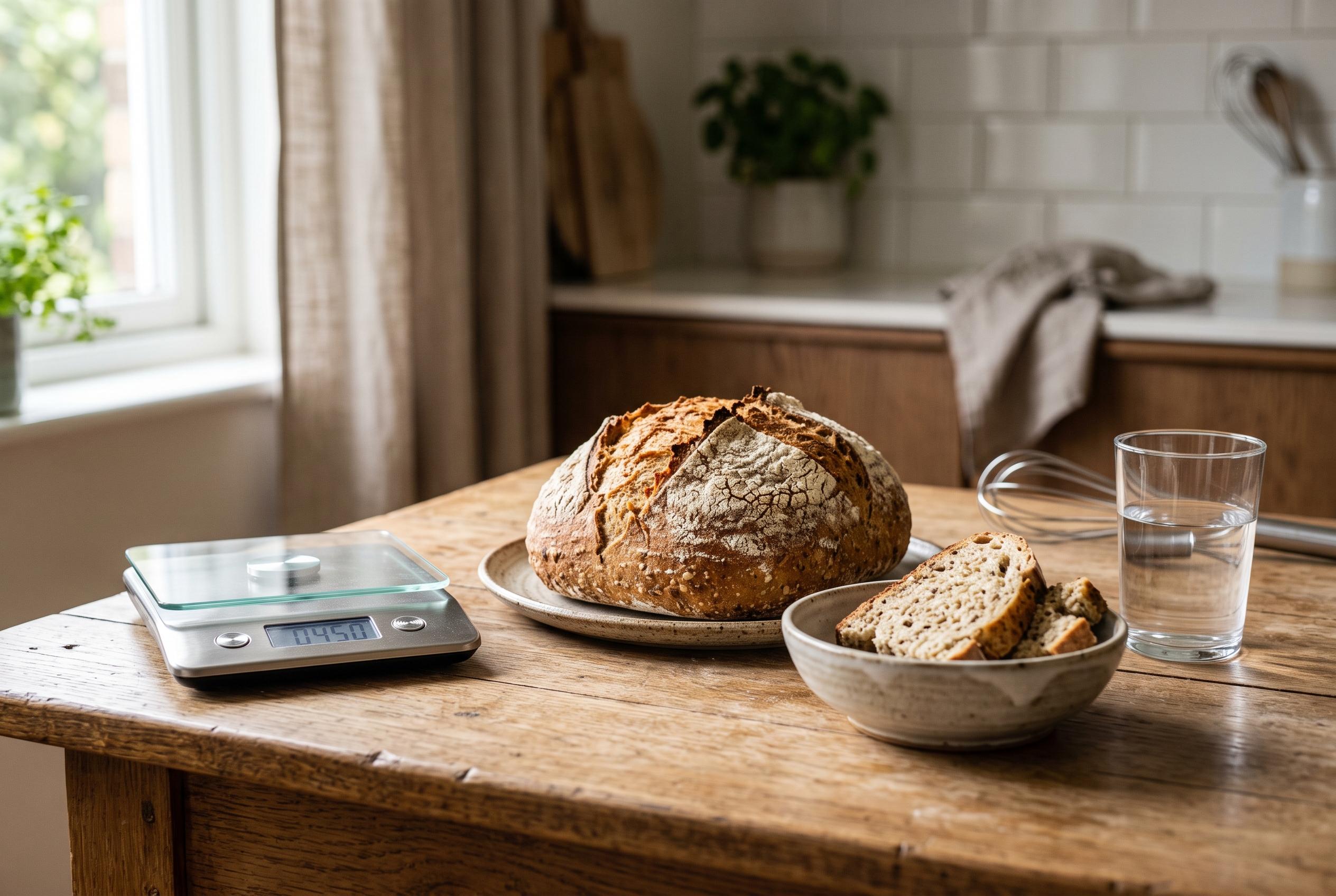

A Chinese research team has demonstrated that a simple dry-heat process applied to quinoa flour improves bread quality and shows promising blood-glucose-lowering effects in diabetic mice, marking a significant step from lab research to potential food application.
A Chinese research team has pushed quinoa a step closer to a functional bread ingredient by showing that a modest dry-heat step, rather than a more intensive treatment, was the only one that improved loaf quality enough to justify animal testing. In a new paper in Food Chemistry: X, Ya-li Zhou, Xin-you You, Xiaolong Li and colleagues reported that whole quinoa flour heated at 110C for one hour was carried forward into a six-week mouse study, where bread made with the treated flour was linked to lower blood-glucose-related markers in streptozotocin-induced diabetic mice. The journal abstract says the supplementation “suggested beneficial effects” on glycated haemoglobin, blood glucose and insulin levels. (sciencedirect.com)
The study matters less because it adds to quinoa’s already healthy image than because it shows a route from lab-scale flour modification to a food people might actually eat. The work comes from the College of Biological and Food Engineering at Anyang Institute of Technology in China and builds on an earlier paper from the same group that was received in June 2022 and published in May 2023. That earlier article, later indexed by FAO AGRIS, dealt with dough handling, bread texture and laboratory digestion rather than animal outcomes, suggesting the mouse work is the latest stage of a longer research programme rather than a one-off result. (base.xml-journal.net)
In both the earlier and later studies, the researchers used the same basic recipe: whole quinoa flour was dry-heated for one hour at 110C, 130C or 150C, then blended into bread at 15% quinoa flour and 85% wheat flour. According to the 2026 paper and the English abstract of the 2023 study, the treatment stripped aggregates from the particle surface and created more visible defects as temperature rose, yet did not erase the flour’s underlying A-type starch crystallinity. A Chinese-language PDF version of the 2023 paper hosted by the journal indicates the full processing study was published as a complete article, not just an abstract, before the team expanded the work into in vivo testing. (sciencedirect.com)
The processing data explain why the mildest heat setting won out. In the 2023 study, dough made with the treated flour absorbed more water at every temperature, but it also became markedly weaker as heating intensified. Relative to the control, water absorption rose by 1.79% at 110C, 3.25% at 130C and 4.83% at 150C, while dough weakness jumped by 43.75%, 104.17% and 125.00% respectively. The same reports say elongation and tensile resistance fell as treatment temperature climbed. In other words, pushing the flour harder did alter it, but not in ways a baker would necessarily welcome. (spgykj.com)
Bread texture followed the same pattern. The earlier paper found that bread hardness fell by 1.82% and elasticity rose by 4.51% when the quinoa flour had been treated at 110C, whereas hotter treatments made the loaves harder and less elastic. The 2026 Food Chemistry: X abstract says 110C produced a slight drop in hardness and a significant gain in springiness, while 130C and 150C progressively worsened texture. It also says dry heat lowered rapidly digestible starch and increased the slowly digestible and resistant fractions, which is why the authors selected the 110C sample for the animal work despite some larger compositional shifts at higher temperatures. (sciencedirect.com)
That decision marks the main advance over the group’s earlier publications. In 2021, Zhou and co-authors had already reported in Food Hydrocolloids that dry heat could change the physicochemical and digestive behaviour of isolated quinoa starch without changing its A-type crystal pattern. But that paper was about starch itself and pointed to uses such as thickening, not bread quality or blood-sugar outcomes. The new study moves from purified starch to whole flour, then from bench tests to bread, and finally to diabetic mice, giving the work a more direct food application. (sciencedirect.com)
Even so, the findings stop well short of showing that quinoa bread can control diabetes in people. The animal results described in the abstract are cautious, the intervention lasted six weeks, and the bread still relied on a wheat-based formula with quinoa flour making up 15% of the mix rather than a wholly gluten-free loaf. The paper presents the results as evidence of hypoglycaemic potential, not proof of a clinical benefit. That distinction matters, especially in a field where changes in starch digestibility in vitro do not always translate neatly into human diets and long-term metabolic outcomes. (sciencedirect.com)
What the paper does offer is a relatively simple processing idea with a narrow but plausible commercial window. Dry heat treatment is attractive because it avoids chemical reagents, and the quinoa studies from 2023 and 2026 both suggest the flour’s crystal structure can be preserved while its behaviour in dough and digestion is nudged in a more useful direction. Yet the same line of research also shows how quickly the benefit can disappear when the temperature rises: once the treatment moved above 110C, loaf texture deteriorated even as some digestibility measures improved. For food manufacturers, that is probably the real takeaway from the latest paper: quinoa flour may be made more functional by heat, but only if the process is tightly controlled. (sciencedirect.com)
Disclaimer: This content is for informational purposes only and is not intended to be a substitute for professional medical judgment, advice, diagnosis, or treatment.