

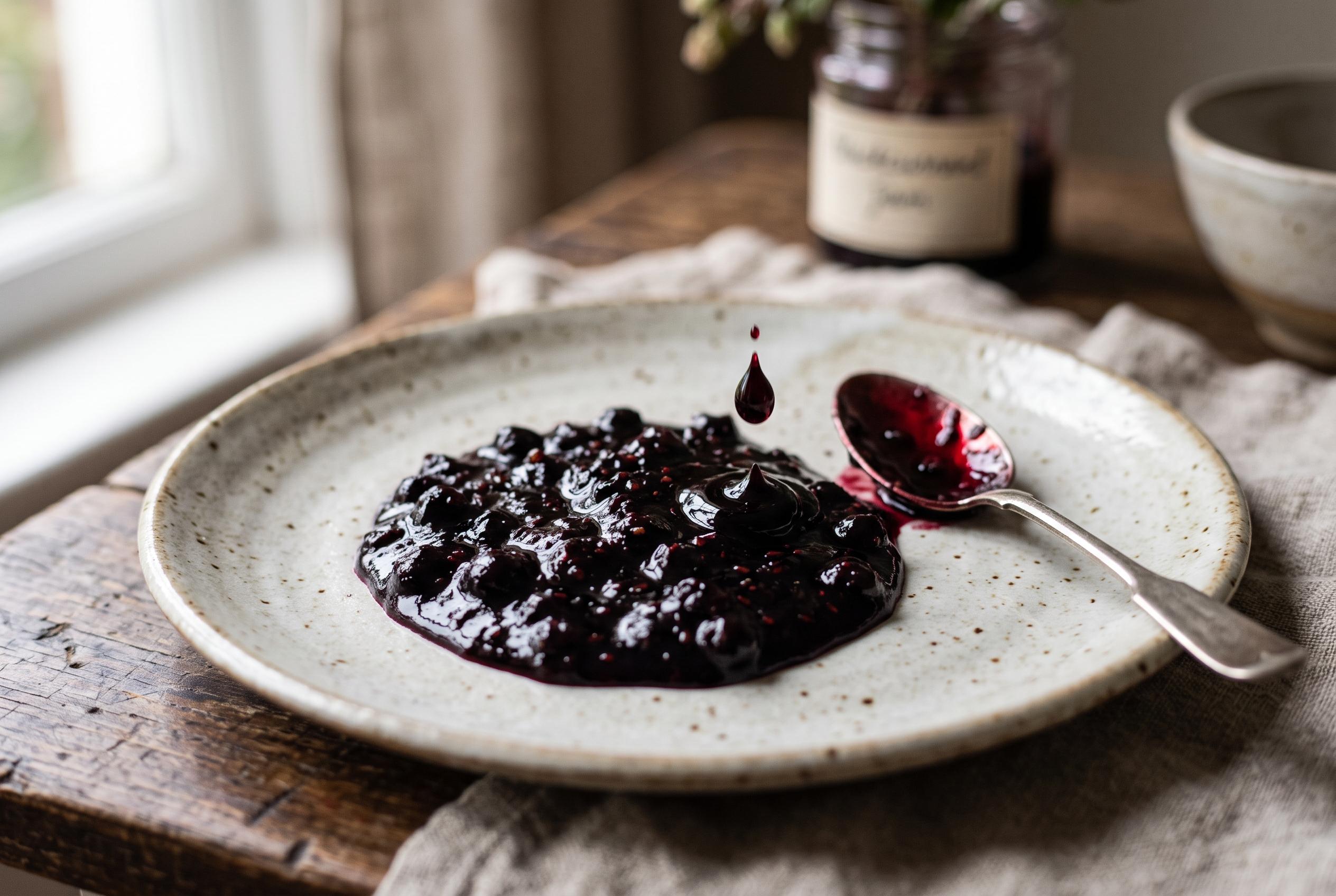

A low-sugar blackcurrant jam made with fructose showcases a delicate balance between rich, tart flavour and health-conscious sweetness, emphasising slow cooking to preserve colour and nutrition. This innovative approach appeals to those seeking both tradition and modern dietary considerations, especially for blood sugar management.
Blackcurrant jam made with fructose sits at the meeting point of tradition and restraint: the fruit’s sharp flavour gives the preserve depth, while the sweetener keeps the result from becoming cloying. In the Pravda.Ru recipe, the key is gentle cooking, because a short, low simmer helps the berries keep their colour and prevents the mixture from catching. Blackcurrants are a particularly good fit for this approach, since nutrition data published by Verywell Fit describes them as notably tart, low in sugar and naturally rich in vitamin C and anthocyanins, the plant compounds that give the fruit its dark hue. Medical News Today notes that fructose occurs naturally in fruit and has different metabolic effects from glucose, but also stresses that it should still be used sparingly.
The recipe itself is straightforward: wash and dry the berries, strip away the stems, add fructose and a spoonful of lemon juice, then cook the mixture slowly until it thickens. The lemon juice does more than brighten the flavour. It also helps stabilise the colour, which matters when making a dark preserve from berries that can dull if overheated. Lyudmila Kravtsova, a chef quoted by Pravda.Ru, said a heavy-bottomed pan is important when working with dense fruit mixtures and a high level of sweetener, because the jam can scorch on the sides before it has finished reducing.
Blackcurrants tend to work better than red currants here because their natural tartness stands up to fructose’s clean sweetness. Verywell Fit says black currants are commonly used in jams and jellies precisely because of that acidic edge, while red currants may need extra lemon juice to achieve the same contrast. Research indexed by PubMed and published in Diabetes Care has found that, when fructose replaces other carbohydrates in controlled amounts, it can improve long-term glycaemic control in people with diabetes, though higher intakes may raise triglycerides. That makes the preserve appealing to some readers watching blood sugar, but only as part of a balanced diet rather than a licence to overindulge.
Disclaimer: This content is for informational purposes only and is not intended to be a substitute for professional medical judgment, advice, diagnosis, or treatment.



