

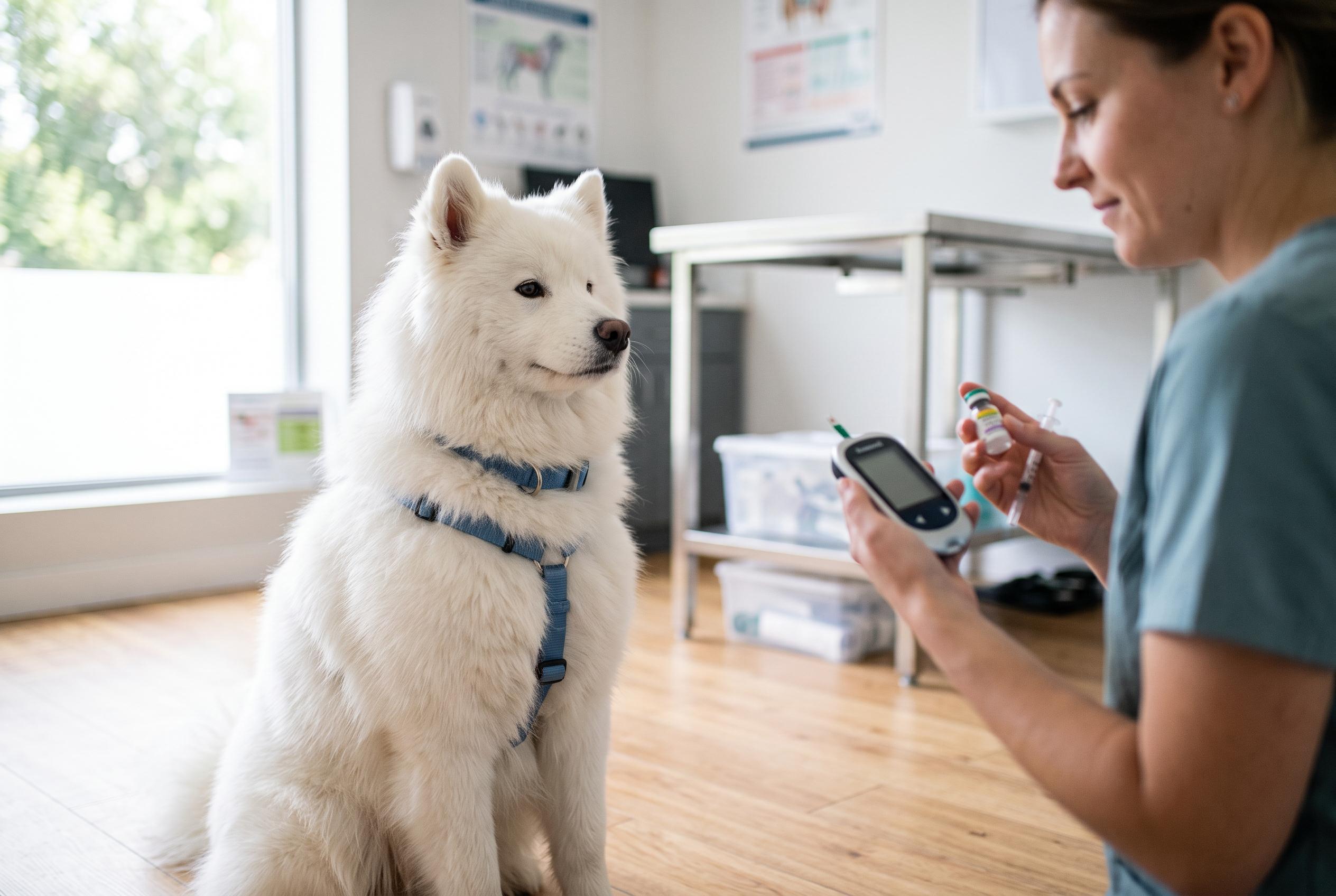

Initial weeks are critical for stabilising diabetic Samoyeds, with frequent veterinary follow-ups, home monitoring, and awareness of potential complications crucial for lifelong health management.
According to Samoyed Guide, a Samoyed diagnosed with diabetes usually needs close veterinary follow-up at first, then less frequent but still regular checks once insulin treatment is settled. The first weeks after diagnosis are typically the busiest, because the priority is to confirm the condition, find the right insulin dose and watch for early complications.
During that initial period, veterinarians often want to see the dog back frequently, sometimes every few days or weekly, while the treatment plan is taking shape. That early stage is where blood glucose curves become especially useful. As Vetstreet explains, curves help show how insulin is working through the day and whether feeding times, exercise and injections are properly aligned.
A glucose curve is a series of blood sugar readings taken over several hours. Mello Vet says that home monitoring can also be valuable, particularly because clinic visits may raise a dog’s stress levels and distort results. Home testing, continuous glucose monitors and urine test strips each have strengths and limits, but together they can give owners and vets a clearer picture of patterns rather than relying on a single reading.
Once a diabetic Samoyed is stable, Samoyed Guide says rechecks are usually spaced out to every three to six months. These visits normally include a physical examination, weight check, a review of appetite, thirst, urination and energy levels, and blood tests such as fructosamine, which reflects average blood glucose over the previous couple of weeks. Clinicians Brief notes that curve interpretation can also guide insulin adjustments, including a dose reduction when the lowest glucose point falls too far.
Even in a dog that seems settled, diabetes can change. Diet shifts, changes in exercise, weight gain or loss, and other illnesses can all alter insulin needs. That is why PetMD and PetPlace both stress that diabetes in dogs is a lifelong condition that depends on consistency, careful observation and veterinary oversight rather than one-time stabilisation.
Owners also need to know when a routine check is not enough. Samoyed Guide warns that sudden increases in thirst or urination, reduced appetite, vomiting, diarrhoea, weakness, rapid weight loss, cloudy eyes, shaking or collapse can signal an emergency. Those signs may point to hypoglycaemia, dangerous low blood sugar, or diabetic ketoacidosis, a serious complication that requires immediate veterinary treatment.
Daily management at home remains central to keeping the condition under control. Vetstreet and Mello Vet both emphasise steady meal timing, consistent insulin use and keeping records of food, medication and symptoms. For many families, the most effective routine is the simplest one: feed at the same times, inject as prescribed, monitor trends and contact the vet quickly if anything changes.
Disclaimer: This content is for informational purposes only and is not intended to be a substitute for professional medical judgment, advice, diagnosis, or treatment.



