

Japanese internal medicine doctor Sō Yamamura conducted a personal experiment revealing that watermelon can cause significant blood sugar spikes, prompting a reassessment of its place in balanced diets during summer.
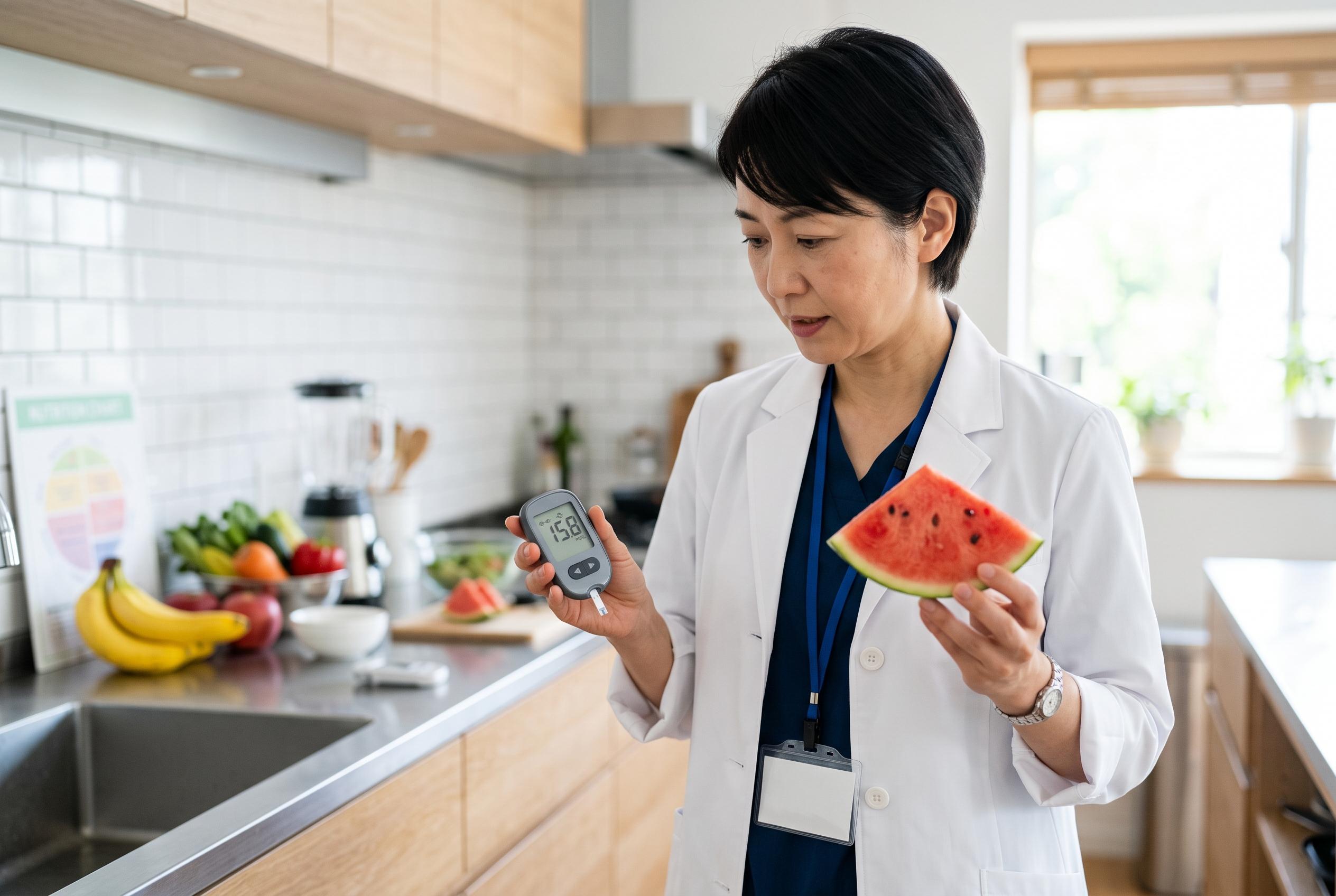
Japanese internal medicine doctor Sō Yamamura has used a video experiment to test a simple summer assumption: that watermelon, because it is mostly water, is gentle on blood sugar. In a clip released by “Yasashii Naika I | Yamamura Sō no Kettouchi Jikken Shitsu”, Yamamura measured his own glucose response after eating a supermarket pack of cut watermelon and found a sharp rise rather than a mild one.
According to the video, Yamamura began with a blood sugar reading of 107 before eating about one-eighth of a watermelon. His level climbed steadily and reached 186 at the 40-minute mark, an increase of 79 points. He described the result as the kind of spike that can happen even after a modest serving, warning that regular dessert-sized portions could still push glucose up more than people expect.
That warning sits alongside a broader nutritional picture in which watermelon can still have a place in a balanced diet. Vogue Japan has noted that the fruit is low in calories, rich in water and contains antioxidants such as lycopene, as well as vitamins A and C. Other nutrition guides point out that watermelon has a high glycaemic index, but a relatively low glycaemic load because its carbohydrate content is limited by its high water content, meaning portion size matters more than the fruit’s reputation as a light snack.
Yamamura’s advice was not to avoid fruit altogether, but to eat it more strategically. He suggested having fruit at the end of a meal, when the body is already primed to release insulin, and reducing the amount of rice or other starches if dessert is included. In other words, the issue is not watermelon alone but the overall carbohydrate total across the meal.
He also answered questions from viewers working night shifts, saying hunger can be harder to manage during irregular hours. His advice was to keep snacks to a minimum and, when necessary, choose lower-carbohydrate options such as nuts or cheese. After a night shift, he said, the better approach is to focus on side dishes and keep rice portions small, reinforcing a simple message: timing, balance and moderation matter as much as the food itself.
Disclaimer: This content is for informational purposes only and is not intended to be a substitute for professional medical judgment, advice, diagnosis, or treatment.