

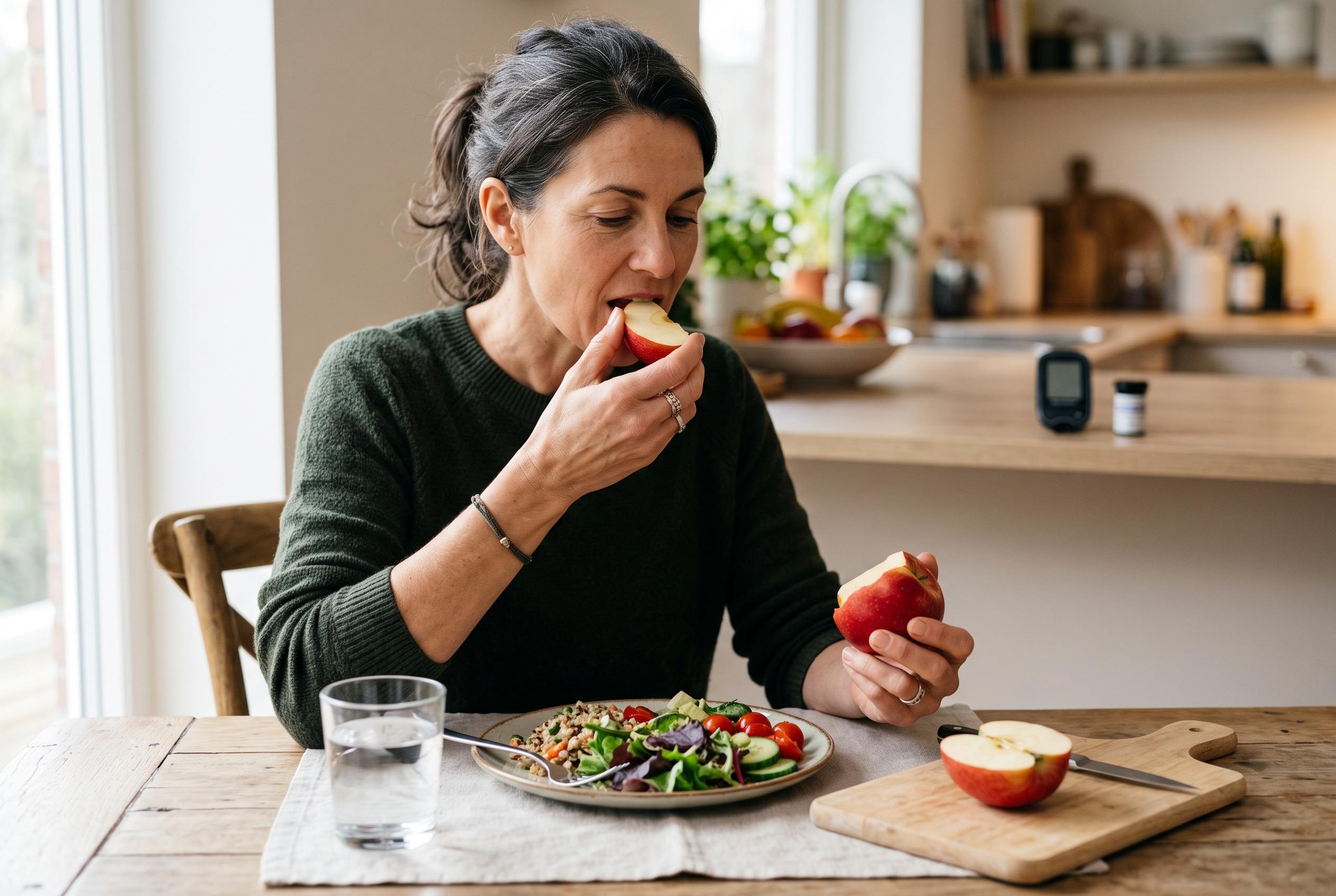

Dietitians highlight that consuming apples alongside meals or as part of balanced eating patterns can optimise their fibre, antioxidants, and blood sugar management benefits, with timing depending on individual preferences and activity levels.
Dietitians say apples can be a smart choice at almost any point in the day, but the fruit may be especially useful when it is eaten with other foods rather than on its own. Packed with fibre, water and antioxidants, a whole apple can help people feel fuller for longer and may soften the rise in blood sugar that often follows a meal. Health says the fruit’s low glycaemic index is one reason it is often recommended as a steady, practical snack. According to the same report, specialists point to compounds such as chlorogenic acid, vitamin C and quercetin as part of the apple’s broader nutritional appeal.
For that reason, breakfast is one sensible time to eat an apple. Jacqueline A. Vernarelli, a dietitian and epidemiology specialist at Sacred Heart University, told Health that apples are low in calories and can promote satiety because of their fibre content. Lauren Manaker, a registered dietitian, said a single apple is unlikely to transform metabolism on its own, but it may help gently stimulate digestion early in the day. The bigger point, the experts emphasise, is that apples fit well into a balanced meal pattern rather than acting as a stand-alone fix.
Timing matters less than pairing. Morgan Walker, a registered dietitian and assistant professor at Lebanon College, told Health that eating an apple with, or just before, a meal may help limit the blood sugar rise that can follow because fibre slows carbohydrate absorption. Similar guidance appears in diabetes-focused explainers from Healthline and Medical News Today, which note that whole apples can be a useful snack for blood sugar management because their fibre and plant compounds slow the release of sugar into the bloodstream. That does not make apples a treatment for diabetes, but it does help explain why they are often considered a better option than many processed snacks.
Apples can also work well as pre-workout fuel, though the best timing depends on the person and the session. Some people may prefer to eat one two or three hours before exercise so the fibre has time to settle, while others may tolerate slices closer to training. Ashley Koff, founder of The Better Nutrition Program, told Health that the fruit’s natural sugars can provide quick energy, while its fibre helps avoid a sharp drop in stamina. Manaker, however, cautioned that people who are sensitive to fibre may not want an apple immediately before intense activity.
The most useful advice, dietitians say, is not to chase a perfect hour but to choose the format that is most likely to become a habit. Apples can be added to porridge, pancakes or muffins at breakfast, or turned into a more satisfying dessert after dinner with a little nut butter or cinnamon. Nutrition guides from myhealthcare.com and insulinresistance.health echo that pairing apples with protein or fat, such as nuts, seeds or yoghurt, can make them more filling and may blunt a glucose spike. As Manaker put it, the best time to eat an apple is simply the time when you will actually eat it.
Disclaimer: This content is for informational purposes only and is not intended to be a substitute for professional medical judgment, advice, diagnosis, or treatment.



