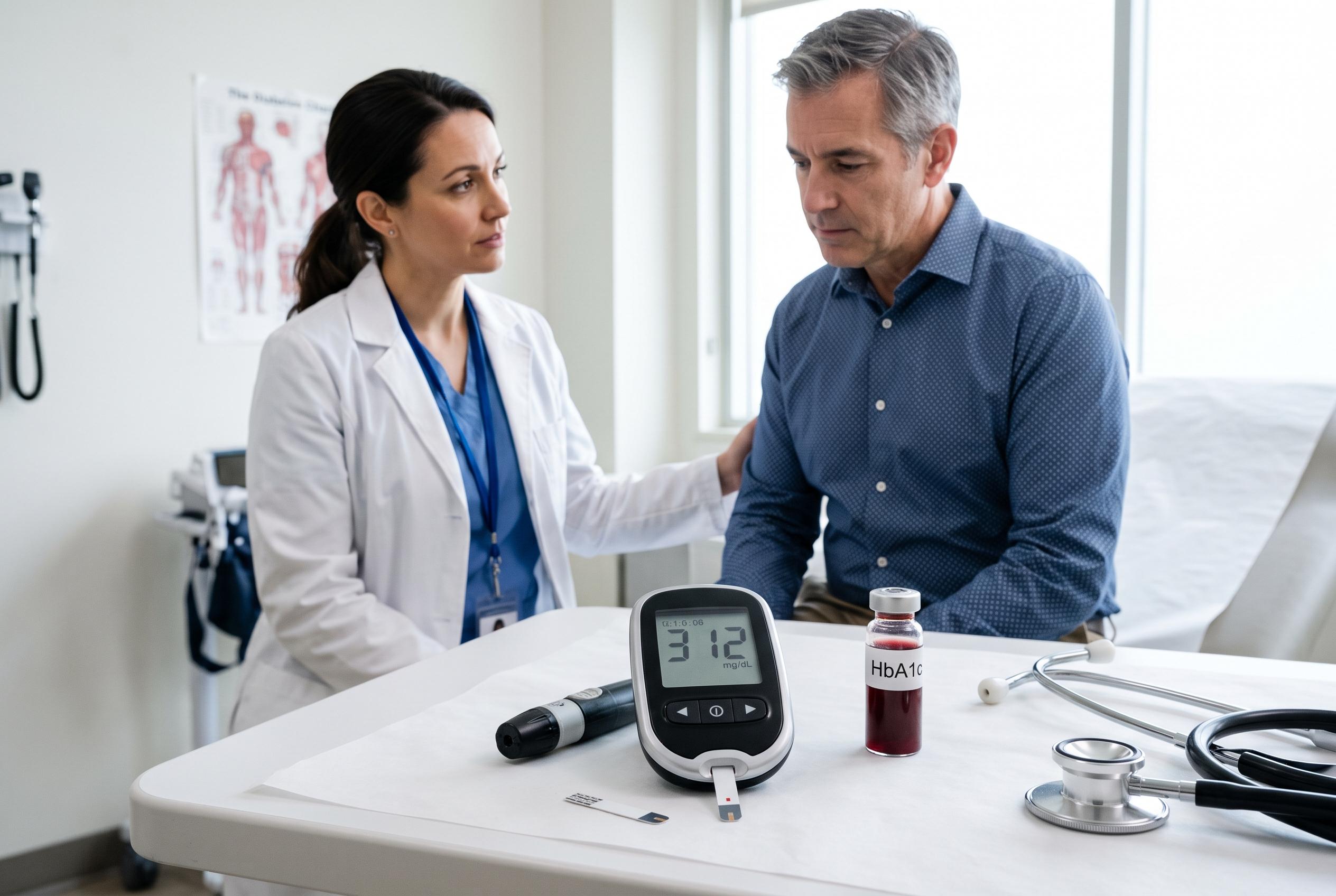

Medical experts warn that normal HbA1c levels can mask high blood sugar readings, underscoring the importance of multiple tests for accurate diabetes diagnosis and management.
A person can, in rare cases, record glucose readings in the 160 to 220 mg/dL range and still have an HbA1c below 6 per cent, but doctors say that combination should not be dismissed as a harmless anomaly. In the Indian Express report, endocrinologist Pranav Ghody said HbA1c gives an average of blood sugar over roughly two to three months, while a finger-prick reading captures only one moment, so persistent high readings still need proper assessment.
The National Institute of Diabetes and Digestive and Kidney Diseases says the A1C test measures the amount of haemoglobin coated with glucose and is commonly used to diagnose diabetes and monitor treatment. But the test is not perfect. Ghody told the newspaper that HbA1c can read artificially low if red blood cells are being replaced more quickly than normal, because they have less time to collect glucose. He also pointed to haemoglobin variants, which can interfere with some laboratory methods.
That matters because several conditions can distort the result. According to Ghody, doctors may look for anaemia, recent blood loss or transfusion, kidney disease, increased red-cell turnover and haemoglobin variants such as HbE, which are relevant in India. The method used by the laboratory also affects how reliable the number is.
If the readings do not match, the answer is not to ignore the glucose meter. Ghody said doctors may ask for repeat testing with a reliable device, a continuous glucose monitor where appropriate, a fresh HbA1c from a suitable laboratory method, and sometimes blood tests such as fructosamine or glycated albumin. Research in Diabetes Care and other medical journals has also found that HbA1c and blood glucose can diverge enough to affect diagnosis and treatment. The key point, Ghody said, is that consistently high glucose should be investigated rather than reassured away by a seemingly normal HbA1c.
Disclaimer: This content is for informational purposes only and is not intended to be a substitute for professional medical judgment, advice, diagnosis, or treatment.