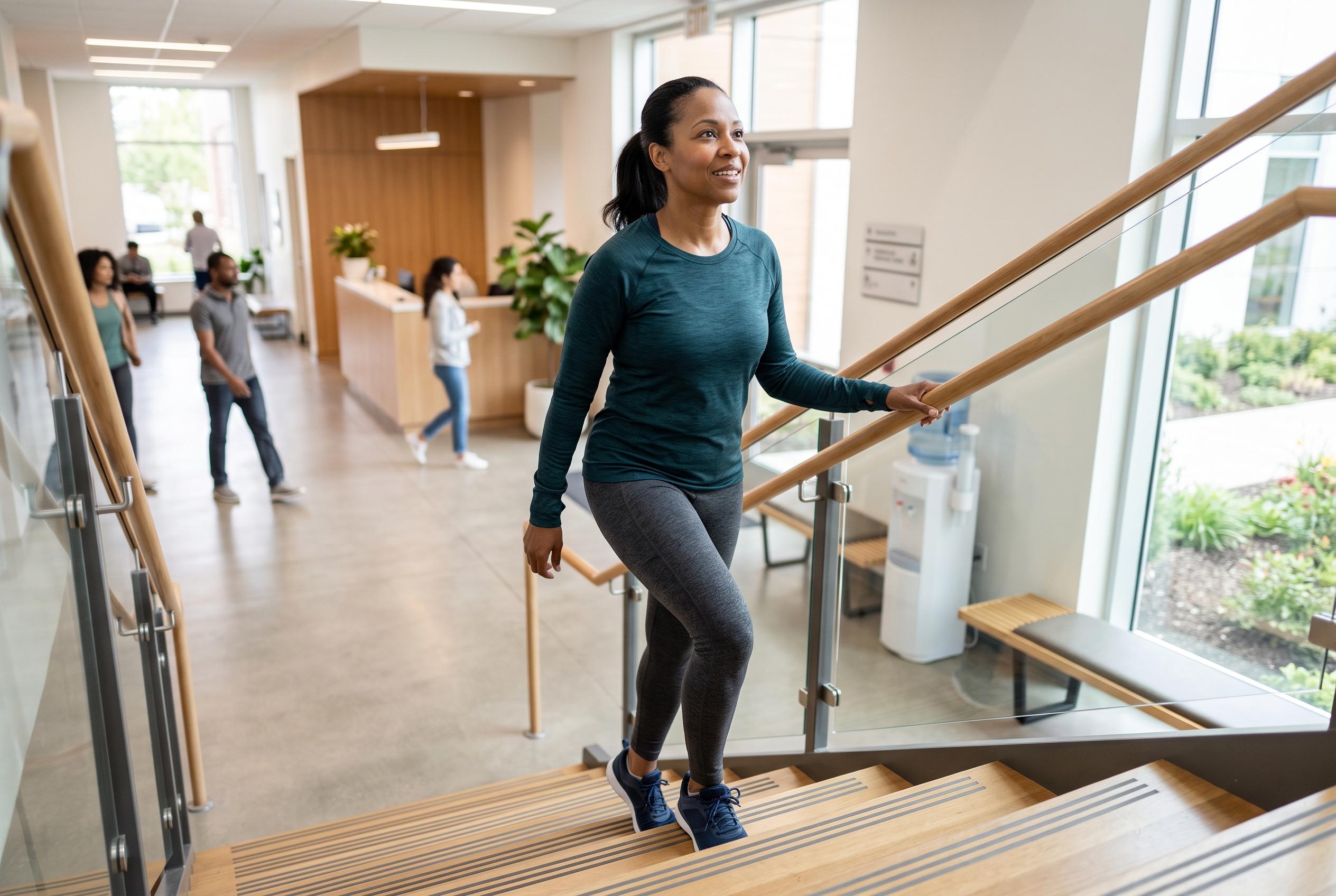

New research highlights the substantial health benefits of incorporating stair climbing into daily routines, offering an accessible way to improve fitness, cardiometabolic health, and manage blood sugar, especially for those in their 40s.
Walking up stairs may sound too simple to count as exercise, but researchers and clinicians say it can make a meaningful difference to fitness, metabolism and blood sugar control. Vogue Korea reports that the habit is especially useful for people in their 40s, when changes in muscle mass, energy use and hormonal balance can become more noticeable.
Marián García, a pharmacist and nutrition specialist, argues that stair climbing works best when it is treated as a deliberate routine rather than a casual bit of movement. In practice, that means choosing stairs over lifts whenever possible and building the effort into the day several times rather than relying on a single session.
Her advice is backed by wider evidence. A scoping review indexed on PubMed found that regular stair climbing can improve aerobic capacity and cardiometabolic markers, including body composition, blood pressure, cholesterol and insulin sensitivity. A separate systematic review in the Journal of Sports Sciences reported benefits for fasting and post-meal blood sugar levels in healthy adults as well as people with pre-diabetes or type 2 diabetes.
The practical appeal is that stair climbing is easy to fit into everyday life. Studies highlighted by Healthline and the Cleveland Clinic suggest it can also support heart health, strengthen muscles and bones and, because it is weight-bearing, help protect against osteoporosis. The Cleveland Clinic notes that it may be gentler on the joints than running, while Healthline says a 30-minute StairMaster session can burn roughly 180 to 260 calories depending on intensity and body weight.
García recommends making the effort more effective by using multiple flights, varying pace and occasionally taking two steps at a time to recruit the legs and glutes more fully. She also points to research showing that even very short stair sessions after meals can help blunt glucose spikes, although she stresses that this does not cancel out the meal itself. The wider message is straightforward: small bursts of climbing, repeated consistently, can add up to a useful boost in daily activity.
Disclaimer: This content is for informational purposes only and is not intended to be a substitute for professional medical judgment, advice, diagnosis, or treatment.