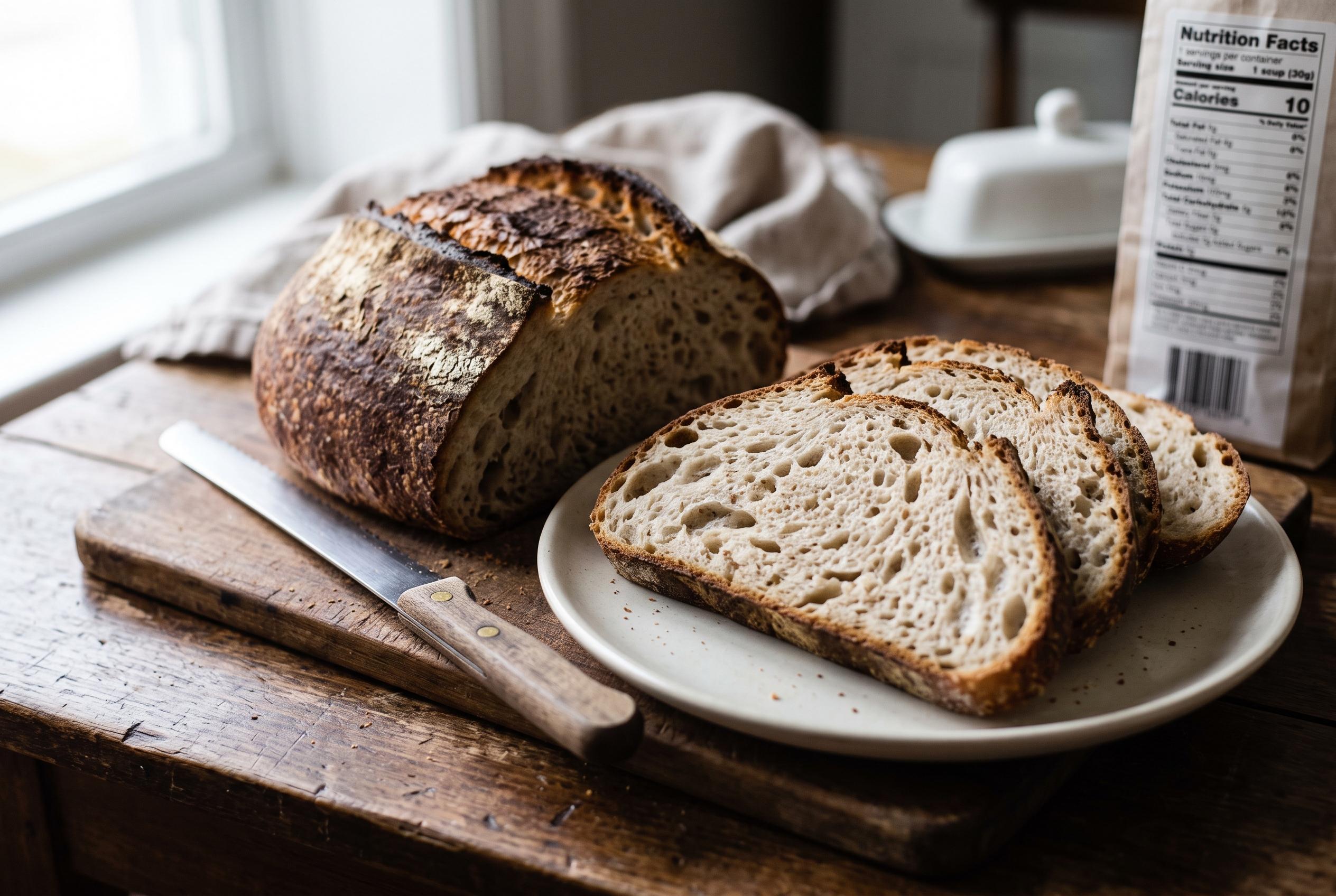

Consumers are advised to scrutinise bread labels carefully, as many products labelled as whole-wheat may be made predominantly from refined flour, affecting health and blood sugar management more than the colour suggests.
Many shoppers reach for whole-wheat bread believing it is automatically the healthier choice, but the label can be misleading. Kormedi, via The Korea Times, says some loaves sold as whole-wheat are made mostly with refined flour, then darkened with caramel colouring or similar additives to imitate the look of a grain-rich loaf. The clearest sign of a genuine product, it says, is whole-wheat flour listed first in the ingredient list.
That matters because the appearance of bread often tells only part of the story. The article says authentic whole-wheat bread is usually firmer, coarser and less sweet than imitations, while colour alone is not a reliable guide. It also notes that ingredient lists are ordered by weight, so the first few items reveal what the loaf is really made from. Nutrition experts quoted in the piece recommend looking for bread labelled as “100 percent whole grain” or “100 percent whole wheat”, along with at least 3 grams of fibre, less than 3 grams of added sugar and no more than 140 milligrams of sodium per slice.
The blood sugar question is more complicated still. Kormedi cites the Korean Diabetes Association as saying white bread has a glycaemic index, or GI, of 70.7, compared with 50 for whole-wheat bread, placing whole wheat in the low-GI range. But other GI references put whole-wheat bread higher, with some sources describing it as medium or even high GI, underscoring that the response depends on how the bread is made, how finely the grain is milled and whether sugar or other ingredients have been added. In practice, the article says, portion size and what the bread is eaten with can also affect blood sugar, so consumers are best served by reading the full label rather than trusting the colour or the marketing on the front of the pack.
Disclaimer: This content is for informational purposes only and is not intended to be a substitute for professional medical judgment, advice, diagnosis, or treatment.