

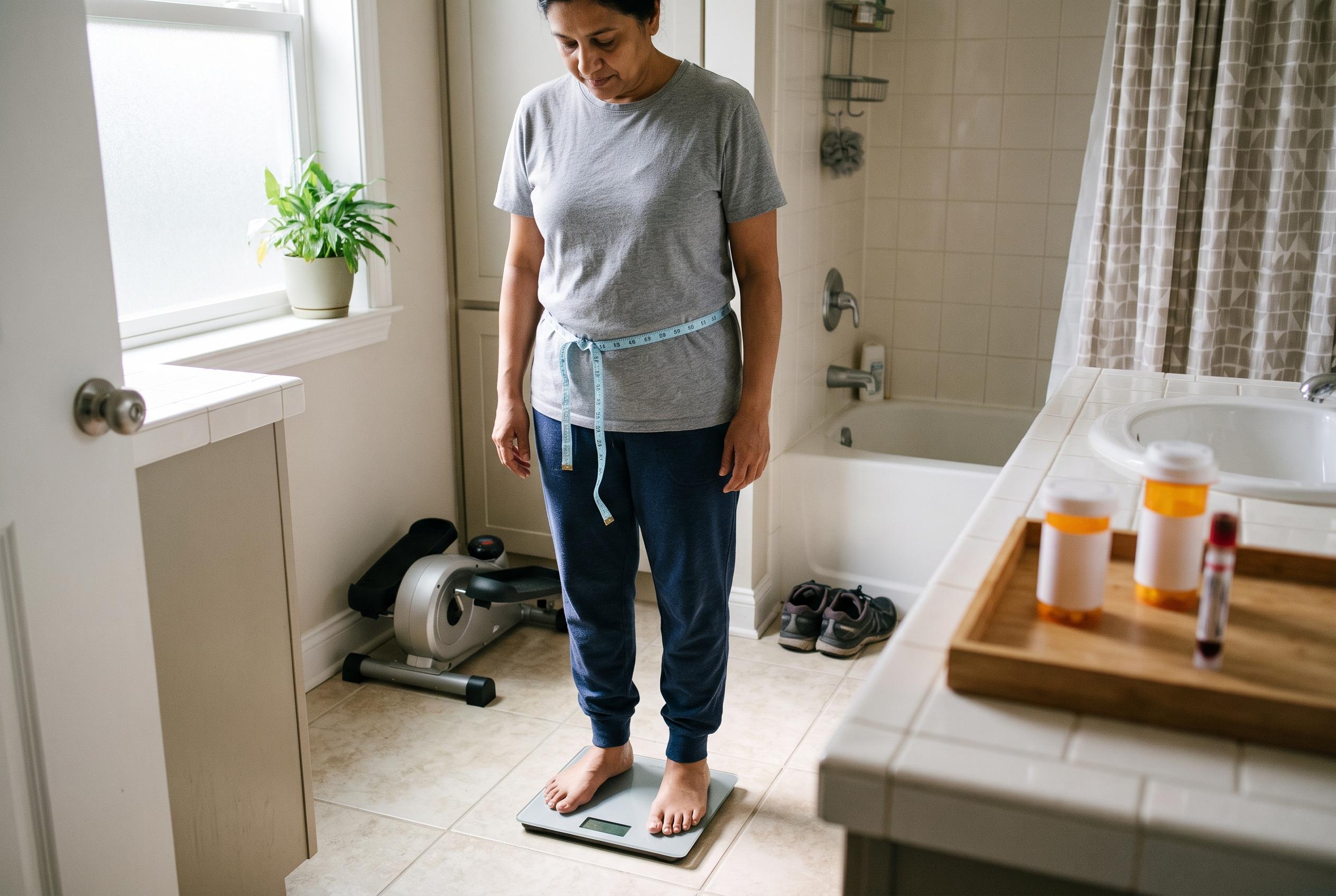

For people who appear slim and those losing weight after treatment, waist size, blood tests, mobility and muscle can reveal more about health than the scales alone.
For many people, the number on the scale can be a poor guide to health. As Dr Mahendra Narwaria argues in his India Today column, a person can look lean and still carry hidden metabolic risk, while another may lose weight slowly yet still make meaningful gains in blood sugar, blood pressure and mobility. That distinction matters because weight loss alone does not always tell the full story. The National Institute of Diabetes and Digestive and Kidney Diseases says bariatric surgery can improve type 2 diabetes, high blood pressure and unhealthy cholesterol, while also helping people move more easily and rely less on medication.
Narwaria’s examples of two patients, one visibly heavier and one apparently slim, reflect a well-known problem in South Asian populations: body mass index can miss danger when fat is concentrated around the abdomen and internal organs. Health experts have repeatedly warned about the so-called “thin-fat” Indian phenotype, in which a person may appear normal by international BMI standards but still have insulin resistance, fatty liver or an elevated risk of diabetes. In India, BMI cut-offs are lower than the global norms, which is one reason doctors often look beyond body size and ask whether the waistline is expanding, blood tests are worsening or daily activity is becoming harder.
The article also reflects a broader shift in obesity care: the goal is not simply to make the body smaller, but to improve how it functions. Research cited by the Cleveland Clinic shows that bariatric surgery can deliver stronger long-term control of blood glucose in patients with obesity and type 2 diabetes than medical therapy alone, with fewer diabetes medicines needed years later. The National Institutes of Health has reported similar findings, saying weight-loss surgery can produce better long-term glucose control and higher rates of diabetes remission than medical management plus lifestyle changes.
That evidence helps explain why Narwaria stresses muscle-preserving treatment rather than chasing dramatic drops on the scale. Weight loss can include fat, water and lean tissue, so a fall in kilograms does not automatically mean a person has become healthier. That is also why doctors increasingly pair medication or surgery with high-protein eating, resistance exercise and regular monitoring. According to the NIDDK, bariatric surgery can improve mobility, mood and quality of life, while UCLA Health says many patients report better daily functioning after surgery, including relief from obesity-related conditions such as sleep apnoea and hypertension.
For readers, the practical lesson is straightforward: health checks should not stop at body weight. HbA1c, blood pressure, cholesterol and waist size can reveal risks that appearance conceals, especially for people who seem slim but have a growing midsection. India Today’s column closes with that same message, urging people to treat the scale as only one measure among many and to focus instead on whether the body is becoming stronger, more mobile and metabolically healthier.
Disclaimer: This content is for informational purposes only and is not intended to be a substitute for professional medical judgment, advice, diagnosis, or treatment.



