

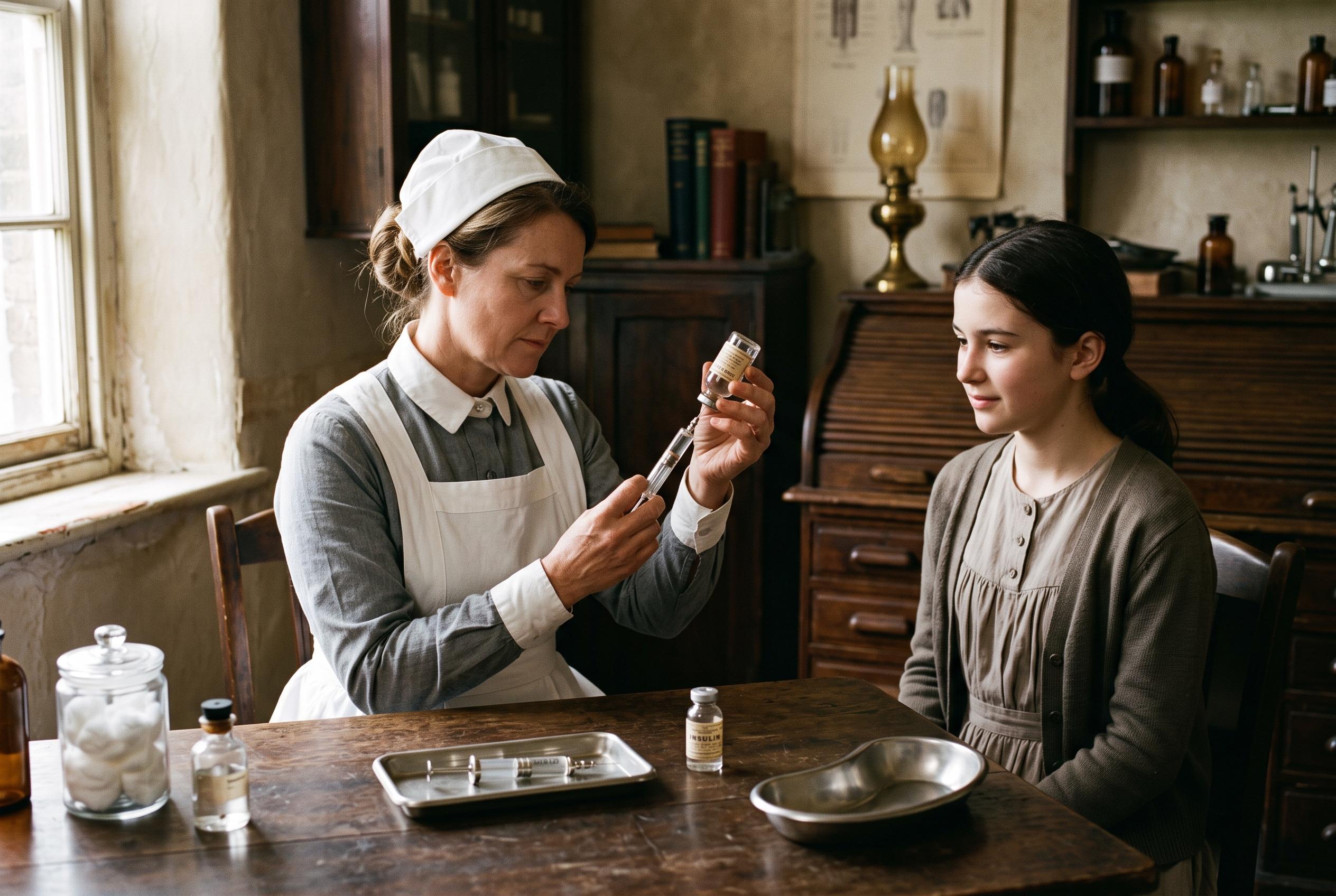

Leonard Thompson’s successful insulin treatment in Toronto in January 1922 transformed type 1 diabetes from a rapidly fatal disease into a manageable chronic condition.
For much of medical history, a diagnosis of type 1 diabetes was often a death sentence. That changed in January 1922, when a 14-year-old patient in Toronto became the first person to receive insulin successfully in a form that could be used in human treatment. The account published by Khabar Online says that moment transformed diabetes from a rapidly fatal illness into a manageable chronic condition.
The breakthrough grew out of work led by Frederick Banting, with support from John Macleod and help from Charles Best at the University of Toronto. As Nature has noted, the team began experiments in 1921 aimed at isolating the hormone the pancreas uses to regulate blood sugar, but the early extract still needed further purification before it could be used safely in people. Biochemist James Collip later joined the effort and played a crucial role in refining the preparation for human use.
Leonard Thompson received his first injection on 11 January 1922, but the result was disappointing. After more purification, he was given a second dose on 23 January, and this time his blood sugar fell, along with the glucose and ketones in his urine, according to the historical summaries from Nature and medical history sources. Thompson, who had been dangerously wasted by the disease, lived for another 13 years after treatment began and died in 1935 at the age of 27.
The discovery soon won global recognition. The Nobel Prize in Physiology or Medicine went to Banting and Macleod in 1923, and the US Food and Drug Administration says the achievement helped usher in the era of large-scale insulin production, first through collaboration with Eli Lilly and Company and later through advances that enabled human insulin manufacturing. Early insulin came from the pancreases of cattle and pigs, and while the therapy did not cure type 1 diabetes, it permanently changed the outlook for millions of patients. Even so, access to this life-saving medicine remains uneven in parts of the world.
Disclaimer: This content is for informational purposes only and is not intended to be a substitute for professional medical judgment, advice, diagnosis, or treatment.



