

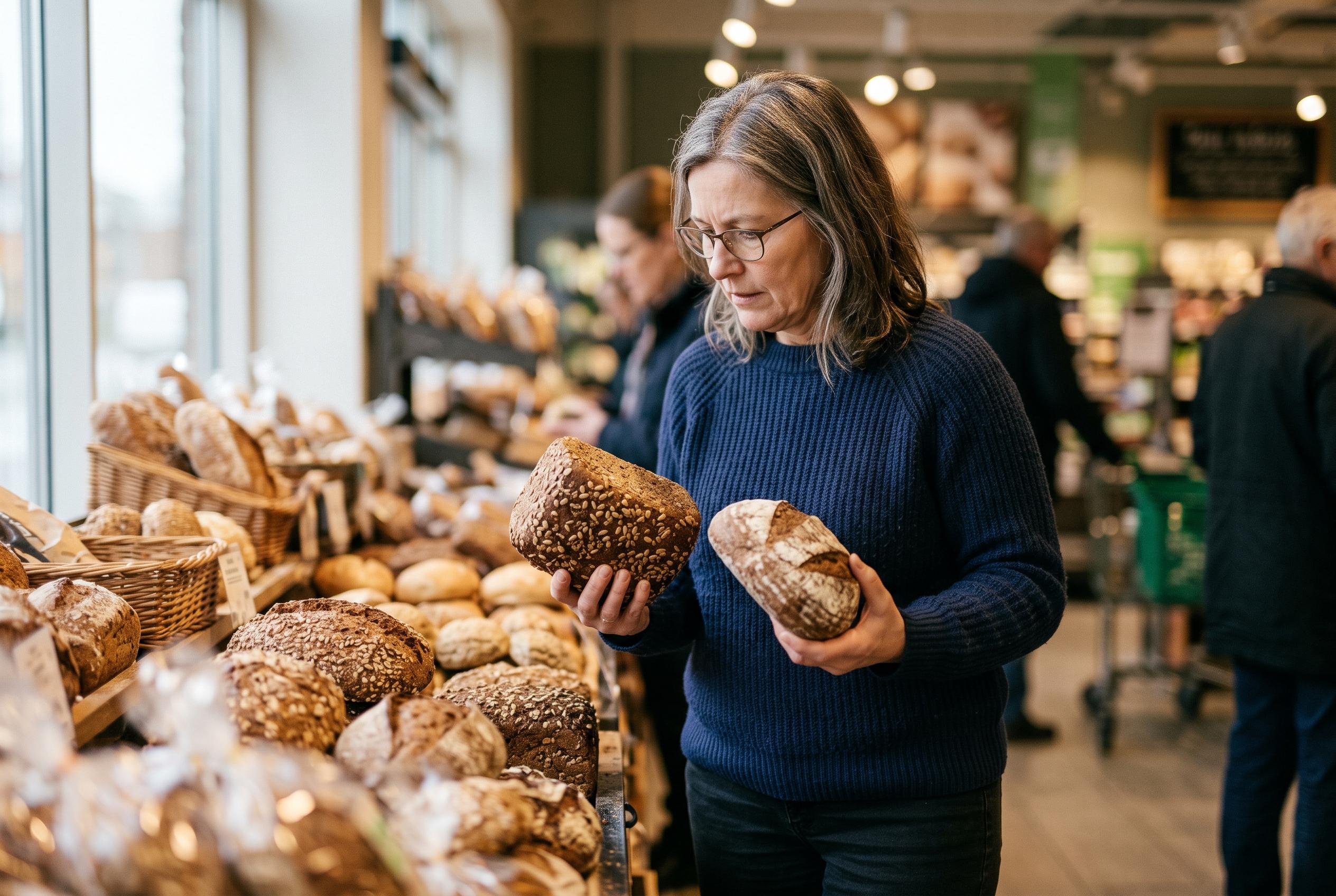

Colourful packaging, seeds and claims such as “multigrain” can be misleading: people with diabetes should check whole-grain ingredients, fibre, total carbohydrate and serving size before choosing bread.
For people with diabetes, the darkest loaf on the shelf is not automatically the best choice. A brown crust, scattered seeds or a label promising “multigrain” can create the impression of a healthier bread, but the real test is what is inside the loaf and how it fits into the rest of the meal. The piece published by Sky News Arabia argues that bread need not be ruled out at all; what matters is choosing carefully rather than relying on colour or marketing language.
According to the American Diabetes Association, people are generally better served by choosing whole grains and fibre-rich foods as part of a plan that also accounts for total carbohydrate intake. That distinction matters because a bread described as multigrain may contain several grains without using them in whole form, while seeds on the surface do not transform refined flour into whole grain flour. The practical starting point, as the Centres for Disease Control and Prevention advises, is the ingredient list, where whole-grain flour should ideally appear first.
Nutrition labels matter just as much. The American Diabetes Association says a slice with at least 3 grams of fibre can be a useful benchmark, but the size of the slice and the stated serving can be misleading if one brand cuts thicker or larger pieces than another. Consumer guidance from WebMD and other label-reading resources also stresses that serving size should be checked before comparing products, because the numbers on the panel may look modest simply because the serving is smaller than what people usually eat.
Sugar claims can distract from the more important issue: starch. A loaf may advertise low added sugar, yet still contain enough carbohydrate to raise blood glucose, because the body breaks down starches in flour into glucose. That is why total carbohydrate, rather than sugar alone, should guide the choice. Wholegrain bread may still be a sensible option, but it is not a free pass to eat unlimited slices; portion size remains central.
The same caution applies to fashionable terms such as sourdough or sprouted grain. As Consumer Reports notes, those descriptions do not guarantee that a loaf is made from whole grains or is automatically better for blood sugar control. Bread can still have a place on the table, especially when paired with protein, eggs or vegetables to make a more balanced meal. In the end, the most useful information is often printed in small type on the back of the packet.
Disclaimer: This content is for informational purposes only and is not intended to be a substitute for professional medical judgment, advice, diagnosis, or treatment.



