

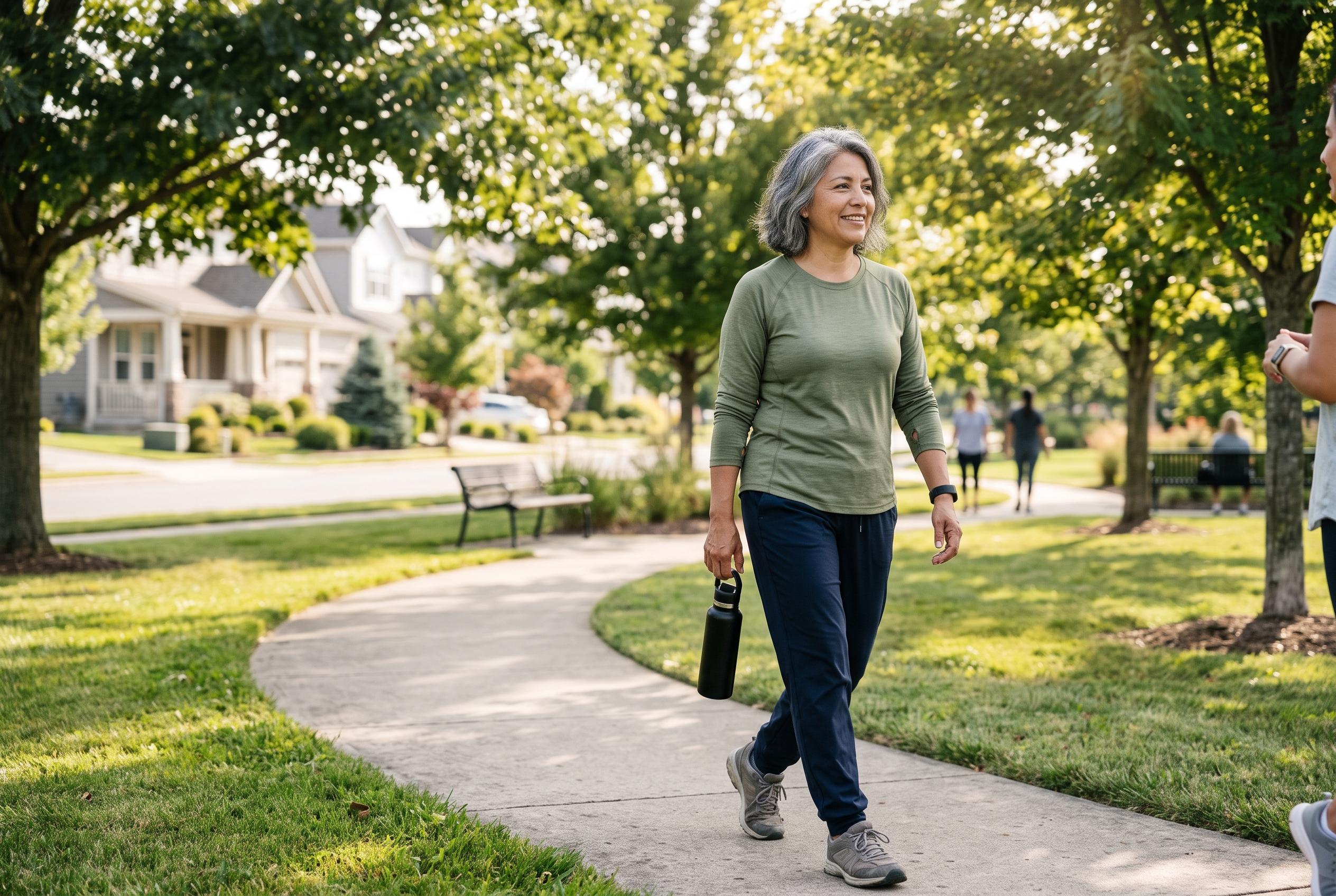

Research suggests that brief movement soon after eating may help reduce post-meal glucose spikes, offering a practical counter to prolonged sitting.
A few minutes of walking after lunch may be enough to help steady blood sugar for the rest of the afternoon. The Daily Mail reported that brief post-meal movement is being promoted as a simple way to counter the effects of long periods spent sitting, especially for people who work at a desk and often eat without leaving it.
The basic biology is straightforward. After a meal, carbohydrates are broken down into glucose, which enters the bloodstream and prompts the pancreas to release insulin. According to Cleveland Clinic, light movement after eating can help muscles draw in some of that glucose, reducing the size of the blood sugar rise that follows a meal. Healthline says the same habit may also support digestion and make it easier for some people to avoid the sluggish feeling that often comes after lunch.
Research cited by the Daily Mail suggests the timing matters. The article pointed to studies showing that a walk started soon after eating can blunt glucose spikes more effectively than remaining seated, with longer walks generally producing a stronger effect. A study in Diabetes Care found that several shorter walks taken after meals controlled daily blood sugar better than one longer walk done at another time of day, which reinforces the idea that consistency may matter as much as duration.
The benefit is not limited to people with diabetes, but it is likely to be most noticeable for those with prediabetes, type 2 diabetes or a largely sedentary routine. Review articles and explanatory guides from Diabetic Lens, Artinci and other health publications say even very short bouts of movement, including a couple of minutes of walking or marching in place, can help lower post-meal glucose. A separate review discussed by the Daily Mail and published in Obesity Reviews found that short walking breaks reduced post-meal glucose and insulin levels more than sitting still, with the biggest improvements seen in people with obesity. Still, the Daily Mail article noted that such walks should be seen as a useful habit rather than a substitute for prescribed treatment.
For people who cannot get outside, the evidence points to flexibility rather than intensity. Marching beside a desk, climbing a flight of stairs or doing a short circuit of the office can all provide the muscle activity needed to help clear circulating sugar. The message from the research is uncomplicated: a hard workout is not required for every health gain, and after lunch, a modest walk may be one of the easiest habits to build.
Disclaimer: This content is for informational purposes only and is not intended to be a substitute for professional medical judgment, advice, diagnosis, or treatment.



