

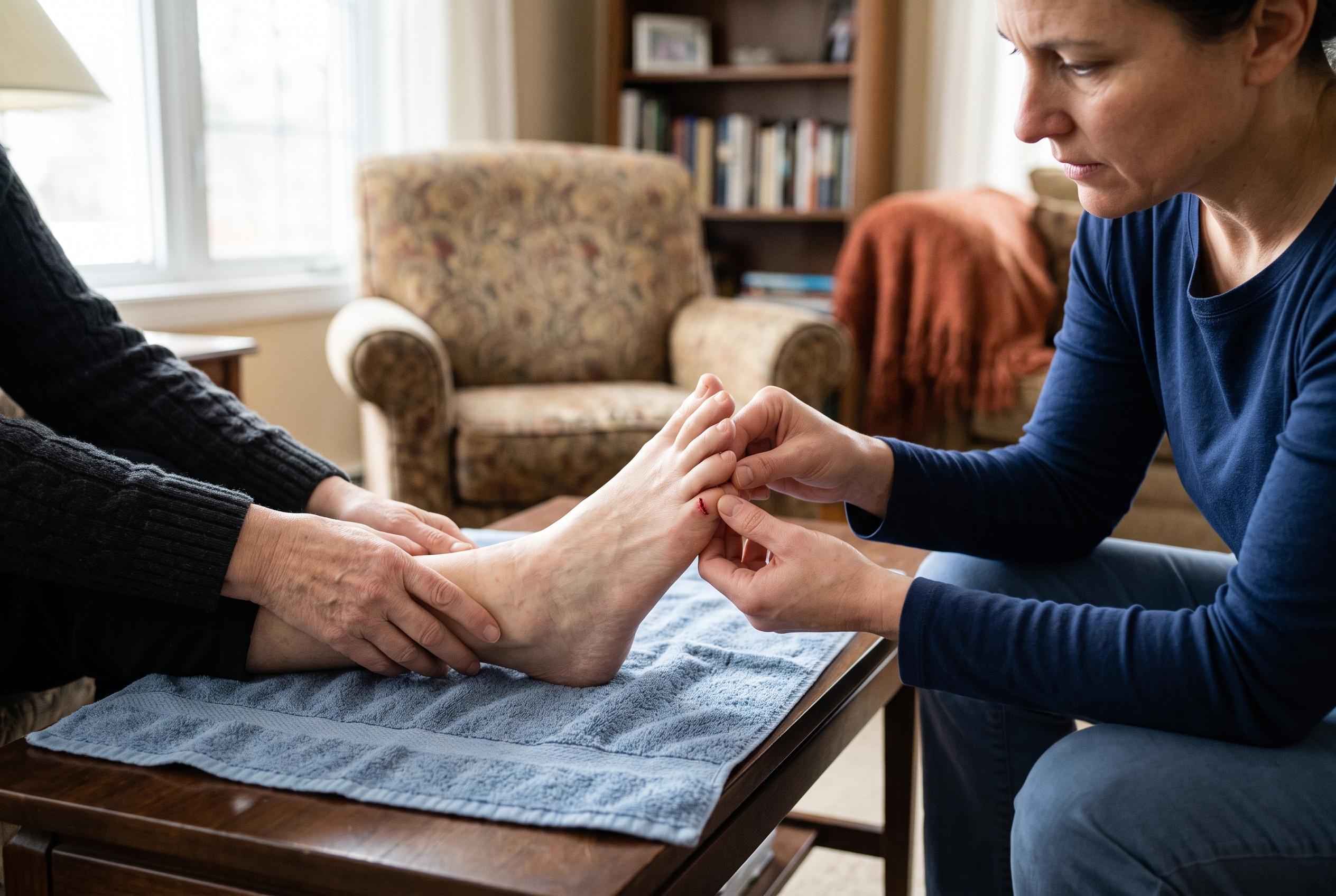

Even a minor break in the skin can worsen quickly for people with diabetes, making prompt care and daily checks essential.
A small wound on a diabetic big toe should not be ignored. Diabetes UK says even minor breaks in the skin can become serious if they are left untreated, because higher blood glucose can slow healing and raise the risk of infection. The safest first step is to keep the area clean and dry, avoid putting pressure on the toe and check it closely every day for any change.
The NHS advises people with diabetes to watch for redness, swelling, warmth, discharge or increasing pain around any foot wound, because those signs can indicate infection or a deeper problem. If the wound is not improving, or if the surrounding skin looks worse, medical assessment should happen promptly. That is especially important because diabetic foot problems can progress quickly and, in severe cases, lead to ulcers or more serious complications.
The CDC also recommends daily foot inspection, good hygiene and well-fitting footwear to reduce the chance of further injury while the wound heals. Controlling blood sugar is important too, because poor glucose control can affect circulation and nerve function, making it harder for a wound to close properly. If the person cannot easily see the sole of the foot or the side of the toe, help from a family member or carer can be useful.
Mayo Clinic says treatment for diabetic foot wounds may range from protective dressings and infection treatment to specialist wound care, depending on how deep or inflamed the wound is. In practical terms, the best advice is to seek a doctor’s review as soon as possible, rather than waiting to see whether it settles on its own. Early treatment gives the wound the best chance of healing and reduces the risk of complications.
Disclaimer: This content is for informational purposes only and is not intended to be a substitute for professional medical judgment, advice, diagnosis, or treatment.



